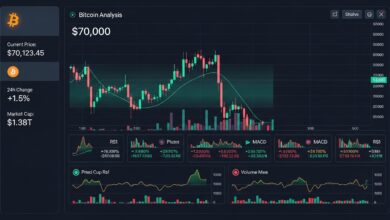
Bitcoin Price Predictions 2026-2030: What Lies Ahead for Crypto Salaries and Stablecoins
Bitcoin price predictions 2026–2030 explained in depth, including crypto salaries, stablecoins, adoption trends, and long-term market outlook.


Bitcoin has evolved from a fringe digital experiment into a globally recognized financial asset that influences markets, policymaking, and even how people are paid for their work. As we move deeper into the second half of the 2020s, interest in Bitcoin price predictions 2026–2030 is intensifying among investors, businesses, and everyday users alike. The question is no longer whether Bitcoin will survive, but how it will integrate into the global economy and what role it will play alongside stablecoins and crypto-denominated salaries.
Between 2026 and 2030, Bitcoin is expected to face a defining era shaped by post-halving supply dynamics, institutional adoption, regulatory clarity, and expanding real-world utility. At the same time, crypto salaries paid in Bitcoin or stablecoins are gaining traction, particularly in remote work, Web3 development, and emerging markets. Stablecoins, often viewed as Bitcoin’s quieter counterpart, are also becoming essential infrastructure for payments, savings, and payroll systems.
This article explores long-term Bitcoin price predictions, examining economic cycles, adoption trends, and technological progress while also connecting Bitcoin’s future value to the growth of crypto salaries and stablecoins. Rather than offering hype-driven forecasts, this analysis focuses on realistic scenarios that help readers understand what lies ahead for Bitcoin and the broader crypto economy between 2026 and 2030.
Bitcoin’s Long-Term Market Cycles
Bitcoin Halving Cycles and Supply Scarcity
Any serious discussion about Bitcoin price predictions 2026–2030 must begin with Bitcoin’s halving mechanism. Bitcoin halvings occur roughly every four years, reducing the block reward miners receive and effectively slowing the issuance of new BTC. By 2026, the market will be operating in the aftermath of the 2024 halving, while another halving is expected around 2028.
Historically, Bitcoin’s price has reacted strongly to these supply shocks, often entering extended bull markets 12 to 18 months after each halving. As Bitcoin approaches its maximum supply of 21 million coins, scarcity becomes increasingly pronounced. Between 2026 and 2030, more than 95% of all Bitcoin will already be mined, reinforcing its narrative as digital gold and a hedge against inflation.
This structural scarcity plays a crucial role in long-term price appreciation, particularly as demand from institutions, governments, and retail investors continues to grow.
Macro-Economic Forces Shaping Bitcoin’s Value
Beyond internal mechanics, Bitcoin’s price trajectory is deeply influenced by global macroeconomic conditions. Inflation cycles, interest rate policies, currency devaluation, and geopolitical uncertainty all affect demand for alternative stores of value. If fiat currencies continue to face inflationary pressure, Bitcoin’s appeal as a deflationary asset may strengthen further.
Between 2026 and 2030, Bitcoin could increasingly be viewed not just as a speculative investment but as a strategic asset held by corporations, pension funds, and even central banks. This shift in perception could stabilize Bitcoin’s price movements while supporting higher long-term valuations.
Bitcoin Price Predictions for 2026
Market Outlook and Adoption Trends
By 2026, Bitcoin is likely to be in a maturation phase following the post-2024 halving rally. Many analysts expect adoption to deepen during this period, particularly in payment systems and corporate treasuries. Bitcoin price predictions for 2026 often range widely, reflecting both optimism and caution, but a common theme is reduced volatility compared to earlier cycles.
Institutional-grade infrastructure, such as regulated custodians and spot Bitcoin ETFs, is expected to play a key role in attracting conservative capital. This could push Bitcoin into a new valuation range where sharp crashes become less frequent, though corrections will still occur.
Impact on Crypto Salaries
As Bitcoin’s price stabilizes at higher levels, its use in crypto salaries may expand. While stablecoins remain the preferred option for predictable income, Bitcoin-denominated bonuses and partial salaries could become more common, particularly in tech-driven industries. A higher and more stable Bitcoin price increases confidence among workers willing to receive compensation in BTC as a long-term investment.
Bitcoin Price Predictions for 2027
Growth Phase Before the Next Halving
In 2027, Bitcoin is expected to enter another growth phase as anticipation builds for the 2028 halving. Historically, pre-halving years tend to see renewed accumulation as investors position themselves for future supply reductions. Bitcoin price predictions 2027 often suggest gradual appreciation rather than explosive growth, reflecting a more mature market structure.
Retail participation may increase again, driven by renewed media attention and broader financial education around cryptocurrencies. At the same time, institutional investors could continue accumulating Bitcoin as part of diversified portfolios.
Stablecoins as a Bridge to Bitcoin Adoption

During this period, stablecoins are likely to play an even more critical role. As more people enter the crypto ecosystem through stablecoin payments and savings, Bitcoin often becomes the next step for long-term value storage. This symbiotic relationship strengthens Bitcoin’s demand without forcing users to endure immediate volatility.
Bitcoin Price Predictions for 2028
The 2028 Halving and Market Expectations
The 2028 Bitcoin halving represents a pivotal moment within the Bitcoin price predictions 2026–2030 timeframe. With block rewards reduced again, new Bitcoin supply will shrink further, intensifying scarcity. Historically, halving years are characterized by heightened speculation and increased market activity.
While short-term price movements around the halving can be unpredictable, the long-term impact has consistently favored price appreciation. By this stage, Bitcoin’s annual inflation rate will be lower than that of most fiat currencies, reinforcing its role as a long-term store of value.
Corporate and Government Involvement
By 2028, it is plausible that more governments will have established clearer frameworks for Bitcoin usage, taxation, and custody. Some countries may even hold Bitcoin as part of their sovereign reserves. Such developments could significantly influence market sentiment and support higher price levels.
Bitcoin Price Predictions for 2029
Post-Halving Expansion and Market Confidence
Following the 2028 halving, 2029 could mark a strong expansion phase. Bitcoin price predictions for 2029 often lean bullish, driven by reduced supply, rising demand, and increasing mainstream acceptance. If historical patterns repeat, this year could see Bitcoin testing new all-time highs.
Market confidence may also be bolstered by improved scalability solutions, such as advancements on the Lightning Network, making Bitcoin more practical for everyday transactions alongside its investment role.
Bitcoin’s Role in Global Payroll Systems
As confidence in Bitcoin grows, its role in crypto salaries could expand beyond niche industries. While stablecoins will remain dominant for payroll due to price stability, Bitcoin may increasingly be offered as an optional component of compensation packages, particularly in multinational companies and decentralized organizations.
Bitcoin Price Predictions for 2030

A Mature Asset in a Digital Economy
By 2030, Bitcoin is likely to be considered a mature financial asset rather than an emerging technology. Bitcoin price predictions 2030 often envision Bitcoin reaching levels that reflect its fixed supply and global demand, potentially rivaling gold’s market capitalization.
At this stage, Bitcoin’s volatility may be significantly lower than in previous decades, making it more appealing to conservative investors. Its integration into traditional finance could be seamless, with Bitcoin-backed financial products widely available.
Long-Term Outlook for Stablecoins and Salaries
Stablecoins are expected to dominate day-to-day transactions and payroll systems by 2030, acting as the transactional layer of the crypto economy. Bitcoin, meanwhile, may serve as the settlement and savings layer, similar to how gold once functioned in traditional finance.
Crypto salaries could become normalized, especially in regions where access to stable banking systems is limited. In such scenarios, Bitcoin’s role as a long-term wealth-building asset complements the stability offered by stablecoins.
How Crypto Salaries Influence Bitcoin Demand
Changing Attitudes Toward Digital Compensation
The rise of remote work and decentralized organizations has accelerated interest in crypto salaries. Workers paid partially in Bitcoin often view it as a long-term investment rather than immediate income. This behavioral shift contributes to reduced selling pressure, supporting long-term price appreciation. As more professionals gain exposure to Bitcoin through salaries, grassroots adoption strengthens, reinforcing demand beyond speculative trading.
Stablecoins as the Gateway Asset
Stablecoins play a crucial role in onboarding new users. Once individuals are comfortable using digital wallets and blockchain-based payments, transitioning into Bitcoin becomes more natural. This indirect demand driver is often overlooked in Bitcoin price predictions, yet it plays a significant role in long-term growth.
Risks and Challenges to Bitcoin’s 2026–2030 Outlook
Regulatory Uncertainty
Despite growing acceptance, regulatory risks remain one of the biggest uncertainties for Bitcoin. Sudden policy changes or restrictive regulations could impact price trajectories, especially in major economies. However, clearer regulations may also reduce uncertainty and attract institutional capital.
Technological and Environmental Concerns
Bitcoin’s energy consumption continues to be a topic of debate. While the network is increasingly powered by renewable energy, public perception and policy responses could influence adoption. Technological innovation will be key to addressing these concerns without compromising decentralization.
Conclusion
The period between 2026 and 2030 is set to be transformative for Bitcoin and the broader crypto ecosystem. Bitcoin price predictions 2026–2030 suggest a gradual shift from speculative volatility toward maturity, driven by scarcity, institutional adoption, and real-world utility. As crypto salaries and stablecoins become integral parts of the digital economy, Bitcoin’s role as a long-term store of value is likely to strengthen.
Rather than viewing Bitcoin in isolation, its future must be understood within a broader financial system where stablecoins handle transactions and Bitcoin anchors value. While challenges remain, the long-term outlook for Bitcoin through 2030 remains cautiously optimistic, shaped by both innovation and adoption.
FAQs
Q: What are realistic Bitcoin price predictions for 2030?
Realistic forecasts suggest Bitcoin could reach significantly higher valuations by 2030 due to scarcity and adoption, though exact prices depend on macroeconomic and regulatory factors.
Q: Will Bitcoin be used for everyday salaries by 2030?
Bitcoin is more likely to be used as a savings and bonus component, while stablecoins will dominate everyday salary payments due to price stability.
Q: How do stablecoins support Bitcoin’s long-term growth?
Stablecoins act as an entry point into crypto, increasing overall adoption and eventually driving demand for Bitcoin as a long-term asset.
Q: Is Bitcoin still a good long-term investment after 2026?
Many analysts believe Bitcoin remains a strong long-term investment due to its fixed supply and growing institutional interest, despite short-term volatility.
Q: What risks could impact Bitcoin price predictions between 2026 and 2030?
Key risks include regulatory changes, macroeconomic shocks, technological challenges, and shifts in investor sentiment.