Crypto Investors Fear Market Crash as U.S. Captures Venezuelan President Maduro
Crypto investors fear a market crash as reports claim the U.S. has captured Venezuela’s President Maduro, sparking global uncertainty and risk-off sentiment.

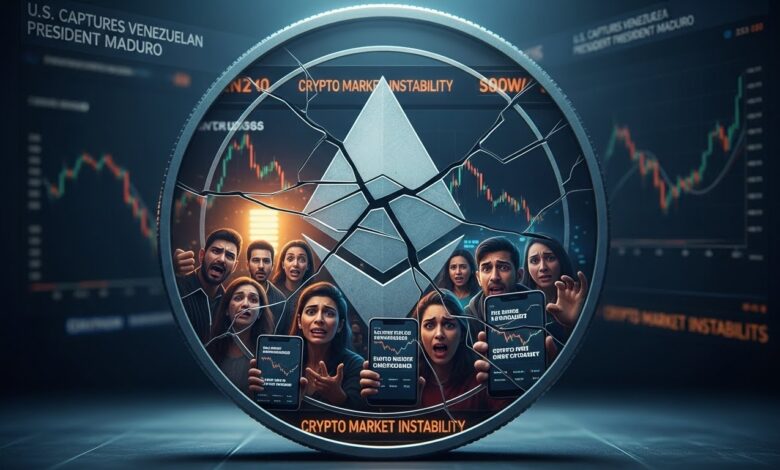
Global financial markets were jolted after explosive reports claimed that the United States captured Venezuelan President Nicolás Maduro, an event that immediately sent shockwaves through geopolitics, energy markets, and digital assets. For crypto investors, the news triggered intense fear of a broader market crash, as uncertainty surged across risk assets. Bitcoin and Ethereum, and major altcoins experienced heightened volatility, while traders rushed to reassess exposure in a rapidly shifting macro environment.
The cryptocurrency market has long been sensitive to geopolitical tensions, especially when they involve energy-rich nations, U.S. foreign policy, and potential disruptions to global trade. Venezuela, despite its struggling economy, plays a symbolic and strategic role due to its oil reserves, sanctions history, and previous reliance on crypto to bypass financial restrictions. As headlines spread about Maduro’s capture, fears of escalating conflict, retaliatory actions, and global market instability quickly spilled into the digital asset space.
This article explores why crypto investors fear a market crash, how the reported capture of Maduro impacts sentiment, and what historical patterns suggest about crypto’s behavior during geopolitical crises. By examining Bitcoin price action, altcoin trends, macroeconomic linkages, and investor psychology, we aim to provide a clear, balanced, and in-depth analysis of one of the most unsettling moments for the crypto market in recent times.
The Geopolitical Context Behind Maduro’s Capture
Why Venezuela Matters to Global Markets
Venezuela holds some of the world’s largest proven oil reserves, making it strategically significant despite years of economic decline. U.S. sanctions, political isolation, and internal instability have kept Venezuela at the center of geopolitical debates for over a decade. Any major political shift, especially one involving direct U.S. intervention, has the potential to disrupt energy markets, regional stability, and diplomatic relations with countries such as Russia, China, and Iran.
For crypto investors, Venezuela has also been a notable case study. The country saw early grassroots adoption of Bitcoin and stablecoins as citizens sought protection against hyperinflation and currency controls. This connection means that major political developments involving Venezuela resonate more strongly within the crypto narrative than events in many other emerging markets.
The Shock Value of U.S. Intervention
Reports that the U.S. captured Venezuelan President Maduro represent an extreme escalation compared to traditional sanctions or diplomatic pressure. Even if details remain fluid, the perception of direct intervention alone was enough to unsettle markets. Investors began pricing in worst-case scenarios, including military escalation, retaliation by allied states, and renewed instability across Latin America. In such moments, markets tend to move ahead of verified facts. Crypto, known for its sensitivity to sentiment, reacted almost instantly as traders reduced leverage and sought to limit downside risk.
Immediate Crypto Market Reaction and Price Volatility
Bitcoin’s Role as a Risk Barometer
Bitcoin is often described as both “digital gold” and a risk-on asset, depending on market conditions. Following the Maduro capture reports, Bitcoin experienced sharp intraday swings, reflecting confusion crypto investors about which narrative would dominate. Some viewed Bitcoin as a hedge against geopolitical chaos, while others treated it as a speculative asset vulnerable to a broader sell-off.
The result was heightened volatility rather than a clear directional move. This uncertainty reinforced fears that if traditional markets turned sharply risk-off, crypto could follow with amplified losses.
Altcoins Face Amplified Selling Pressure
While Bitcoin showed relative resilience, altcoins bore the brunt of investor anxiety. Historically, smaller-cap tokens suffer disproportionately during geopolitical shocks, as liquidity dries up and risk tolerance collapses. Projects tied to decentralized finance, gaming, and speculative narratives saw increased selling as traders moved into cash or stablecoins. The fear of a crypto market crash intensified as correlations between altcoins and equities strengthened, suggesting that broader macro forces were overpowering crypto-specific fundamentals.
Why Crypto Investors Fear a Market Crash
Rising Risk-Off Sentiment Across Global Assets
The reported capture of Maduro coincided with a broader rise in risk-off sentiment. Equity futures weakened, oil prices fluctuated, and safe-haven assets like gold attracted renewed interest. In this environment, crypto investors worried that digital assets would once again be treated as high-risk instruments rather than safe alternatives.
When geopolitical shocks occur, institutional investors often reduce exposure to volatile assets. As institutions now play a larger role in crypto markets, their defensive positioning can accelerate downturns.
Leverage and Liquidation Risks
Another reason crypto investors fear a market crash is the prevalence of leverage. Futures and perpetual contracts amplify price movements, meaning even modest declines can trigger cascading liquidations. During periods of uncertainty, these liquidations can snowball into sharp, sudden crashes. The Maduro news heightened these fears, as traders anticipated spikes in volatility that could wipe out overleveraged positions within hours.
Historical Parallels: Crypto During Geopolitical Crises
Lessons From Past Conflicts
Crypto’s response to geopolitical events has been mixed. During the early stages of the Russia–Ukraine conflict, Bitcoin initially fell alongside equities before later rebounding as some investors sought alternatives to traditional financial systems. Similarly, tensions in the Middle East have produced short-term sell-offs followed by periods of stabilization. These patterns suggest that while crypto investors fear market crashes during crises, the long-term impact often depends on how the situation evolves and whether crypto narratives align with macro realities.
Venezuela’s Unique Crypto History
Venezuela’s past use of crypto to bypass sanctions adds another layer of complexity. Any regime change or escalation could renew discussions around sanctions-resistant finance, potentially boosting crypto adoption in the long run. However, markets tend to focus on immediate risk rather than future possibilities, explaining the initial wave of fear-driven selling.
Energy Markets, Inflation, and Crypto Correlations
Oil Price Volatility and Inflation Fears
Geopolitical turmoil involving an oil-rich nation inevitably raises concerns about energy supply. Fluctuating oil prices can feed into inflation expectations, influencing central bank policy. Higher inflation or delayed rate cuts are typically negative for risk assets, including cryptocurrencies. Crypto investors closely monitor these dynamics, as tighter financial conditions reduce liquidity, one of the key drivers of crypto bull markets.
The Dollar’s Strength and Crypto Pressure
Periods of global uncertainty often strengthen the U.S. dollar, as investors seek safety. A stronger dollar historically places downward pressure on Bitcoin and altcoins, as crypto is priced globally and competes with dollar-denominated assets. The Maduro situation, by reinforcing demand for dollars, added another reason for crypto investors to brace for potential downside.
Stablecoins and Capital Flight Within Crypto
Shift Toward Stable Assets
As fear spread, many traders rotated funds into stablecoins such as USDT and USDC. This internal capital flight within the crypto ecosystem reflects defensive positioning rather than complete exit. While stablecoin dominance rising can signal caution, it also suggests that capital remains within crypto, ready to re-enter if conditions stabilize.
On-Chain Signals of Caution
On-chain data during geopolitical scares often shows increased exchange inflows, indicating potential selling pressure. At the same time, long-term holders may reduce activity, choosing to wait out the storm. These mixed signals underscore the tension between short-term fear and long-term conviction.
Institutional Investors and the Fear Factor
Wall Street’s Growing Influence on Crypto
With ETFs, custody solutions, and regulated platforms, institutional participation in crypto has grown significantly. While this adds legitimacy, it also increases crypto’s sensitivity to global macro events. Institutions tend to react swiftly to geopolitical shocks, adjusting portfolios based on risk models rather than ideological belief in decentralization. This shift partly explains why crypto investors fear market crashes more intensely during events like the reported capture of Maduro.
Media Narratives and Market Psychology
Media coverage plays a crucial role in shaping sentiment. Headlines linking geopolitical conflict with financial instability can amplify fear, leading to self-fulfilling sell-offs. In crypto, where sentiment changes rapidly, narrative-driven moves can overshadow fundamentals in the short term.
Could Crypto Eventually Benefit From the Crisis?
The Hedge Narrative Revisited
Despite immediate fears, some argue that geopolitical instability ultimately strengthens the case for Bitcoin as a hedge against state-driven financial systems. If sanctions expand or capital controls tighten, crypto could regain appeal as an alternative store of value. However, this narrative typically takes time to materialize. In the early stages of crises, fear dominates over ideological arguments.
Emerging Markets and Crypto Adoption
If Venezuela undergoes significant political change, crypto adoption dynamics in the region could shift. While this is speculative, it highlights why long-term investors may view current volatility as part of a broader transformation rather than a terminal crash.
Risk Management Strategies for Crypto Investors
Navigating Volatility Without Panic
Periods when crypto investors fear a market crash test emotional discipline. Successful investors often focus on risk management, reducing leverage, diversifying holdings, and maintaining a long-term perspective.
Rather than reacting to every headline, understanding macro trends and historical patterns can help investors make more rational decisions during turbulent times.
The Importance of Liquidity and Time Horizon
Investors with sufficient liquidity and longer time horizons are generally better positioned to weather geopolitical storms. While short-term traders face heightened risks, long-term holders may find opportunities amid volatility if they remain patient and informed.
Conclusion
The reports that the U.S. captured Venezuelan President Maduro unleashed a wave of fear across global markets, with crypto investors particularly anxious about the risk of a market crash. Heightened volatility, risk-off sentiment, and macroeconomic uncertainty combined to create one of the most emotionally charged environments in recent months.
Yet history suggests that while crypto often suffers during the initial phase of geopolitical shocks, its long-term trajectory depends on broader adoption trends, monetary policy, and technological progress. For now, fear dominates the narrative, but as clarity emerges, markets may stabilize and reassess the true implications of the crisis. For crypto investors, the challenge lies in balancing caution with conviction, navigating uncertainty without succumbing to panic, and recognizing that volatility is an inherent part of the digital asset landscape.
FAQs
Q: Why do crypto investors fear a market crash after Maduro’s capture?
Crypto investors fear a market crash because geopolitical shocks increase uncertainty, trigger risk-off sentiment, and often lead to reduced exposure to volatile assets like cryptocurrencies.
Q: How does geopolitical instability affect Bitcoin prices?
Geopolitical instability can cause short-term volatility in Bitcoin, as investors debate whether it will act as a safe haven or a high-risk asset during global crises.
Q: Are altcoins more vulnerable during geopolitical events?
Yes, altcoins are generally more vulnerable because they are less liquid and more speculative, making them more sensitive to sudden shifts in investor sentiment.
Q: Can crypto benefit from geopolitical crises in the long run?
In some cases, yes. Over time, geopolitical crises can strengthen the narrative of crypto as an alternative financial system, especially in regions facing sanctions or currency instability.
Q: What should crypto investors do during periods of extreme uncertainty?
Investors should focus on risk management, avoid excessive leverage, stay informed, and align decisions with their long-term investment goals rather than reacting emotionally to headlines.