Bitcoin Mining Costs Could Ease if Venezuelan Oil Production Expands
Bitcoin mining costs could ease if Venezuelan oil production expands, reshaping energy prices, hash rates, and long-term mining profitability.


Bitcoin mining has always been a game of margins. From the earliest days when enthusiasts mined Bitcoin on personal computers to today’s industrial-scale operations running specialized ASIC hardware, the determining factor for profitability has consistently been energy cost. Electricity prices dictate whether miners can survive downturns, endure halvings, and remain competitive as network difficulty rises. Against this backdrop, the idea that Bitcoin mining costs could ease if Venezuelan oil production expands has attracted growing attention among crypto investors, energy analysts, and policymakers alike.
Venezuela sits atop the world’s largest proven oil reserves, yet years of underinvestment, sanctions, and political turmoil have drastically curtailed its output. If Venezuelan oil production expands meaningfully, global energy markets could experience increased supply, exerting downward pressure on oil prices and, by extension, electricity costs in certain regions. This potential shift matters deeply to Bitcoin miners, whose operational expenses are overwhelmingly energy-driven. Cheaper energy does not simply mean higher profits; it can alter mining geography, influence hash rate distribution, and reshape Bitcoin’s long-term decentralization narrative.
This article explores how expanded Venezuelan oil production could ripple through global energy markets and ultimately affect Bitcoin mining economics. By examining the relationship between oil prices and electricity generation, the structure of Bitcoin mining costs, and the strategic responses of miners, we can better understand why this development could be a meaningful variable in the evolving crypto landscape.
The Economics of Bitcoin Mining and Energy Dependence
Bitcoin mining is fundamentally an energy-intensive process. Miners compete to solve cryptographic puzzles, and the probability of success depends on computational power, which in turn requires electricity. As the Bitcoin network has matured, mining difficulty has increased, forcing miners to deploy ever-more efficient but power-hungry machines. This reality makes energy costs the single largest operating expense for most mining operations.
Electricity prices vary dramatically across regions, influenced by fuel sources, infrastructure, regulation, and subsidies. Countries with abundant natural resources or surplus power generation often attract miners seeking lower costs. When oil prices rise, electricity generated from oil-fired plants becomes more expensive, indirectly squeezing miners. Conversely, when oil prices fall or supply increases, electricity costs can stabilize or decline, improving mining margins.
The link between energy markets and Bitcoin mining is not theoretical. Historical data shows that periods of high energy prices often coincide with miner capitulation, reduced hash rates, and consolidation among large players. Therefore, any factor capable of easing global energy prices, such as increased oil production from a major reserve holder like Venezuela, naturally becomes relevant to Bitcoin mining economics.
Venezuela’s Oil Industry: Untapped Potential and Global Impact
Venezuela’s oil reserves are legendary, yet its current production levels are a fraction of their historical highs. Infrastructure decay, limited access to technology, and geopolitical constraints have kept output subdued. However, discussions around easing sanctions, foreign investment partnerships, and modernization of facilities have revived speculation that Venezuelan oil production could expand in the coming years.
If such an expansion materializes, it could inject additional barrels into the global market. Even a modest increase may influence oil benchmarks, particularly in a world where supply-demand balances remain sensitive to geopolitical shifts. For Bitcoin miners, the importance lies not in Venezuela alone but in the cumulative effect on global oil prices and energy sentiment.
An expanded Venezuelan oil industry could also alter regional energy dynamics in Latin America. Neighboring countries might gain access to cheaper fuel imports, potentially lowering electricity generation costs. Over time, these changes could create new mining hubs or make existing operations more competitive, especially in regions previously considered marginal due to high power prices.
How Oil Prices Influence Electricity Costs
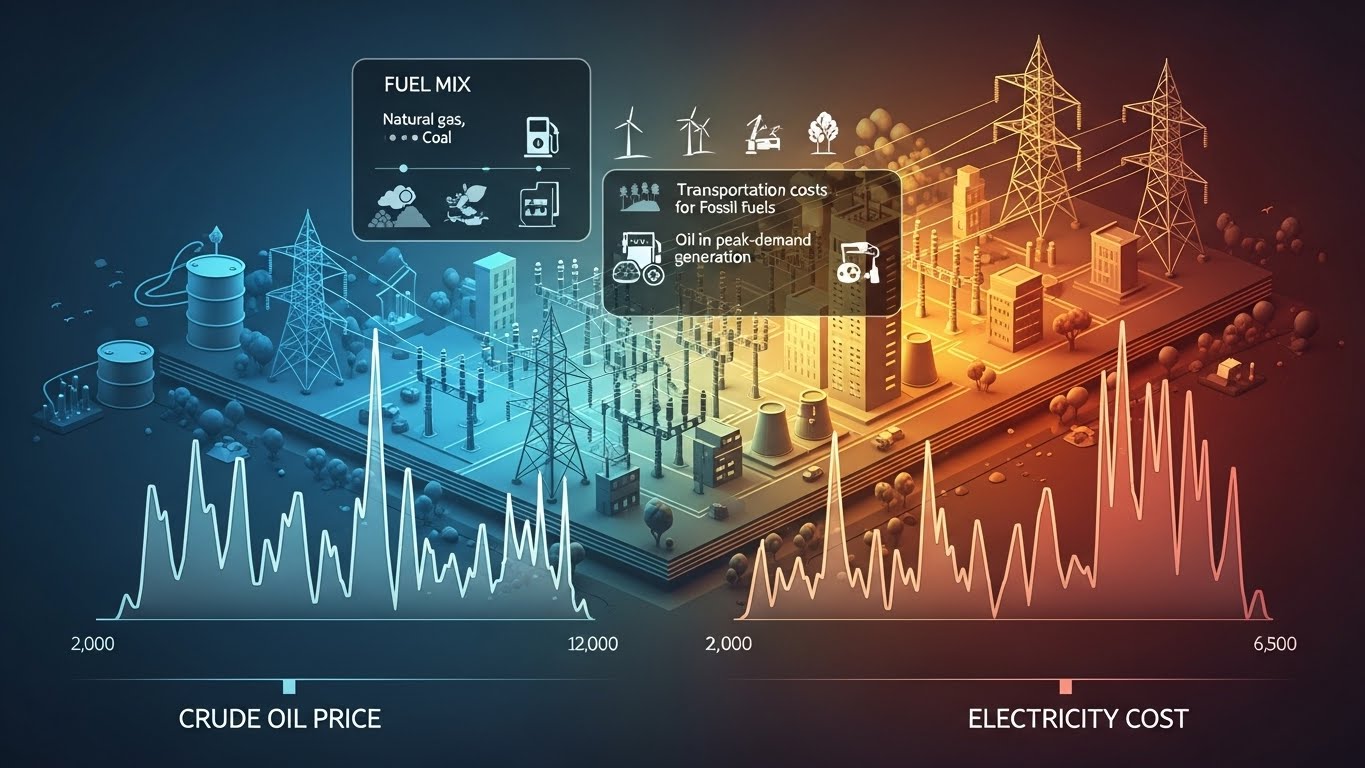
To understand why Venezuelan oil production matters for Bitcoin mining, it is essential to grasp how oil prices affect electricity markets. While many countries rely on a mix of energy sources, oil still plays a role in electricity generation, especially in regions lacking abundant hydroelectric, nuclear, or natural gas resources. When oil prices rise, utilities often pass increased costs onto consumers, raising electricity tariffs. In contrast, increased oil supply can dampen price volatility and reduce generation costs in oil-dependent grids. Lower fuel costs translate into cheaper electricity for industrial users, including Bitcoin miners. Even in regions where oil is not the primary generation source, oil prices influence transportation, infrastructure maintenance, and overall inflation, indirectly shaping electricity pricing structures.
This interconnectedness means that Bitcoin mining costs are exposed to macro energy trends. An expansion in Venezuelan oil production could therefore have a cascading effect, easing costs across multiple layers of the energy economy.
Bitcoin Mining Costs Could Ease if Venezuelan Oil Production Expands
The phrase Bitcoin mining costs could ease if Venezuelan oil production expands captures a conditional but plausible scenario. The easing would not be immediate or uniform, but the directional impact is clear. Lower oil prices can reduce electricity costs, particularly in emerging markets and oil-reliant regions where miners often operate.
For miners operating on thin margins, even a small reduction in energy expenses can be decisive. Lower costs extend the lifespan of older hardware, delay forced upgrades, and reduce the risk of shutdown during market downturns. This is especially relevant in a post-halving environment, where block rewards shrink and efficiency becomes paramount.
Moreover, lower mining costs can influence Bitcoin’s market dynamics. When miners face less financial pressure, they are less likely to sell large amounts of BTC to cover expenses. This reduced sell pressure can support price stability, creating a feedback loop that benefits both miners and investors.
Hash Rate, Difficulty, and Energy Price Sensitivity
Bitcoin’s hash rate reflects the total computational power securing the network. It is a dynamic metric, responding to changes in mining profitability. When energy prices rise sharply, inefficient miners drop out, reducing the hash rate until difficulty adjusts downward. Conversely, when costs ease, new miners enter, and existing players expand operations.
If Venezuelan oil production expands and contributes to lower energy costs, the Bitcoin network could experience a gradual increase in hash rate. This growth would not necessarily be linear but would likely favor regions where energy prices become newly competitive. Over time, this could enhance network security while redistributing mining power geographically.
Difficulty adjustments ensure that Bitcoin maintains its block production schedule, but they also amplify the importance of cost structures. Miners with access to cheaper electricity benefit disproportionately during periods of expansion, reinforcing the strategic importance of energy sourcing in the mining industry.
Regional Implications for Bitcoin Mining

Expanded Venezuelan oil production could have distinct regional implications. Latin America, already home to hydro-rich countries like Paraguay and Brazil, might see additional benefits from lower fuel costs. Cheaper oil could complement renewable energy sources, creating hybrid energy solutions attractive to miners.
In other parts of the world, particularly in developing economies where oil-fired plants remain common, lower fuel costs could make previously unviable mining operations profitable. This could lead to a more diversified global mining map, reducing concentration in a handful of countries and supporting Bitcoin’s decentralization ethos.
However, regulatory environments remain a critical factor. Even with cheaper energy, hostile or uncertain regulations can deter investment. Therefore, the impact of Venezuelan oil production on mining will depend not only on prices but also on policy responses in various jurisdictions.
Environmental Considerations and Energy Mix Shifts
Any discussion of oil production and Bitcoin mining inevitably raises environmental concerns. Critics argue that increased oil output contradicts global climate goals and could exacerbate emissions. From a mining perspective, reliance on fossil fuels remains contentious, especially as the industry seeks to improve its sustainability narrative. That said, the relationship is more nuanced. Lower oil prices do not automatically increase fossil fuel usage; they can also reduce energy costs during transitions to cleaner grids. In some cases, cheaper oil-derived electricity may serve as a bridge, enabling infrastructure upgrades and investments in renewables.
Moreover, Bitcoin miners increasingly seek energy sources that balance cost and sustainability. If Venezuelan oil production expansion indirectly stabilizes energy markets, it could facilitate long-term planning and integration of renewable power, rather than locking miners into high-cost, high-emission scenarios.
Strategic Responses from Bitcoin Miners
Miners are acutely aware of macroeconomic signals. If indicators suggest that Venezuelan oil production is expanding and energy prices may soften, mining firms could adjust strategies accordingly. Long-term power purchase agreements, expansion plans, and hardware investments often hinge on energy cost projections.
Some miners may delay relocation or consolidation decisions, anticipating improved margins. Others might accelerate expansion to capture early advantages before difficulty rises. In competitive markets, timing is crucial, and those who correctly anticipate energy trends can gain a lasting edge.
The possibility that Bitcoin mining costs could ease if Venezuelan oil production expands therefore becomes a strategic consideration, not just a theoretical outcome. It underscores the growing sophistication of mining operations, which now resemble energy-focused industrial enterprises as much as tech companies.
Broader Market Implications for Bitcoin
Beyond mining, lower production costs can influence Bitcoin’s broader market dynamics. Reduced miner sell pressure, improved network security, and enhanced decentralization all contribute to investor confidence. While energy prices alone do not dictate Bitcoin’s price, they shape the cost base underlying the network.
If expanded Venezuelan oil production contributes to a more favorable mining environment, it could indirectly support Bitcoin’s long-term value proposition. This does not guarantee price appreciation, but it strengthens the network’s resilience against external shocks, from regulatory changes to macroeconomic downturns. In this sense, energy developments become part of Bitcoin’s fundamental analysis, alongside adoption metrics, technological upgrades, and monetary policy considerations.
Conclusion
The idea that Bitcoin mining costs could ease if Venezuelan oil production expands highlights the deep interconnection between energy markets and the crypto economy. While the outcome is conditional and influenced by numerous variables, the underlying logic is sound. Increased oil supply can ease energy prices, which in turn can lower the dominant cost component of Bitcoin mining.
For miners, this potential shift offers breathing room in an increasingly competitive landscape. For the Bitcoin network, it could mean higher hash rates, improved security, and reduced centralization risks. For investors, it adds another layer to understanding how macroeconomic developments shape Bitcoin’s fundamentals.
Ultimately, Venezuelan oil production is not a silver bullet for mining profitability, but it represents a meaningful factor worth monitoring. As Bitcoin continues to mature, its relationship with global energy markets will only grow more pronounced, making developments like this increasingly relevant to all participants in the ecosystem.
FAQs
Q: How do oil prices directly affect Bitcoin mining costs?
Oil prices influence electricity generation costs in regions that rely on oil-fired power plants. When oil prices fall due to increased supply, electricity costs can decline, reducing operational expenses for Bitcoin miners.
Q: Why is Venezuelan oil production important compared to other producers?
Venezuela holds the world’s largest proven oil reserves, so even modest production increases can impact global supply expectations and price sentiment, making it particularly influential.
Q: Will lower mining costs automatically increase Bitcoin’s price?
Lower mining costs can reduce sell pressure from miners and support network stability, but Bitcoin’s price is influenced by many factors, including demand, macroeconomics, and market sentiment.
Q: Could cheaper energy lead to centralization in Bitcoin mining?
Cheaper energy can attract new miners and expand operations, but if access is widespread across regions, it can also promote decentralization rather than concentration.
Q: Is expanded oil production bad for Bitcoin’s environmental image?
While increased oil output raises environmental concerns, the impact on Bitcoin mining depends on how energy markets evolve. Stabilized prices can also support transitions to cleaner energy sources over time.