Solana Price Faces Crash Risk Despite 8 Million New Investors the cryptocurrency market is no stranger to contradiction, but few situations highlight this better than the current state of Solana. On one hand, the network has attracted nearly 8 million new investors, signaling growing interest, expanding adoption, and renewed optimism. On the other hand, analysts warn that Solana price faces crash risk despite this surge in participation. This apparent paradox has left traders, long-term holders, and observers questioning whether Solana is preparing for another breakout or standing on unstable ground.
Solana has long been praised for its high-speed blockchain, low transaction fees, and rapidly growing ecosystem. These strengths have helped it recover from past downturns and regain relevance in a highly competitive market. However, price action does not always move in harmony with user growth. Market structure, liquidity conditions, speculative behavior, and broader crypto sentiment all play decisive roles. Understanding why Solana price faces crash risk despite 8 million new investors requires a deeper look into technical signals, investor psychology, network fundamentals, and macroeconomic pressures shaping the crypto landscape.
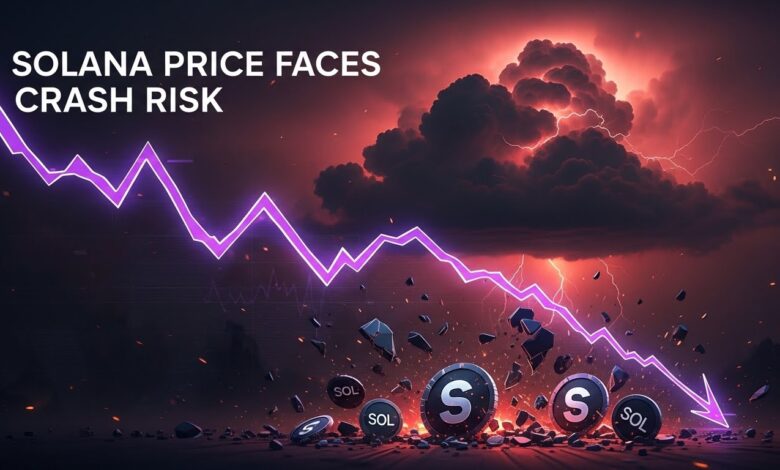
Solana Price Faces Crash Risk
The addition of 8 million new investors to the Solana ecosystem is a significant milestone. It reflects increasing awareness of the network and its applications across decentralized finance, NFTs, gaming, and payments. New wallets, rising transaction counts, and expanding community engagement all suggest that Solana continues to resonate with a broad audience.
This influx of participants is often interpreted as bullish. More investors usually mean more demand, higher liquidity, and stronger network effects. However, not all investors contribute equally to price stability. A large portion of new participants may be short-term traders or speculative buyers drawn in by recent price momentum rather than long-term conviction. This distinction is crucial when analyzing why Solana price faces crash risk even amid impressive adoption figures.
The Disconnect Between User Growth and Price Stability
In traditional markets, growing user bases often translate into stronger valuations over time. In crypto markets, the relationship is far less straightforward. Price movements are heavily influenced by leverage, derivatives trading, and sentiment-driven speculation.
Solana’s expanding investor base may include many participants with limited experience in volatile markets. When prices rise quickly, enthusiasm builds. When prices stall or decline, fear can spread just as rapidly. This dynamic can amplify downside risk, especially if a large portion of holders lack long-term commitment.
Technical Indicators Signaling Potential Downside
Technical analysis plays a major role in understanding why Solana price faces crash risk despite 8 million new investors. Chart patterns, momentum indicators, and volume trends often reveal underlying market weakness before it becomes obvious.
Overextended Price Action
After strong rallies, assets frequently become overextended. Solana has experienced periods of rapid appreciation, pushing prices far above key moving averages. When price action stretches too far from its historical norms, corrections become more likely.
Overextension does not guarantee a crash, but it increases vulnerability. If buying pressure slows while sellers gain confidence, prices can fall quickly as traders rush to protect profits.
Declining Momentum Signals
Momentum indicators often show whether a trend is strengthening or weakening. When Solana’s price continues to rise but momentum indicators begin to flatten or decline, it suggests that buying power is fading. This divergence can precede sharp pullbacks, particularly in highly speculative environments.
Liquidity and Leverage Risks in the Solana Market
Another reason Solana price faces crash risk lies in market structure. Crypto markets are increasingly driven by leveraged trading, where traders borrow funds to amplify gains. While leverage can boost upside moves, it dramatically increases downside risk.
Liquidations and Cascading Sell-Offs
When prices move against leveraged positions, forced liquidations occur. These liquidations add sudden selling pressure, pushing prices lower and triggering additional liquidations. This cascade effect can turn a modest correction into a sharp crash within hours.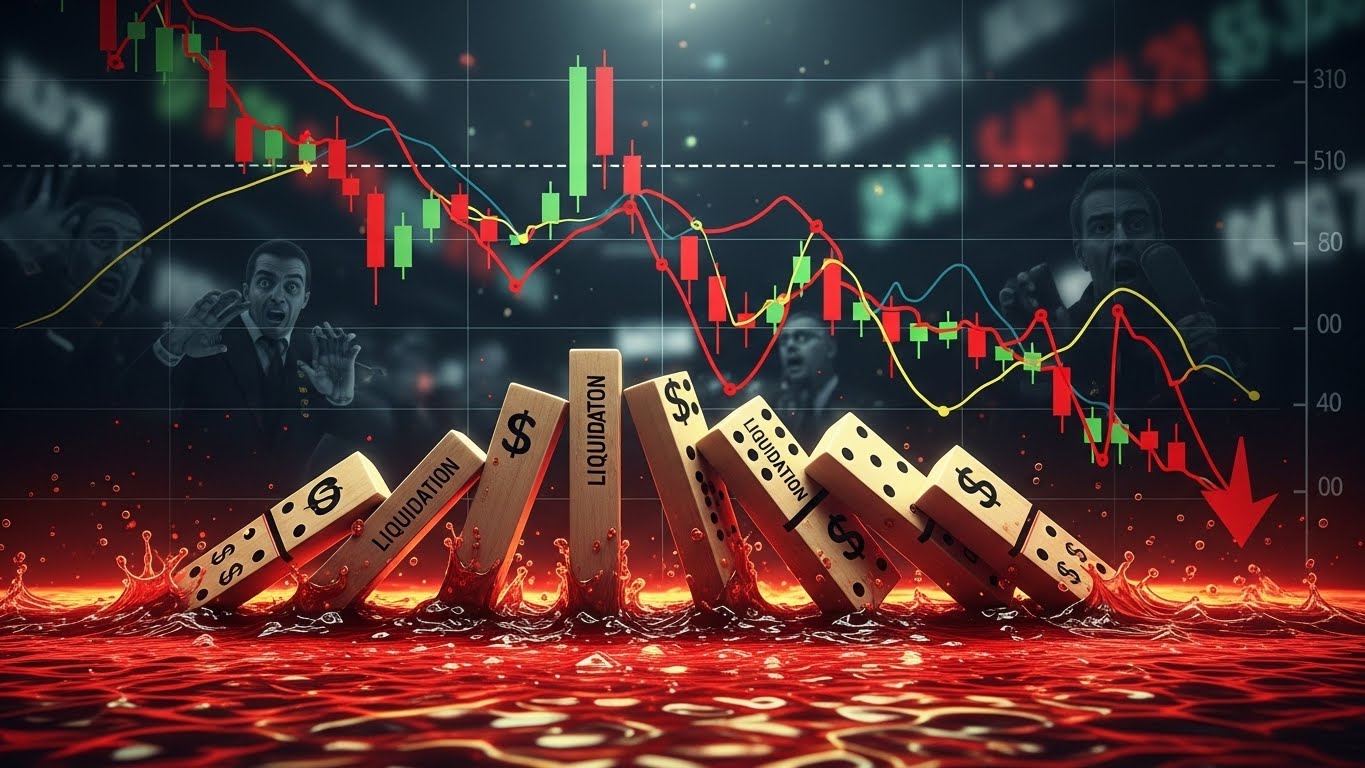
Solana’s popularity among active traders makes it particularly sensitive to these dynamics. Even with millions of investors, a leveraged unwind can overwhelm organic demand in the short term.
Thin Order Books During Volatility
During periods of uncertainty, liquidity can dry up quickly. Buyers step back, spreads widen, and relatively small sell orders can cause disproportionate price drops. This structural fragility contributes to concerns that Solana price faces crash risk despite strong headline adoption numbers.
On-Chain Data and Investor Behavior
On-chain metrics provide valuable insight into how investors are behaving beneath the surface. While new wallet creation is rising, other indicators may tell a more cautious story.
Distribution From Large Holders
Large holders, often referred to as whales, have a significant influence on price. If on-chain data shows these holders reducing exposure or transferring tokens to exchanges, it may indicate preparation for selling. This behavior can increase crash risk, regardless of how many new investors enter the market.
Short-Term Holding Patterns
An influx of new investors does not automatically mean long-term commitment. If on-chain data reveals that tokens are moving frequently between wallets or being sold shortly after purchase, it suggests speculative activity rather than accumulation. This pattern can weaken price support during downturns.
Broader Market Conditions Affecting Solana
Solana does not operate in isolation. Its price is heavily influenced by the broader cryptocurrency market and global financial conditions.
Bitcoin’s Influence on Altcoins
Bitcoin remains the dominant force in crypto markets. When Bitcoin shows weakness or enters a correction, altcoins like Solana often experience amplified declines. Even strong project-specific fundamentals may not protect against market-wide risk-off sentiment.
If Bitcoin faces selling pressure, Solana price faces crash risk regardless of its growing investor base.
Macroeconomic Uncertainty
Interest rates, inflation concerns, and global economic uncertainty affect risk appetite across all markets. Cryptocurrencies are still considered high-risk assets. During periods of macroeconomic stress, investors tend to reduce exposure, which can lead to sharp price declines in assets like Solana.
Solana’s Ecosystem Strengths and Long-Term Potential
Despite short-term risks, it is important to acknowledge Solana’s strengths. The network continues to attract developers, launch new applications, and process high transaction volumes at low cost.
Developer Activity and Network Usage
Solana’s high-performance blockchain supports a wide range of decentralized applications. Strong developer activity is a positive long-term signal, indicating that innovation continues regardless of market cycles.
Growing Adoption Beyond Speculation
Payments, gaming, and decentralized finance projects on Solana aim to create real-world utility. These efforts support the argument that Solana’s long-term value extends beyond speculative trading, even if short-term price risks remain elevated.
Psychological Factors Driving Crash Risk
Market psychology plays a central role in crypto price movements. When expectations become too optimistic, disappointment can trigger rapid reversals.
Unrealistic Expectations From New Investors
Many new investors may expect quick profits based on recent performance. When prices fail to meet these expectations, frustration and fear can lead to panic selling. This emotional response can intensify downside moves.
Social Media and Sentiment Shifts
Social platforms amplify both optimism and fear. Positive narratives attract new buyers, while negative narratives spread just as fast.
Once sentiment turns, even strong fundamentals may be ignored in favor of short-term risk avoidance.
Strong Adoption Prevent a Solana Price Crash
The presence of 8 million new investors raises an important question. Can adoption alone prevent a crash, or does it simply change the nature of market cycles?
Adoption provides a foundation for recovery, but it does not eliminate volatility. In the short term, markets are driven more by liquidity, leverage, and sentiment than by user growth. This reality explains why Solana price faces crash risk despite impressive adoption metrics.
Over the long term, however, sustained adoption can support higher valuations once speculative excesses are cleared.
Possible Scenarios for Solana’s Price Ahead
Several scenarios could unfold depending on how current risks are resolved. A healthy correction could reset leverage and attract long-term buyers at lower levels. Alternatively, a deeper crash could occur if broader market conditions deteriorate or if panic selling accelerates.
In a more optimistic scenario, consolidation could allow Solana to build a stronger base before resuming an upward trend. Each outcome depends on factors extending beyond investor count alone.
Conclusion
Solana price faces crash risk despite 8 million new investors because market dynamics extend far beyond adoption numbers. Technical indicators, leveraged trading, liquidity conditions, investor psychology, and broader macroeconomic forces all contribute to short-term price vulnerability. While the growing investor base highlights Solana’s relevance and long-term potential, it does not guarantee immediate price stability.
Understanding this balance is essential for anyone following Solana closely. Adoption strengthens the foundation, but volatility remains an inherent feature of crypto markets. Whether Solana experiences a sharp correction or manages to stabilize, its future will be shaped by how effectively the network converts growing interest into sustainable, real-world value.
FAQs
Q: Why does Solana price face crash risk even with 8 million new investors
Solana price faces crash risk because short-term price movements are driven by leverage, market sentiment, and liquidity rather than investor count alone. Many new investors may be speculative, increasing volatility instead of stability.
Q: Does a potential crash mean Solana’s network is failing
A potential price crash does not mean Solana’s network is failing. Network usage, developer activity, and adoption can remain strong even during price corrections, which are common in crypto markets.
Q: How does leverage increase crash risk for Solana
Leverage amplifies both gains and losses. When prices move against leveraged positions, forced liquidations can trigger cascading sell-offs, causing rapid and severe price declines.
Q: Can long-term investors benefit if Solana price crashes
Long-term investors may view a crash as an opportunity if they believe in Solana’s fundamentals. Lower prices can offer better entry points, provided investors understand the risks and maintain a long-term perspective.
Q: What factors could reduce Solana’s crash risk in the future
Reduced leverage, stronger long-term holding behavior, improved macroeconomic conditions, and continued real-world adoption could help lower crash risk and support more stable price action over time.