Housing Market Predictions for 2026 When Will Home Prices Drop the housing market has been one of the most debated economic topics of the last decade, and as 2026 approaches, homeowners, buyers, investors, and policymakers are all asking the same question when will home prices drop? After years of rapid appreciation, affordability challenges, rising mortgage rates, and shifting economic conditions, uncertainty is shaping the outlook for the real estate sector. Housing market predictions for 2026 are not just about numbers but about understanding how inflation, interest rates, employment trends, housing supply, and buyer psychology intersect to influence home values.
We takes a comprehensive look at what experts expect from the housing market in 2026, whether a price correction is likely, and what different groups should prepare for. By examining historical cycles and current data-driven trends, this guide aims to provide clarity in a market that often feels unpredictable.
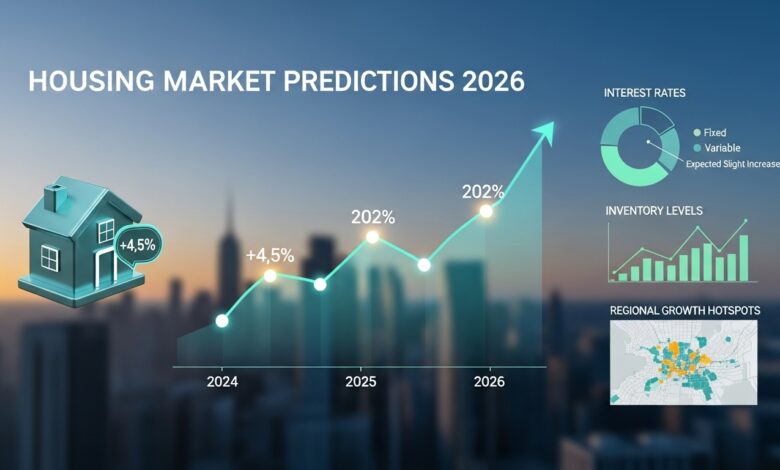
Housing Market Predictions for 2026
To understand housing market predictions for 2026, it is essential to first understand how housing cycles work. Real estate markets typically move through phases of expansion, peak, contraction, and recovery. The rapid price growth seen in recent years was fueled by low interest rates, limited housing inventory, strong demand, and demographic shifts such as millennials entering peak home-buying age. However, no expansion lasts forever, and by the mid-2020s, signs of cooling began to emerge. Housing market cycles, home price trends, and real estate corrections are natural outcomes of economic adjustments rather than sudden crashes in most cases.
By 2026, the market is expected to be in a more balanced phase compared to the overheated conditions of earlier years. This does not necessarily mean a dramatic collapse in prices, but rather a moderation where price growth slows, stagnates, or declines slightly in certain regions. The key takeaway is that the housing market rarely moves uniformly across all locations, making localized analysis especially important.
Economic Factors Shaping Housing Market Predictions for 2026
Economic conditions play a central role in determining when and how home prices may drop. Inflation trends, GDP growth, wage increases, and consumer confidence all influence housing demand. If inflation remains under control by 2026, central banks may stabilize or reduce interest rates, which could support housing demand. On the other hand, prolonged economic uncertainty or a recession could dampen buyer activity and put downward pressure on prices.
Another major factor is employment. Strong job markets generally support higher home prices, while rising unemployment can lead to increased housing supply as homeowners are forced to sell. Economic outlook, inflation impact on housing, and employment trends will therefore be critical in shaping housing market predictions for 2026. A stable economy may lead to flat prices, while economic stress could create pockets of decline.
Interest Rates and Mortgage Affordability in 2026
Mortgage rates have a direct and powerful effect on housing affordability. Higher interest rates increase monthly payments, reducing the purchasing power of buyers. Over the past few years, rate hikes significantly cooled demand, leading many potential buyers to delay purchases. Looking toward 2026, many analysts expect mortgage rates to stabilize rather than continue rising sharply.
If rates ease slightly, buyer confidence could return, preventing a major price drop. However, if rates remain elevated, affordability will continue to be strained, especially for first-time buyers. Mortgage rates, home loan affordability, and interest rate forecasts are therefore central to answering the question of when home prices will drop. In many scenarios, prices may not fall dramatically but could remain flat until incomes catch up.
Housing Supply and Inventory Trends Heading Into 2026
One of the most important drivers of home prices is supply. For years, housing markets have suffered from low inventory due to underbuilding and homeowners holding onto low-rate mortgages. By 2026, new construction is expected to increase moderately, especially in suburban and high-growth regions. This gradual increase in supply could help ease price pressures.
However, supply constraints are unlikely to disappear overnight. Zoning restrictions, labor shortages, and material costs continue to limit how quickly new homes can be built. Housing inventory, new home construction, and supply and demand balance will determine whether prices soften or simply stabilize. In markets where inventory rises faster than demand, modest price declines may occur.
Regional Differences in Housing Market Predictions for 2026
National averages often hide significant regional differences. Some cities experienced explosive growth and may be more vulnerable to price corrections, while others with steady demand and limited supply may remain resilient. Coastal markets, tech-driven cities, and areas with high living costs may see more pronounced slowdowns compared to affordable inland regions.
Migration patterns also matter. Remote work has reshaped housing demand, with many buyers moving away from expensive urban centers to suburban or secondary markets. Regional housing trends, local real estate markets, and urban versus suburban demand will continue to shape outcomes in 2026. As a result, the question of when home prices will drop depends heavily on location.
Buyer Behavior and Demographic Shifts in 2026
Demographics play a long-term role in housing demand. Millennials and Gen Z buyers will dominate the market in 2026, bringing different preferences and financial realities. Many younger buyers prioritize affordability, flexibility, and lifestyle over size and location. This shift could influence demand for smaller homes, condos, and rental properties.
At the same time, aging homeowners may downsize or sell, increasing supply in certain segments. Buyer demand trends, demographic shifts, and first-time homebuyers are essential considerations when analyzing housing market predictions for 2026. These factors suggest a market that adapts rather than collapses.
Will Home Prices Drop or Just Stabilize in 2026
The most common misconception is that a slowdown automatically means a crash. In reality, most forecasts suggest that 2026 will be characterized by stabilization rather than a sharp decline in home prices. Some overheated markets may experience modest drops, while others may see prices plateau.
A true nationwide price drop typically requires a major economic shock, such as widespread job losses or a financial crisis. While risks exist, most experts do not predict such extreme conditions for 2026. Home price forecasts, market stabilization, and real estate outlook indicate a period of adjustment rather than collapse.
Impact of Government Policies and Regulations on Housing in 2026
Government policies related to housing, taxation, and lending can significantly influence market outcomes. Incentives for first-time buyers, changes in property taxes, or adjustments to lending standards could either stimulate or cool demand. By 2026, policymakers may focus more on affordability and supply-side solutions.
Regulatory changes aimed at encouraging construction or easing zoning restrictions could increase housing availability over time. Housing policies, real estate regulations, and government intervention will therefore play a supporting role in shaping housing market predictions for 2026.
Sellers Should Expect in the 2026 Housing Market
For sellers, 2026 may require more realistic pricing strategies. The era of bidding wars and instant sales may be largely over in many markets. Homes that are priced competitively and well-maintained are likely to attract buyers, while overpriced listings may sit longer.
Sellers should be prepared for longer selling times and more negotiation. Home selling trends, market competitiveness, and pricing strategies will matter more than ever. While this shift may feel like a downturn, it also represents a healthier and more balanced market.
Buyers Should Prepare for in 2026
Buyers in 2026 may find more opportunities than in previous years, especially if inventory improves. While prices may not drop dramatically, slower growth and reduced competition could make the process less stressful. Buyers should focus on affordability, long-term value, and financial readiness.
Understanding local market conditions will be crucial. Home buying tips, affordability outlook, and real estate opportunities suggest that patience and planning will be key advantages for buyers navigating the 2026 market.
Long-Term Housing Market Outlook Beyond 2026
Looking beyond 2026, housing demand is expected to remain strong due to population growth and household formation. While short-term fluctuations are inevitable, real estate has historically proven to be a resilient long-term investment. The adjustments seen in 2026 may lay the groundwork for a more sustainable growth phase.
Factors such as climate considerations, technological innovation, and evolving lifestyle preferences will shape future housing trends. Long-term real estate outlook, housing demand drivers, and market resilience highlight the importance of viewing 2026 as part of a broader cycle rather than an endpoint.
Conclusion
Housing market predictions for 2026 point toward a period of transition rather than turmoil. While many are asking when home prices will drop, the more accurate question may be where and by how much. Economic stability, interest rate trends, housing supply, and demographic shifts all suggest that widespread price crashes are unlikely. Instead, buyers and sellers should expect a more balanced market with localized variations. Understanding these dynamics will help individuals make informed decisions and navigate the housing landscape with confidence as 2026 unfolds.
FAQs
Q: Will housing prices crash in 2026 or just slow down
Most forecasts suggest that housing prices in 2026 are more likely to slow down or stabilize rather than crash. A nationwide crash typically requires severe economic disruption, which most analysts do not currently expect. Localized price drops may occur, but these are likely to be moderate.
Q: When is the best time to buy a home based on 2026 predictions
The best time to buy in 2026 will depend on local market conditions and personal financial readiness. With potentially more inventory and less competition, buyers may find better negotiating opportunities compared to previous years.
Q: How will mortgage rates affect housing market predictions for 2026
Mortgage rates are a major factor in affordability. If rates stabilize or decline slightly by 2026, demand may improve, limiting price drops. If rates remain high, affordability challenges could continue to pressure prices in certain markets.
Q: Are some regions more likely to see home price drops in 2026
Yes, regions that experienced rapid price growth and are now facing declining demand or rising inventory may see more noticeable price corrections. More affordable and supply-constrained areas may remain relatively stable.
Q: Should investors be cautious about real estate in 2026
Investors should approach 2026 with careful analysis rather than fear. While rapid appreciation may slow, opportunities may arise in markets adjusting to new demand patterns. Long-term fundamentals remain important for investment decisions.