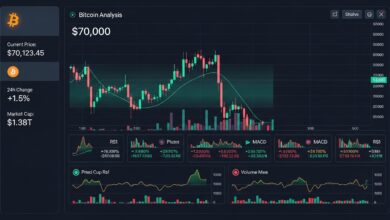
Bitcoin Price Surges Past $70k After Market Shakeout bitcoin’s price has once again captured global attention after surging back above the $70,000 mark following a brutal selloff that rattled investors and triggered widespread uncertainty across the crypto market. The sudden rebound highlights the resilience of the world’s largest digital asset and reinforces its reputation as a volatile yet powerful store of value. After weeks of downward pressure, market participants are now reassessing sentiment, liquidity flows, and the long-term outlook for Bitcoin price, cryptocurrency market trends, and digital asset investments.
The recent price action has not only revived bullish expectations but also sparked conversations about institutional demand, macroeconomic shifts, and the evolving role of blockchain technology in global finance. As Bitcoin climbs back above the psychological $70,000 level, investors are closely watching whether this move signals the start of a new rally or simply a short-term recovery within a broader consolidation phase.
Bitcoin Price Surges Past $70k
Before the rebound, Bitcoin experienced a sharp correction that wiped out billions in market value within days. The crypto market saw heavy liquidations across leveraged positions, with traders forced to exit positions as prices dropped rapidly. This cascade of selling pressure pushed the Bitcoin price well below key support levels, triggering panic among short-term holders.
The selloff was fueled by a combination of factors, including profit-taking after a prolonged rally, macroeconomic uncertainty, and rising bond yields that made risk assets less attractive. As Bitcoin slipped below critical technical levels, automated trading systems and stop-loss orders accelerated the downward momentum.
Market Sentiment Turns Bearish
During the correction, sentiment indicators shifted dramatically. Social media activity reflected fear, while the cryptocurrency market saw declining trading volumes and reduced buying pressure. Analysts warned that the downturn could extend further if Bitcoin failed to reclaim major support zones.
However, seasoned investors noted that such corrections are common in the Bitcoin bull cycle. Historically, Bitcoin has experienced multiple sharp pullbacks even during strong uptrends, often followed by powerful recoveries.
The Rebound: Bitcoin Roars Back Above $70,000
Strong Buying Pressure Returns
The turning point came when Bitcoin began to stabilize near key support levels. Buyers stepped in aggressively, absorbing selling pressure and pushing the BTC price higher. As confidence returned, the market witnessed a wave of fresh capital inflows, particularly from institutional participants and long-term holders.
Within a short period, Bitcoin broke through resistance levels and reclaimed the $70,000 threshold. This move reignited optimism across the digital asset market and led to renewed interest from both retail and institutional investors.
Technical Indicators Signal Strength
Technical analysis played a crucial role in confirming the rebound. Bitcoin’s price crossed important moving averages, signaling renewed bullish momentum. Key indicators such as the Relative Strength Index (RSI) and moving average convergence divergence (MACD) suggested that selling pressure was fading while buying interest was increasing.
The recovery also coincided with a rise in trading volume, indicating strong participation from market players. As Bitcoin held above $70,000, analysts began discussing the possibility of a sustained uptrend toward new all-time highs.
Institutional Demand and Market Structure
Growing Interest From Institutional Investors
One of the primary drivers behind Bitcoin’s resilience is the increasing presence of institutional investors. Large financial firms, asset managers, and hedge funds have steadily increased their exposure to Bitcoin investment products, viewing the asset as a hedge against inflation and currency debasement.
Institutional demand has contributed to deeper liquidity and a more mature cryptocurrency market structure. The presence of regulated investment vehicles has also made it easier for traditional investors to gain exposure to Bitcoin without directly managing private keys or digital wallets.
The Role of Bitcoin ETFs and Custodial Solutions
The introduction of Bitcoin exchange-traded funds and advanced custodial solutions has played a major role in boosting market confidence. These products have opened the door for retirement funds, corporate treasuries, and large asset managers to participate in the Bitcoin ecosystem.
As a result, Bitcoin’s price movements are increasingly influenced by institutional flows rather than purely retail speculation. This shift has helped stabilize the market during periods of volatility and contributed to the recent rebound.
Macroeconomic Factors Behind the Recovery
Interest Rates and Inflation Concerns
Bitcoin’s price is often influenced by broader macroeconomic trends. During the selloff, rising interest rates and strong economic data created uncertainty in risk markets. Investors shifted capital into safer assets, causing temporary outflows from cryptocurrency investments.
However, as expectations around monetary policy began to stabilize, risk appetite returned. Bitcoin, often described as digital gold, benefited from renewed demand as investors sought protection against inflation and currency devaluation.
Global Liquidity and Risk Appetite
The rebound above $70,000 also coincided with improved global liquidity conditions. When liquidity increases, investors tend to allocate more capital to high-growth assets such as Bitcoin and other cryptocurrencies.
This dynamic has been evident throughout Bitcoin’s history. Periods of loose monetary policy and strong liquidity conditions have often aligned with major bull runs, while tightening cycles have led to corrections and consolidation phases.
On-Chain Data and Investor Behavior
Long-Term Holders Accumulating
On-chain metrics reveal that long-term Bitcoin holders continued to accumulate during the selloff. These investors, often referred to as “strong hands,” tend to buy during periods of fear and hold through volatility.
The steady accumulation by long-term holders reduced the available supply on exchanges, creating conditions for a price rebound once buying pressure returned. This supply squeeze is a recurring theme in Bitcoin market cycles.
Exchange Reserves Declining
Another key indicator supporting the rebound is the decline in Bitcoin reserves on centralized exchanges. When investors withdraw Bitcoin from exchanges, it often signals long-term holding behavior rather than short-term trading.
Lower exchange reserves reduce selling pressure and can contribute to upward price movements. This trend has been observed during previous rallies and appears to be playing a role in the current recovery.
The Psychological Impact of the $70,000 Level
A Key Psychological Milestone
The $70,000 level represents a major psychological barrier for traders and investors. Round numbers often serve as important support and resistance levels in financial markets, and Bitcoin is no exception.
Reclaiming this level has boosted confidence across the crypto trading community. It signals strength and suggests that the market has absorbed the recent selloff without losing its long-term bullish structure.
Renewed Retail Interest
As Bitcoin crossed back above $70,000, retail interest began to rise again. Search trends, trading app downloads, and social media discussions all showed increased activity. This renewed attention often fuels additional buying pressure, creating a feedback loop that supports higher prices.
Altcoin Market Reaction
Spillover Effects Across the Crypto Market
Bitcoin’s recovery had a ripple effect across the broader cryptocurrency market. Many altcoins followed Bitcoin’s upward movement, posting double-digit percentage gains within days.
Historically, Bitcoin leads market recoveries, with altcoins following once confidence returns. This pattern reinforces Bitcoin’s role as the primary driver of overall market sentiment.
Rotation Into High-Risk Assets
As Bitcoin stabilized above $70,000, some investors began rotating capital into smaller digital assets with higher growth potential. This rotation often occurs during bullish phases when investors seek greater returns beyond Bitcoin.
However, analysts caution that altcoins typically carry higher risk and volatility compared to Bitcoin, making proper risk management essential.
Future Outlook for Bitcoin Price
Potential Path Toward New All-Time Highs
With Bitcoin back above $70,000, many analysts are speculating about the possibility of new all-time highs. Key resistance levels above the current price range will play a crucial role in determining the next phase of the Bitcoin bull run. If institutional inflows continue and macroeconomic conditions remain favorable, Bitcoin could enter another strong upward trend. However, the market is likely to experience periods of consolidation and volatility along the way.
Risks That Could Impact the Rally
Despite the optimistic outlook, several risks remain. Regulatory developments, macroeconomic shifts, and unexpected market events could influence the Bitcoin price in the coming months.
Traders are also watching derivatives markets for signs of excessive leverage, which can lead to sudden liquidations and price swings. Maintaining a balanced market structure will be essential for sustaining the current rally.
Conclusion
Bitcoin’s rebound above $70,000 after a brutal selloff demonstrates the asset’s resilience and the strength of underlying demand. The recovery was driven by a combination of institutional inflows, improving macroeconomic conditions, and strong accumulation by long-term holders. While volatility remains a defining feature of the cryptocurrency market, Bitcoin’s ability to recover quickly highlights its growing maturity and global relevance.
As the market moves forward, the $70,000 level may serve as a foundation for future gains. Whether Bitcoin continues its upward trajectory or enters a consolidation phase, the recent rebound reinforces its position as the leading digital asset and a key component of the modern financial landscape.
FAQs
Q: Why did Bitcoin drop before rising above $70,000 again?
Bitcoin experienced a sharp correction due to profit-taking, macroeconomic uncertainty, and heavy liquidations in leveraged positions. When prices fell below key technical levels, automated trading systems triggered additional selling. However, strong buying interest near support levels helped stabilize the market, leading to the eventual rebound above $70,000.
Q: What factors helped Bitcoin recover after the selloff?
The recovery was driven by renewed institutional demand, improved market sentiment, and favorable macroeconomic conditions. Long-term holders accumulated Bitcoin during the downturn, reducing available supply on exchanges. As buying pressure returned, Bitcoin regained momentum and crossed the $70,000 threshold.
Q: Is the move above $70,000 a sign of a new bull run?
While the rebound is a positive signal, it does not guarantee a sustained bull run. Analysts look at factors such as trading volume, institutional inflows, and macroeconomic trends to determine the market’s direction. If these factors remain supportive, Bitcoin could continue its upward trend, but periods of consolidation are still likely.
Q: How does institutional investment affect Bitcoin’s price?
Institutional investors bring large amounts of capital into the market, which increases liquidity and stabilizes price movements. Their participation also boosts confidence among retail investors. Products like Bitcoin exchange-traded funds and custodial services have made it easier for institutions to invest, contributing to Bitcoin’s resilience during corrections.
Q: What should investors watch after Bitcoin’s return above $70,000?
Investors should monitor key resistance levels, macroeconomic indicators, and institutional inflows. On-chain data, such as exchange reserves and long-term holder activity, can also provide insights into market trends. These factors will help determine whether Bitcoin continues its rally or enters a consolidation phase.