
Bitcoin Liquidations Hit $704M as $70K Support Faces Pressure the cryptocurrency market has once again entered a period of intense volatility, with Bitcoin and Ethereum leading the headlines after liquidations surged to a staggering $704 million within just 24 hours. Such sharp liquidation events are often a sign of excessive leverage in the market, and when they occur in clusters, they can accelerate price movements in both directions. In this case, the pressure appears to be mounting on the downside, as traders closely watch the critical $70,000 support level for Bitcoin.
Adding to the tension is data from Poly market, a decentralized prediction platform where traders wager on future outcomes. Recent activity suggests that a growing number of participants believe Bitcoin could break below the $70,000 mark, potentially triggering a deeper correction. The combination of heavy liquidations, fragile support levels, and cautious market sentiment has created an environment filled with uncertainty.
We will explore what caused the $704 million in liquidations, how Bitcoin and Ethereum are reacting, why the $70,000 level matters, and what the crypto market outlook may look like in the coming weeks.
Bitcoin Liquidations Hit $704M
In the crypto derivatives market, traders often use leverage to amplify their positions. Leverage allows investors to control larger positions with smaller amounts of capital, but it also increases risk. When the market moves against a leveraged position, exchanges automatically close that position to prevent further losses. This forced closure is known as a liquidation event.
The recent $704 million in liquidations reflects a large number of leveraged positions being wiped out in a short time frame. Most of these were long positions, meaning traders were betting on higher prices. As the market dropped, these positions were closed, creating additional selling pressure.
This cascading effect is common in the cryptocurrency market, where price swings can be sharp and rapid. Once liquidations begin, they can trigger a chain reaction, pushing prices even lower.
Why Liquidations Matter for Bitcoin and Ethereum
Liquidations are not just numbers on a screen; they can significantly influence short-term price action. When large amounts of positions are liquidated, the market experiences sudden volatility. This can cause sharp price drops or spikes, depending on the direction of the forced trades.
In the recent event, both Bitcoin price and Ethereum price saw increased downward pressure. The scale of the liquidations indicates that the market may have been overly optimistic, with too many traders using high leverage in anticipation of further gains. Such situations often lead to short-term corrections, as the market resets and excessive leverage is flushed out.
Bitcoin’s $70,000 Level: A Crucial Support Zone
Why $70,000 Is Psychologically Important
Round numbers often act as psychological support levels in financial markets. For Bitcoin, the $70,000 mark has become a critical threshold. It represents not only a technical support level but also a psychological line that separates bullish confidence from bearish uncertainty.
When prices hover near such levels, traders tend to become more cautious. A break below $70,000 could signal a shift in market sentiment, potentially leading to further selling pressure.
Technical Significance of the $70K Support
From a technical analysis perspective, the $70,000 zone aligns with previous consolidation areas and moving average levels. This makes it a key region where buyers are expected to step in.
If Bitcoin holds above this level, it could stabilize and attempt a recovery. However, a decisive break below $70,000 might open the door to lower support zones, possibly around $65,000 or even $60,000. This is why many analysts are closely watching the Bitcoin support level in the current market environment.
Poly market Traders Turn Cautious
What Poly market Data Reveals
Poly market is a decentralized prediction platform where users trade on the likelihood of specific events. In the context of Bitcoin price predictions, Poly market offers insight into real-time market sentiment.
Recent data shows a growing probability assigned to the scenario where Bitcoin drops below $70,000. This shift suggests that traders are becoming more cautious, likely influenced by the surge in liquidations and broader market volatility.
Why Prediction Markets Matter
Prediction markets like Poly market are often considered sentiment indicators. Unlike traditional polls or surveys, these markets involve real money, meaning participants have financial incentives to make accurate predictions.
When traders collectively lean toward a bearish outcome, it can reflect genuine concerns about the crypto market trend.
However, prediction markets are not always accurate. They represent probabilities, not certainties. Market conditions can change rapidly, especially in the Bitcoin and Ethereum market, where news, macroeconomic data, or institutional activity can shift sentiment overnight.
Ethereum’s Role in the Liquidation Wave
How Ethereum Was Affected
While Bitcoin often dominates headlines, Ethereum also experienced significant liquidations during the same 24-hour period. The Ethereum price dropped alongside Bitcoin, contributing to the overall $704 million liquidation total. Because Ethereum is widely used in DeFi trading, smart contracts, and crypto derivatives, its price movements can have a ripple effect across the entire ecosystem.
Correlation Between Bitcoin and Ethereum
Historically, Bitcoin and Ethereum share a strong price correlation. When Bitcoin experiences sharp movements, Ethereum usually follows. This relationship was evident during the recent liquidation event. As Bitcoin approached the $70,000 level, Ethereum also faced selling pressure, triggering additional liquidations. This synchronized movement amplified the overall impact on the market.
The Role of Leverage in Crypto Volatility
How High Leverage Increases Risk
The crypto futures market allows traders to use leverage levels that are much higher than those in traditional financial markets. Some exchanges offer leverage up to 100x, which can significantly amplify both gains and losses.
When too many traders use high leverage, the market becomes fragile. Even small price movements can trigger large liquidation cascades. The recent $704 million liquidation event is a clear example of how excessive leverage can lead to sudden market disruptions.
The Cycle of Liquidation Cascades
Liquidation cascades occur when one wave of forced closures triggers another. For example, if the Bitcoin price drops slightly, it may liquidate some long positions. This selling pressure pushes the price lower, causing more liquidations, and the cycle continues. This is why liquidation data is closely watched by traders. It can provide clues about potential volatility and market direction.
Market Sentiment and Short-Term Outlook
Bearish Signals Emerging
The combination of heavy liquidations, cautious prediction market sentiment, and fragile support levels has introduced a more bearish tone to the cryptocurrency market. Traders are now focusing on whether Bitcoin can hold the $70,000 level. If it does, the market may stabilize. If not, further downside could follow.
Potential Bullish Scenarios
Despite the recent volatility, the broader Bitcoin market trend remains strong compared to previous cycles. Institutional demand, spot ETFs, and long-term adoption continue to support the market. If Bitcoin successfully defends the $70,000 support, it could regain momentum and attempt another rally toward higher resistance levels.
Institutional Influence on Bitcoin’s Price
The Role of ETFs and Large Investors
Institutional participation has become a major factor in the Bitcoin price outlook. Spot Bitcoin ETFs have attracted significant capital, providing steady demand for the asset.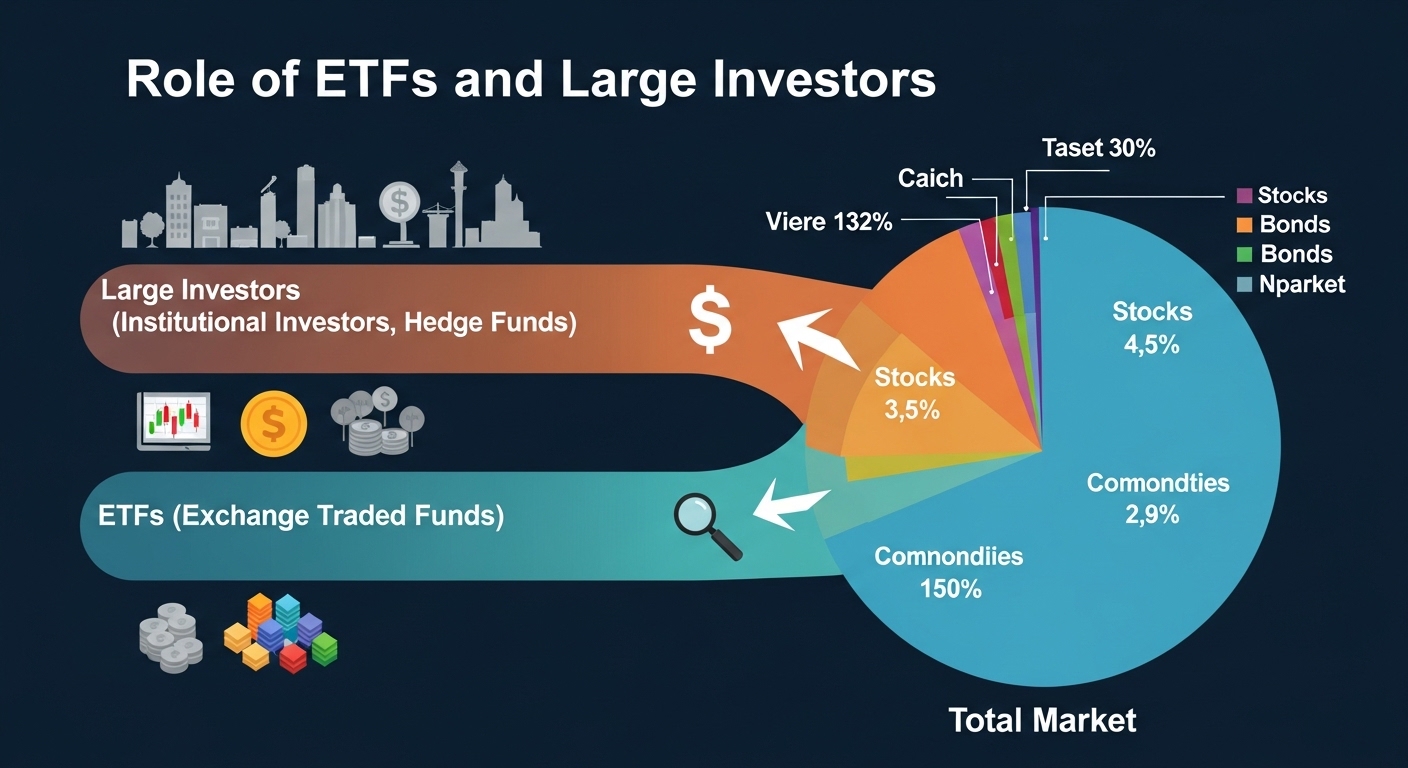
However, institutional flows can also contribute to volatility. Large inflows can drive prices up, while outflows can create downward pressure.
How Institutions Impact Liquidations
When institutional activity causes sudden price movements, it can trigger liquidation cascades in the crypto derivatives market. This dynamic makes institutional behavior a key factor in short-term price action.
What Traders Are Watching Next
Key Support and Resistance Levels
For Bitcoin, the $70,000 level remains the most important support in the short term. Below that, the next major zones are around $65,000 and $60,000. On the upside, resistance levels near $75,000 and $80,000 will be critical if the market attempts a recovery.
Indicators to Monitor
Traders are closely watching open interest, funding rates, and liquidation data. These indicators can provide insights into market positioning and potential volatility. A decline in leverage and stabilization of funding rates could signal a healthier market environment.
Conclusion
The recent $704 million in liquidations across Bitcoin and Ethereum highlights the risks of excessive leverage in the cryptocurrency market. As prices approached key support levels, a wave of forced closures intensified selling pressure and raised concerns about a potential break below $70,000. Data from Poly market suggests that traders are becoming more cautious, with a growing probability assigned to a drop below this crucial level. While prediction markets are not always accurate, they provide valuable insight into current sentiment.
The coming days will be critical for Bitcoin’s price action. If the $70,000 support holds, the market could stabilize and resume its upward trend. If it breaks, further downside may follow as liquidations continue to ripple through the market. Ultimately, the situation serves as a reminder of the volatile nature of the crypto market and the importance of risk management, especially in leveraged trading environments.
FAQs
Q: Why did Bitcoin and Ethereum liquidations reach $704 million in 24 hours?
The $704 million in liquidations occurred because many traders were using high leverage in the crypto derivatives market. When prices moved against their positions, exchanges automatically closed those trades to prevent further losses. This created a cascade effect, where each liquidation pushed prices lower, triggering even more liquidations. The combination of excessive leverage and sudden price drops led to the large liquidation total.
Q: Why is the $70,000 level so important for Bitcoin?
The $70,000 level is both a psychological and technical support zone for Bitcoin. Round numbers often act as key levels where traders place buy or sell orders. Additionally, this price area aligns with previous consolidation zones and technical indicators. If Bitcoin stays above $70,000, it suggests that buyers are still in control. If it falls below that level, it could signal a shift toward a more bearish market.
Q: What does Poly market predict about Bitcoin’s price?
Poly market data indicates that a growing number of traders believe Bitcoin could drop below $70,000. This does not guarantee that the price will fall, but it reflects current market sentiment. Prediction markets use real money, so the probabilities shown often represent how confident traders are about certain outcomes.
Q: How do liquidations affect the overall crypto market?
Liquidations can significantly increase volatility in the crypto market. When large amounts of positions are forcibly closed, it creates sudden buying or selling pressure. This can cause sharp price movements and trigger additional liquidations, leading to a chain reaction. Such events often result in short-term corrections or spikes in price.
Q: Could Bitcoin recover after a large liquidation event?
Yes, Bitcoin has historically recovered after major liquidation events. These events often remove excessive leverage from the market, creating a healthier trading environment. If strong support levels hold and buying interest returns, Bitcoin can stabilize and resume its upward trend. However, the outcome depends on market sentiment, macroeconomic factors, and investor behavior.