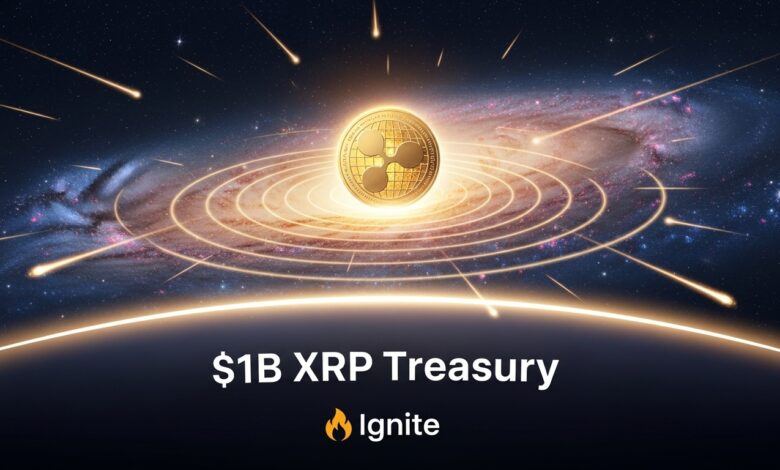
Ripple’s $1B XRP Treasury Could Ignite a Strong $5 Rally the cryptocurrency market has entered a new phase where institutional adoption, regulatory clarity, and technological innovation are shaping the direction of digital assets. Among the major players in this evolving landscape, Ripple has consistently positioned itself as a company focused on real-world utility, cross-border payments, and enterprise blockchain solutions. Now, with the announcement of a $1 billion treasury platform tied to XRP, Ripple has sparked fresh discussions about the token’s long-term trajectory and the possibility of a price rally toward the much-talked-about $5 level.
This development is not just another headline in the fast-moving crypto space. Instead, it signals a deeper strategic move that could strengthen XRP’s role within the broader financial ecosystem. The treasury platform is expected to provide institutional-grade infrastructure, improve liquidity conditions, and support corporate adoption of XRP as a treasury asset. As a result, investors and analysts are beginning to examine how this initiative could reshape market dynamics and potentially unlock new growth phases for the token.
In recent years, Ripple has worked to build credibility among banks, payment providers, and financial institutions. With this new treasury platform, the company appears to be targeting a different but equally important segment: corporate treasuries and large-scale capital allocators. This shift suggests that Ripple is aiming to position XRP not only as a transaction token but also as a strategic financial asset.
Ripple’s $1B XRP Treasury Could Ignite
Ripple’s treasury platform represents a significant step toward integrating digital asset treasury management into traditional corporate finance practices. The $1 billion initiative is designed to provide a structured environment where institutions can hold, manage, and deploy XRP within their treasury strategies.
Unlike traditional treasury systems that rely heavily on fiat currencies, this platform introduces the concept of crypto-based treasury reserves. It allows companies to allocate a portion of their balance sheets into XRP, potentially benefiting from faster settlement, global liquidity, and reduced transaction costs.
From a technical perspective, the platform is expected to leverage Ripple’s existing infrastructure, including the XRP Ledger, which is known for its speed, scalability, and low transaction fees. By building on this foundation, Ripple aims to deliver a solution that meets the compliance, security, and reporting standards required by large institutions.
The Purpose Behind the Treasury Initiative
The core idea behind Ripple’s treasury platform is to create a bridge between traditional corporate finance and the emerging world of digital assets. Many companies have expressed interest in holding cryptocurrencies, but they often face challenges related to custody, risk management, and regulatory uncertainty.
Ripple’s platform is designed to address these concerns by offering a secure and compliant environment for institutional crypto adoption. It provides tools for liquidity management, asset allocation, and transaction processing, all tailored to the needs of corporate treasurers.
By committing $1 billion to the initiative, Ripple is signaling strong confidence in XRP’s long-term value proposition. This level of financial backing also serves as a reassurance to institutions that the platform has the resources and support necessary for sustained growth.
How the Treasury Platform Could Impact XRP’s Market Dynamics
The launch of a $1 billion treasury platform could have several implications for XRP’s price and overall market position. One of the most immediate effects may be increased demand from institutional investors and corporate treasuries.
As more companies allocate funds into XRP, the circulating supply available on exchanges could decrease. This reduction in available tokens, combined with rising demand, may create upward pressure on prices. Such dynamics have been observed in other digital assets when institutional participation increased.
Liquidity Expansion and Price Stability
Another important factor is liquidity. The treasury platform is expected to improve XRP liquidity solutions by providing a structured marketplace for large transactions. When institutions can buy and sell XRP without causing major price fluctuations, the asset becomes more attractive as a treasury reserve.
Improved liquidity often leads to reduced volatility, which is a key requirement for corporate adoption. Companies typically avoid highly volatile assets because they can introduce financial instability. By enhancing liquidity, Ripple may be making XRP more suitable for long-term holdings.
Institutional Confidence and Market Sentiment
Institutional involvement often serves as a strong signal to the broader market. When large organizations begin to adopt a digital asset, retail investors and smaller funds tend to follow. This creates a positive feedback loop that can drive sustained price growth.
Ripple’s treasury platform could therefore act as a catalyst for XRP institutional demand, strengthening market sentiment and reinforcing the token’s position among the top cryptocurrencies.
The Strategic Vision Behind XRP as a Treasury Asset
Ripple has long emphasized the utility of XRP in cross-border payments. However, the treasury platform indicates a broader vision where XRP becomes a multi-purpose financial asset.
Beyond Payments: A Store of Value Narrative
While XRP is primarily known for facilitating fast and inexpensive transactions, the treasury initiative introduces a new narrative: XRP as a potential store of value for corporate treasuries.
This shift aligns with the broader trend of companies exploring digital asset diversification. Just as some corporations have added Bitcoin or Ethereum to their balance sheets, XRP could emerge as an alternative option, particularly for organizations focused on global payments.
Integration With Ripple’s Existing Ecosystem
Ripple’s ecosystem already includes products such as cross-border payment solutions and liquidity services. The treasury platform can integrate seamlessly with these offerings, creating a comprehensive financial infrastructure.
For example, a company holding XRP in its treasury could use the same asset to facilitate international payments. This dual functionality increases efficiency and reduces the need for multiple financial instruments.
XRP Realistically Reach the $5 Milestone
The question on many investors’ minds is whether XRP can realistically achieve the $5 price target. While price predictions are inherently uncertain, several factors could influence this outcome.
Supply and Demand Mechanics
If the treasury platform successfully attracts institutional capital, demand for XRP could rise significantly. At the same time, tokens held in corporate treasuries would likely remain off the open market, reducing supply.
This combination of increased demand and reduced circulating supply could create favorable conditions for price appreciation.
Market Cycles and Macro Trends
Cryptocurrency prices are also influenced by broader market cycles. Bullish trends, increased adoption, and favorable regulatory developments can all contribute to price growth.
If Ripple’s treasury platform launches during a period of positive market sentiment, the impact on XRP’s price could be amplified.
Regulatory Clarity and Institutional Adoption
Regulatory clarity remains a crucial factor for institutional participation. As legal frameworks around digital assets become more defined, companies may feel more comfortable allocating funds to cryptocurrencies.
Ripple has been actively working toward regulatory compliance, and the treasury platform is likely designed with these considerations in mind. Greater clarity could accelerate enterprise blockchain adoption, further supporting XRP’s growth.
Potential Challenges and Risks
While the treasury platform presents exciting opportunities, it is important to consider potential risks and challenges.
Market Volatility
Cryptocurrencies are known for their price volatility. Even with improved liquidity, XRP may still experience significant price swings. This could deter some corporate treasuries from adopting the asset.
Competition From Other Digital Assets
XRP is not the only cryptocurrency targeting institutional adoption. Bitcoin, Ethereum, and several stablecoins are already widely used in corporate and financial contexts.
Ripple’s success will depend on its ability to differentiate XRP and demonstrate clear advantages over competing assets.
Regulatory Uncertainty in Some Regions
Although progress has been made, regulatory uncertainty still exists in many parts of the world. Changes in laws or policies could impact the adoption of XRP and the success of the treasury platform.
Long-Term Implications for Ripple and the Crypto Industry
The introduction of a $1 billion treasury platform could have implications that extend beyond XRP itself. It may signal a broader shift in how corporations approach digital assets.
A New Era of Corporate Crypto Treasuries
If the platform proves successful, it could inspire other companies to develop similar solutions. This would accelerate the integration of cryptocurrencies into mainstream finance.
The concept of corporate crypto treasuries could become a standard practice, much like foreign currency reserves are today.
Strengthening Ripple’s Position in the Market
For Ripple, the treasury platform reinforces its image as a company focused on practical, enterprise-level solutions. This could strengthen partnerships with banks, payment providers, and corporations. By expanding XRP’s use cases, Ripple may also increase the token’s long-term value and relevance.
Conclusion
Ripple’s launch of a $1 billion treasury platform represents a significant milestone in the evolution of XRP and the broader cryptocurrency ecosystem. By targeting corporate treasuries and institutional investors, Ripple is opening a new pathway for digital asset adoption. The platform has the potential to increase demand, improve liquidity, and strengthen market confidence in XRP. While challenges such as volatility and regulatory uncertainty remain, the initiative could play a key role in shaping XRP’s future.
Whether XRP ultimately reaches the $5 milestone will depend on a combination of factors, including institutional adoption, market conditions, and regulatory developments. However, the treasury platform provides a compelling narrative that could support long-term growth and position XRP as a strategic asset in the digital economy.
FAQs
Q: What is Ripple’s $1 billion treasury platform and why is it important for XRP?
Ripple’s $1 billion treasury platform is an institutional-grade system designed to allow corporations and financial institutions to hold, manage, and utilize XRP as part of their treasury strategies. It is important because it introduces a structured and compliant environment for large-scale adoption, potentially increasing demand and strengthening XRP’s position in the global financial ecosystem.
Q: How could the treasury platform influence XRP’s price in the coming years?
The platform could influence XRP’s price by attracting institutional capital and reducing the circulating supply of tokens on exchanges. As more corporations allocate funds into XRP treasuries, demand may increase while available supply decreases, creating upward price pressure. Combined with positive market conditions, this dynamic could support a long-term price rise.
Q: Is XRP becoming a store of value for corporate treasuries?
While XRP has traditionally been used for cross-border payments, the treasury platform introduces the possibility of using it as a strategic treasury asset. Companies may view XRP as a way to diversify their balance sheets, benefit from global liquidity, and integrate digital assets into their financial operations.
Q: What challenges could prevent XRP from reaching the $5 target?
Several challenges could impact XRP’s price growth, including market volatility, competition from other cryptocurrencies, and regulatory uncertainty in certain regions. Institutional adoption also depends on risk tolerance and financial policies, which may vary across organizations.
Q: How does Ripple’s treasury initiative fit into the broader crypto industry trend?
Ripple’s treasury platform aligns with the growing trend of institutional and corporate adoption of digital assets. As more companies explore cryptocurrencies for payments, investments, and treasury management, platforms like Ripple’s could play a crucial role in bridging traditional finance with the digital asset economy.