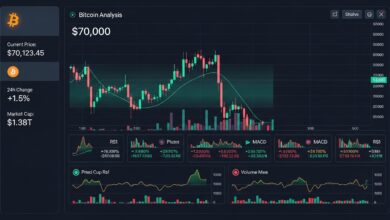
Bitcoin Price Analysis Reclaiming $70K Resistance has once again become the center of global financial discussions as the world’s largest cryptocurrency edges closer to a decisive technical zone. The $70,000 mark is not just another round number on the chart. It represents a powerful psychological and structural resistance that has repeatedly influenced crypto market trends, investor sentiment, and broader digital asset flows. When Bitcoin approaches this level, traders pay attention. When it reclaims it convincingly, the entire market reacts.
The current market cycle has been marked by renewed institutional participation, increased spot demand, and expanding adoption narratives. Against this backdrop, reclaiming the $70K resistance is shaping up to be a defining moment. The outcome could determine whether Bitcoin enters a sustained bullish expansion or retreats into consolidation. Understanding this phase requires a close look at technical analysis, on-chain activity, macroeconomic conditions, and trader psychology.
In this in-depth Bitcoin price analysis, we will explore why $70K matters, what indicators suggest, how market participants are positioned, and what scenarios could unfold next. Whether you are a long-term investor or an active trader, this level deserves your full attention.
Bitcoin Price Analysis Reclaiming $70K Resistance
The $70K resistance level is a powerful combination of technical structure and psychological influence. In prior cycles, Bitcoin often struggled around large round numbers before breaking through with momentum. These price zones attract heavy sell orders because many holders choose to take profits at psychologically satisfying levels.
From a technical perspective, the $70K region aligns with previous rejection points and supply clusters visible on higher time frames. When price approaches such zones, liquidity increases and volatility expands. This is why Bitcoin price analysis repeatedly highlights this level as a battleground between bulls and bears.
If Bitcoin successfully reclaims $70K and holds above it on strong volume, it signals that buyers have absorbed selling pressure. That kind of move can flip resistance into support, creating a launchpad for further upside. However, repeated rejections could reinforce bearish sentiment and lead to corrective pullbacks.
Technical Analysis of Bitcoin Near $70K
Chart Structure and Market Cycles
In the current cycle, Bitcoin has formed higher highs and higher lows on the weekly timeframe. This structure is typically associated with a bullish trend. The approach toward $70K fits within a broader expansion pattern that began after a significant consolidation phase.
A proper Bitcoin price analysis must consider multi-timeframe alignment. On the daily chart, price action shows compression below resistance. Compression often precedes expansion. If momentum builds while volatility narrows, a breakout becomes more likely. Market cycles also provide context.
Historically, Bitcoin tends to accelerate after breaking major resistance zones. When prior all-time highs are reclaimed, media coverage increases, retail participation grows, and liquidity surges. This creates a feedback loop that amplifies price movement.
Moving Averages and Momentum Indicators
Moving averages remain critical in evaluating trend strength. Bitcoin trading above the 50-day and 200-day moving averages is generally considered bullish. A golden cross structure, where shorter-term averages cross above longer-term ones, reinforces upward momentum.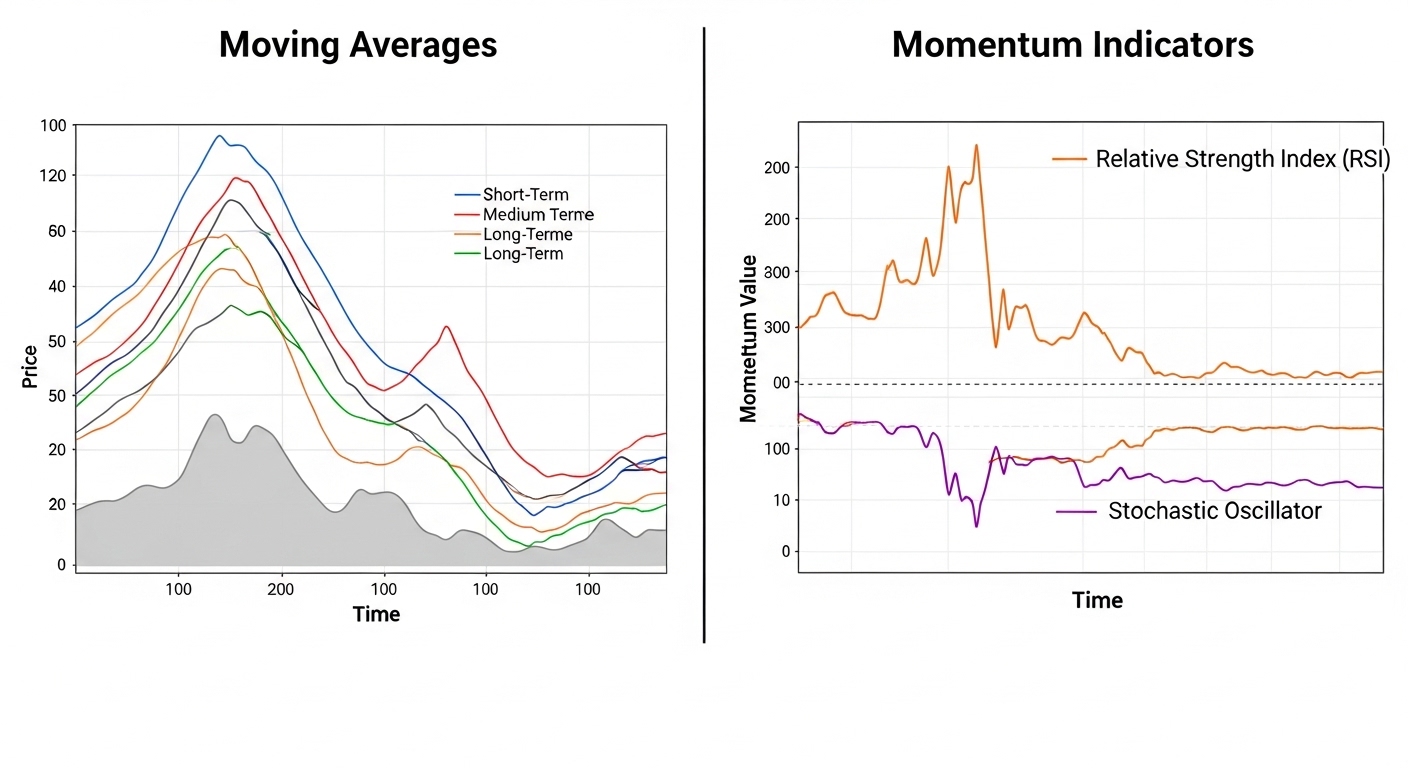
Momentum indicators such as the Relative Strength Index show whether the asset is overbought or oversold. In many bullish phases, Bitcoin remains in overbought territory longer than expected. That is why context matters in Bitcoin price analysis. Overbought does not automatically mean a reversal; it can simply indicate strong demand. Volume also plays a decisive role. A breakout above $70K without strong volume may be a false move. Conversely, high-volume expansion above resistance strengthens the probability of sustained upside.
On-Chain Metrics Supporting the Move
On-chain data provides insight into real network activity. Unlike traditional markets, Bitcoin allows analysts to observe wallet behavior, exchange flows, and holder trends directly on the blockchain.
Long-term holders appear to be accumulating rather than distributing. When coins remain dormant for extended periods, it signals confidence among seasoned investors. Additionally, exchange balances have been trending downward in recent months. Lower exchange reserves often indicate reduced immediate selling pressure. Another crucial metric in Bitcoin price analysis is the realized price of different cohorts. When short-term holders are in profit, volatility tends to increase. If the majority of holders remain comfortably in profit even near $70K, it creates a stable base for further growth.
Institutional Participation and Market Liquidity
Institutional involvement has transformed the landscape of the cryptocurrency market. The introduction of regulated investment vehicles has provided new capital inflows. Large asset managers and hedge funds now treat Bitcoin as part of diversified portfolios.
This institutional demand impacts Bitcoin price analysis significantly. When professional capital enters the market, liquidity deepens and volatility patterns shift. Institutional players often accumulate during consolidation phases and push price through key resistance levels when conditions align.
Liquidity is critical near $70K. If bid-side liquidity outweighs sell walls, the path of least resistance becomes upward. Market depth charts often show large clusters of limit orders around psychological levels. Monitoring these dynamics can provide clues about breakout probability.
Macro Factors Influencing Bitcoin Price
Inflation, Interest Rates, and Monetary Policy
Macroeconomic forces continue to shape digital asset performance. Bitcoin is frequently described as a hedge against inflation. While correlations fluctuate, shifts in interest rates and monetary policy influence risk appetite.
When central banks adopt accommodative policies, liquidity flows into risk assets. In such environments, Bitcoin price analysis tends to skew bullish. Conversely, tightening cycles can dampen speculative enthusiasm. The broader narrative around digital gold also plays a role. During periods of economic uncertainty, investors seek alternative stores of value. If global markets show signs of stress, Bitcoin could benefit from safe-haven flows, reinforcing its push above $70K.
Equity Market Correlation
Bitcoin’s correlation with major stock indices has varied over time. In risk-on phases, Bitcoin often moves in tandem with technology stocks. Strong equity performance can create tailwinds for crypto markets.
However, Bitcoin’s unique supply structure differentiates it from equities. The fixed supply and halving cycles create scarcity dynamics not present in traditional assets. When combined with positive equity sentiment, these factors can amplify upward moves during breakout attempts.
Market Sentiment and Trader Psychology
Sentiment is a powerful driver of price action. The fear and greed index frequently oscillates between extremes during major rallies and corrections. When Bitcoin approaches $70K, social media engagement surges, trading volume spikes, and derivatives activity increases.
Funding rates in perpetual futures markets reveal trader positioning. Excessively high funding suggests overcrowded long positions, which can trigger short-term pullbacks. Balanced funding, on the other hand, indicates healthier market conditions. Bitcoin price analysis must account for emotional cycles. Retail traders often enter aggressively after breakouts, while experienced investors accumulate during consolidation. Understanding these patterns helps anticipate volatility around critical levels.
Potential Bullish Scenario Above $70K
If Bitcoin decisively breaks and holds above $70K, the next phase could involve price discovery. In price discovery, there are fewer historical resistance levels to constrain upward movement. This often leads to accelerated gains.
A successful breakout would likely attract fresh capital from sidelined investors. Media narratives would shift toward new all-time high targets, fueling optimism. Technical traders might identify continuation patterns such as bull flags or ascending triangles, reinforcing the bullish case.
In this scenario, Bitcoin price analysis would focus on identifying new support zones. The former resistance at $70K would ideally transform into a strong support base. Sustained closes above this level would validate the breakout.
Potential Bearish Scenario and Risks
Markets rarely move in straight lines. A rejection at $70K could trigger short-term corrections. If selling pressure intensifies, Bitcoin may revisit lower support levels, potentially in the mid-$60K or high-$50K range.
Such pullbacks are not necessarily bearish in a broader context. In strong uptrends, corrections often serve as healthy resets. However, a failure to maintain higher lows could weaken the bullish structure. Bitcoin price analysis must remain flexible. Overconfidence in one direction can be costly. Monitoring volume, momentum divergence, and macro shifts helps manage downside risk.
The Role of Halving Cycles
Bitcoin’s halving mechanism reduces block rewards approximately every four years. Historically, post-halving periods have been associated with significant price expansions. Reduced supply issuance combined with sustained demand can create upward pressure.
If the current market phase aligns with historical post-halving behavior, reclaiming $70K could mark the beginning of a larger cycle peak phase. However, each cycle has unique characteristics. Increased institutional presence and regulatory clarity make this cycle structurally different from previous ones.
Long-Term Outlook for Bitcoin
Long-term investors often focus less on short-term resistance levels and more on adoption metrics and network growth. Increasing integration of blockchain technology, expanding global awareness, and evolving regulatory frameworks contribute to Bitcoin’s maturation.
In long-term Bitcoin price analysis, volatility is viewed as a feature rather than a flaw. Drawdowns are common, but the overall trajectory has historically trended upward over multi-year horizons.
If Bitcoin continues to gain recognition as a macro asset, the $70K level may eventually appear modest in hindsight. However, in the current context, it remains a pivotal threshold that could determine medium-term direction.
Conclusion
Bitcoin stands at a critical crossroads. The $70K resistance level represents more than a numerical milestone. It embodies psychological tension, technical structure, and macroeconomic influence. A decisive reclaim could open the door to sustained upside and renewed bullish momentum. A rejection, on the other hand, could trigger consolidation or corrective phases.
Comprehensive Bitcoin price analysis suggests that multiple factors align in favor of heightened volatility around this zone. Technical indicators, on-chain metrics, institutional flows, and macro conditions all converge at this key level. Traders and investors alike should watch price behavior closely.
Ultimately, whether Bitcoin breaks through or retreats, the $70K mark will remain a defining chapter in this market cycle.
FAQs
Q: Why is the $70K level considered such a major resistance in Bitcoin price analysis?
The $70K level is significant because it combines technical history and psychological impact. Previous price reactions around this area created a visible supply zone where sellers were active. In addition, round numbers tend to attract profit-taking and limit orders. When many participants focus on the same level, it becomes self-reinforcing. In Bitcoin price analysis, reclaiming such a level indicates strong buyer conviction and often signals the transition from consolidation to expansion.
Q: What indicators should traders watch when Bitcoin approaches $70K?
Traders typically monitor volume, momentum indicators like the Relative Strength Index, and moving averages. Strong volume during a breakout suggests genuine demand rather than a temporary spike. Balanced funding rates in derivatives markets also signal healthier positioning. On-chain metrics such as exchange reserves and long-term holder activity can provide additional confirmation. Combining these indicators strengthens decision-making around critical resistance zones.
Q: Could Bitcoin fall significantly if it fails to break $70K?
Yes, a rejection at $70K could lead to short-term corrections, especially if leveraged positions unwind rapidly. However, corrections do not automatically invalidate the broader bullish structure. As long as Bitcoin maintains higher lows on larger timeframes, pullbacks may represent consolidation rather than reversal. Bitcoin price analysis emphasizes structure over isolated price moves.
Q: How do macroeconomic conditions affect Bitcoin’s ability to reclaim $70K?
Macroeconomic conditions influence liquidity and investor risk appetite. Lower interest rates and supportive monetary policy tend to encourage investment in risk assets, including cryptocurrencies. Economic uncertainty can also boost Bitcoin’s appeal as a store of value. If macro conditions remain favorable, they can provide tailwinds that help Bitcoin sustain a breakout above $70K.
Q: Is reclaiming $70K enough to confirm a new bull market phase?
Reclaiming $70K would be a strong bullish signal, but confirmation typically requires sustained price action above that level with continued higher highs and higher lows. A single breakout candle is not sufficient. Bitcoin price analysis looks for follow-through, rising volume, and supportive on-chain data. When these elements align, the probability of a sustained bull phase increases significantly.