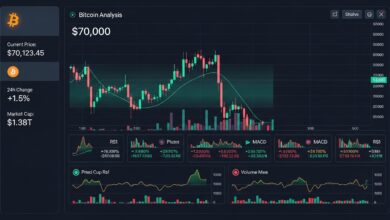
Bitcoin price sliding as 1 million US jobs vanish the Bitcoin price is sliding today because the government admitted nearly 1 million jobs from last year never existed, a revelation that has rippled through global markets and shaken investor confidence. What looked like a stable labor market only weeks ago suddenly appears far weaker after the latest revisions to employment data. As macroeconomic expectations shift, so does the outlook for risk assets, and Bitcoin often sits at the center of that reaction.
The crypto market thrives on liquidity, optimism, and forward-looking sentiment. When new economic data contradicts previous assumptions, the impact can be immediate. The sudden downward revision of jobs data suggests the economy may have been softer than investors believed, and that realization is now feeding into crypto market volatility, Bitcoin price prediction, and broader digital asset sentiment.
This is why the Bitcoin price is sliding today: it is not just about the numbers themselves, but what those numbers imply about the economy, interest rates, and investor confidence. To understand the full picture, it is essential to examine the jobs revision, the macroeconomic consequences, and how those factors translate into movements in Bitcoin and the wider cryptocurrency market.
Bitcoin price sliding as 1 million US jobs
The trigger behind the headline that the Bitcoin price is sliding today because the government admitted nearly 1 million jobs from last year never existed comes from a major revision to U.S. labor data. The Bureau of Labor Statistics adjusted previous payroll figures downward, removing roughly one million jobs that had initially been reported as part of economic growth.
Earlier reports suggested strong job creation across multiple sectors, but updated data showed that the labor market was significantly weaker. Over a twelve-month period, the economy added hundreds of thousands fewer jobs than previously believed, reducing the pace of monthly job growth dramatically.
These types of revisions are not unusual in economic statistics, but the scale of this adjustment stands out. Analysts and investors were forced to reassess their expectations for growth, inflation, and interest rate policy. That sudden shift is a major reason the Bitcoin price is sliding today.
How employment data influences Bitcoin and crypto markets
Employment data is one of the most closely watched indicators in the global economy. It affects everything from consumer spending to central bank policy. When job growth looks strong, central banks are more likely to keep interest rates high to control inflation. When job growth weakens, the opposite can happen.
Bitcoin, as a risk-sensitive asset, often reacts quickly to these expectations. If investors believe the economy is slowing, they may reduce exposure to volatile assets like cryptocurrencies. On the other hand, if they expect rate cuts and more liquidity, Bitcoin can surge.
In this case, the reason the Bitcoin price is sliding today is the sudden uncertainty created by the jobs revision. Instead of a stable labor market, investors are now seeing signs of hidden weakness, and that uncertainty tends to push capital toward safer assets.
Why macroeconomic shocks hit Bitcoin so quickly
The liquidity connection
Bitcoin’s price is deeply tied to global liquidity. When money is cheap and easy to borrow, investors are more willing to take risks. This is why Bitcoin performed so well during periods of low interest rates and large stimulus programs.
However, when economic data becomes unpredictable, liquidity expectations can change overnight. The news that the government effectively erased nearly a million jobs from previous reports introduces doubt into the economic outlook. That doubt can lead to tighter financial conditions, which in turn pressure the Bitcoin price.
The role of investor psychology
Markets are not driven purely by numbers. Sentiment plays a massive role, especially in the crypto space. When headlines announce that millions of jobs were overstated, it creates a narrative of instability. This is another reason the Bitcoin price is sliding today. Traders are reacting not just to the economic implications, but also to the psychological impact of the news. Confidence is a powerful force, and when it weakens, prices often follow.
The relationship between interest rates and Bitcoin
Federal Reserve expectations
The Federal Reserve closely monitors employment data when setting interest rates. A strong labor market typically justifies higher rates, while a weak one can lead to cuts.
The revelation that nearly a million jobs never existed forces investors to rethink the future path of rates. If the economy is weaker than expected, the Fed might eventually lower rates. But in the short term, uncertainty dominates, and markets tend to react negatively to uncertainty. This is a key factor explaining why the Bitcoin price is sliding today. Traders are adjusting their positions as they wait for clearer signals from policymakers.
The impact on risk assets
Bitcoin is often grouped with other risk assets like technology stocks. When economic data shocks the market, these assets are usually the first to feel the impact.
If investors become more cautious, they may sell Bitcoin and move into cash or government bonds. This shift in capital allocation is another reason the Bitcoin price is sliding today.
Market reaction: how traders are responding
Short-term traders are highly sensitive to macroeconomic headlines. When the jobs revision hit the news, many traders interpreted it as a sign of deeper economic problems. The crypto market tends to amplify these reactions because of its 24/7 trading environment and high leverage. Unlike traditional markets, where trading hours are limited, Bitcoin reacts instantly to new information.
This dynamic helps explain why the Bitcoin price is sliding today. The market does not wait for confirmation or deeper analysis. It moves immediately on the headline, and the headline in this case was dramatic.
Is the jobs revision really bad for Bitcoin?
The bearish interpretation
The bearish argument is straightforward. If the economy is weaker than previously believed, investors may avoid risky assets. This reduces demand for Bitcoin and pushes the price lower. In addition, uncertainty about economic data can increase volatility. When investors cannot trust previous reports, they become more cautious, which can weigh on the crypto market.
The bullish counterargument
Some analysts see the situation differently. A weaker labor market could eventually force central banks to lower interest rates or introduce new stimulus measures. That would increase liquidity and potentially drive Bitcoin higher.
In this view, the reason the Bitcoin price is sliding today may be short-term panic rather than a long-term trend. If monetary policy turns more supportive, Bitcoin could recover quickly.
Historical examples of macro shocks affecting Bitcoin
Bitcoin has reacted strongly to macroeconomic surprises in the past. During major economic crises or unexpected data releases, the price often experiences sharp moves.
For example, sudden changes in inflation data, interest rate announcements, or employment reports have historically triggered significant Bitcoin volatility. These reactions highlight how closely Bitcoin is tied to global economic expectations. The current situation fits that pattern. The headline that the Bitcoin price is sliding today because the government admitted nearly 1 million jobs from last year never existed is simply the latest example of macro news driving crypto markets.
What this means for the broader crypto market
Bitcoin sets the tone for the entire crypto ecosystem. When Bitcoin falls, most altcoins follow. This is why the jobs revision has affected not just Bitcoin, but also Ethereum price, altcoin market trends, and crypto trading volume.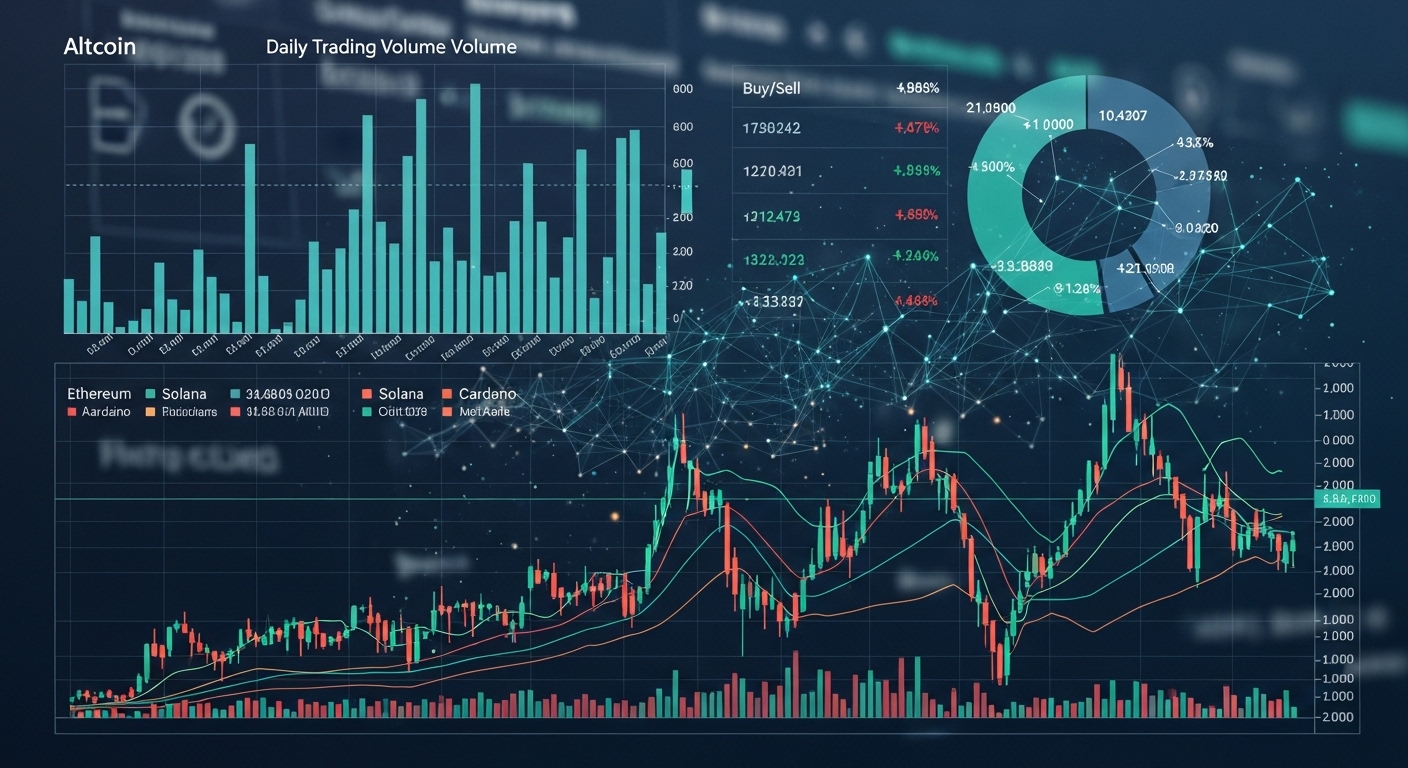
Investors often treat Bitcoin as a barometer for risk in the digital asset space. If Bitcoin struggles, confidence in smaller cryptocurrencies tends to weaken as well. The result is a broad market pullback, reinforcing the idea that the Bitcoin price is sliding today due to macroeconomic concerns.
Short-term outlook for Bitcoin
In the short term, the market will likely remain sensitive to economic data. Traders will watch upcoming reports for confirmation or reversal of the labor market trend.
If further revisions or weak data appear, the Bitcoin price could remain under pressure. On the other hand, if central banks signal easier monetary policy, sentiment could improve quickly. The key factor is clarity. Markets dislike uncertainty more than bad news. Until investors feel confident about the economic outlook, volatility is likely to persist.
Long-term perspective: does this change Bitcoin’s trajectory?
From a long-term perspective, the reason the Bitcoin price is sliding today may not matter as much as broader adoption trends. Institutional investment, regulatory developments, and technological progress continue to shape the crypto market.
Bitcoin has survived numerous macroeconomic shocks, regulatory crackdowns, and market crashes. Each time, it has eventually recovered and reached new highs. While the current jobs revision is significant, it is unlikely to change Bitcoin’s fundamental value proposition as a digital store of value, inflation hedge, and decentralized financial asset.
Conclusion
The Bitcoin price is sliding today because the government admitted nearly 1 million jobs from last year never existed, a revelation that has shaken confidence in the economic outlook. The sudden jobs revision forced investors to reassess growth expectations, interest rate paths, and overall market risk.
Bitcoin, as a highly sensitive risk asset, reacted quickly to the news. The drop reflects uncertainty rather than a definitive long-term trend. While the immediate reaction has been negative, the broader implications depend on how central banks respond and how future economic data unfolds. In the end, macroeconomic surprises will continue to influence Bitcoin’s short-term price movements. But over the long term, the core drivers of adoption, technology, and global demand are likely to remain the dominant forces shaping Bitcoin’s trajectory.
FAQs
Q: Why is the Bitcoin price sliding today after the jobs revision?
The Bitcoin price is sliding today because the government admitted nearly 1 million jobs from last year never existed, which shocked investors and created uncertainty about the strength of the economy. When employment data is revised downward on such a large scale, it suggests that economic growth may have been weaker than originally reported. This causes investors to become more cautious, and many reduce their exposure to riskier assets like Bitcoin. As a result, selling pressure increases, leading to a drop in price.
Q: How does U.S. employment data affect Bitcoin prices?
U.S. employment data plays a major role in shaping expectations about interest rates, inflation, and economic growth. Strong job growth can lead to higher interest rates, which may reduce liquidity in the market and weigh on Bitcoin. Weak job growth, on the other hand, can eventually lead to rate cuts and more liquidity. However, sudden revisions or surprises often cause short-term volatility, which is why the Bitcoin price is sliding today after the latest jobs data adjustment.
Q: Could the jobs revision eventually be positive for Bitcoin?
Yes, it could be positive in the long run. If the revised data shows the economy is weaker than expected, central banks may be more likely to lower interest rates or introduce stimulus measures. Increased liquidity generally benefits risk assets, including Bitcoin. While the Bitcoin price is sliding today due to uncertainty, the longer-term outcome could be bullish if monetary policy becomes more supportive.
Q: Do macroeconomic events always affect Bitcoin this strongly?
Bitcoin does not always react dramatically to macroeconomic events, but major surprises can have a strong impact. Large revisions to employment data, unexpected inflation numbers, or sudden interest rate changes often trigger sharp price movements. Because Bitcoin trades around the clock and attracts speculative capital, it tends to react faster and more intensely than many traditional assets.
Q: What should investors watch next after this jobs revision?
Investors should closely monitor upcoming economic reports, central bank statements, and interest rate decisions. These factors will determine whether the jobs revision leads to policy changes. If the Federal Reserve signals easier monetary policy, the Bitcoin price could recover. If uncertainty continues or more weak data emerges, the price may remain under pressure in the near term.