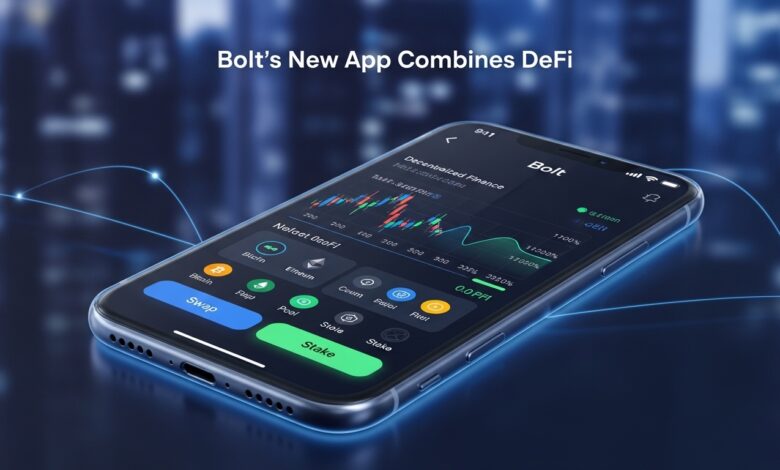
Bolt’s New App Combines DeFi, TradFi, and Rewards the financial technology landscape is evolving at a rapid pace, with companies racing to bridge the gap between decentralized finance and traditional banking systems. One of the most notable developments in this space is the new application introduced by Bolt, which aims to combine DeFi, TradFi, and rewards into a single, streamlined platform. This bold move reflects a growing trend in the fintech industry: the integration of blockchain-based innovation with familiar financial tools.
For years, users have had to navigate separate ecosystems. Traditional banking services operated in one environment, while decentralized finance platforms functioned in another, often requiring specialized knowledge and multiple applications. Bolt’s new app seeks to remove these barriers by offering a unified experience that merges the convenience of traditional financial services with the flexibility and innovation of decentralized systems.
The result is a platform designed to simplify payments, enhance loyalty programs, and introduce users to digital assets in a more intuitive way. By blending crypto wallets, digital rewards, and traditional payment tools, Bolt is positioning itself at the intersection of the future of finance and everyday consumer behavior.
Bolt’s New App Combines DeFi
Bolt’s new app is not just another fintech product; it represents a broader vision for how financial services could function in the coming years. Instead of forcing users to choose between centralized and decentralized systems, the app integrates both, creating a seamless financial environment.
At its core, the platform aims to act as a hybrid finance solution. Users can interact with familiar tools such as payment cards, bank-style accounts, and rewards programs while also accessing features typically found in the decentralized ecosystem. This includes crypto asset management, blockchain transactions, and tokenized rewards.
The idea is to make advanced financial technologies accessible to a wider audience. Many consumers are interested in digital assets and decentralized platforms, but they often find them confusing or risky. By embedding these features into a familiar interface, Bolt hopes to lower the entry barrier and accelerate adoption.
How DeFi and TradFi Work Together in the App
Bridging Two Financial Worlds
Traditionally, DeFi and TradFi have existed in separate spheres. Traditional finance relies on banks, credit institutions, and centralized payment networks. Decentralized finance, on the other hand, operates on blockchain networks, removing intermediaries and allowing peer-to-peer transactions.
Bolt’s new app creates a bridge between these two systems. Users can move funds between traditional accounts and digital wallets within the same interface. This eliminates the need for multiple apps and complicated transfers. The platform’s architecture allows users to hold both fiat currency and digital assets. This dual-balance structure is designed to provide flexibility. A user might receive a payment in traditional currency, convert a portion into digital tokens, and then use those tokens for rewards or transactions.
The Role of Blockchain Integration
The app’s blockchain integration plays a crucial role in enabling its hybrid functionality. By leveraging distributed ledger technology, Bolt can offer faster transactions, transparent reward systems, and more secure asset management.
Blockchain technology also allows for the creation of tokenized loyalty programs. Instead of traditional points that are locked into one brand or ecosystem, tokenized rewards can be more flexible, potentially usable across multiple merchants or services. This approach transforms loyalty programs from simple discount tools into dynamic financial instruments that hold real value for users.
Rewards as a Core Feature of the Platform
Reinventing Loyalty Programs
One of the most distinctive aspects of Bolt’s new app is its focus on rewards. While most fintech apps treat rewards as an add-on feature, Bolt places them at the center of its ecosystem.
Traditional loyalty programs often suffer from limitations. Points can expire, redemption options may be limited, and the overall experience is often fragmented. Bolt’s solution uses digital reward tokens to create a more flexible and transparent system.
These tokens can potentially be stored in the user’s wallet, transferred, or redeemed across participating merchants. This introduces a new level of control and utility for consumers.
The Economics of Tokenized Rewards
Tokenized rewards introduce a new economic model. Instead of static points, users receive digital assets that may carry intrinsic value. This concept aligns with the broader trend toward digital asset ecosystems.
Merchants benefit as well. Tokenized rewards can encourage repeat business, increase engagement, and create stronger customer relationships. Because the rewards exist on a blockchain, they can also be tracked and managed more efficiently.
For consumers, this means rewards become more than just discounts. They become part of a broader financial experience, blending spending, saving, and earning into a single system.
User Experience and Interface Design
Simplifying Complex Financial Tools
One of the biggest challenges in combining DeFi and TradFi is usability. Decentralized platforms often require technical knowledge, while traditional apps focus on simplicity.
Bolt’s new app aims to merge these two approaches. The interface is designed to resemble a standard payment or banking app, with intuitive navigation and clear account balances. Behind the scenes, however, the app manages complex blockchain processes. This design philosophy ensures that users can interact with crypto-enabled payments and digital wallets without needing to understand the technical details.
Seamless Payments and Transfers
The app supports a wide range of payment methods. Users can pay with fiat currency, digital tokens, or a combination of both. This flexibility is a key advantage of the platform’s hybrid model.
For example, a user might pay for a purchase using traditional currency while automatically earning tokenized rewards. Those rewards could later be used for another purchase or converted into a different digital asset. This seamless flow between spending and earning is central to the app’s appeal.
Security and Trust in a Hybrid Financial System
Protecting User Assets
Security is a major concern in both traditional and decentralized finance. Bolt’s app addresses this by combining established security protocols with blockchain-based safeguards.
Traditional elements of the app rely on familiar protections such as encryption, authentication, and compliance standards. Meanwhile, the decentralized components benefit from blockchain’s inherent transparency and immutability. This dual approach is designed to create a secure environment for both fiat and digital assets.
Compliance and Regulatory Considerations
Operating at the intersection of DeFi and TradFi requires careful attention to regulations. Bolt’s platform aims to comply with existing financial rules while still offering the benefits of decentralized systems.
This includes identity verification, transaction monitoring, and adherence to financial regulations. By maintaining compliance, the app can offer users the advantages of regulated fintech services alongside innovative features.
The Competitive Landscape in Hybrid Finance
Growing Interest in Integrated Financial Platforms
Bolt is not alone in exploring the convergence of DeFi and TradFi. The broader fintech industry is moving toward integrated solutions that combine multiple financial services into a single app.
These all-in-one financial platforms are designed to replace traditional banking apps, crypto wallets, and loyalty programs. Instead of juggling multiple accounts and interfaces, users can manage everything in one place. Bolt’s new app positions itself as a strong contender in this emerging category.
Differentiation Through Rewards and Simplicity
While many fintech companies focus on payments or crypto trading, Bolt emphasizes rewards and user experience. By making rewards a central feature, the app offers something that appeals to both tech-savvy users and everyday consumers.
The combination of hybrid finance, tokenized loyalty, and a user-friendly interface gives the platform a unique position in the market.
Potential Impact on Consumers and Merchants
Benefits for Everyday Users
For consumers, the biggest advantage of Bolt’s new app is convenience. Instead of switching between banking apps, crypto wallets, and reward programs, everything is available in one place.
Users can manage their finances, earn rewards, and explore digital assets without needing specialized knowledge. This makes advanced financial tools more accessible to a broader audience. The app also introduces the possibility of earning rewards that hold real value, rather than just points tied to a single brand.
Opportunities for Businesses
Merchants stand to gain significant benefits as well. Tokenized rewards can increase customer engagement and encourage repeat purchases. The platform also simplifies payment processing by supporting both traditional and digital currencies. This flexibility could help businesses attract a wider range of customers, including those who prefer crypto payments.
Additionally, the transparency of blockchain-based rewards systems can improve trust between businesses and consumers.
Challenges and Risks Facing the Platform
Adoption Barriers
Despite its potential, the success of Bolt’s new app will depend on user adoption. Many consumers are still unfamiliar with decentralized finance and may be hesitant to embrace it.
Education and user experience will play a crucial role in overcoming these barriers. If the app can make complex features feel simple and safe, it may succeed in attracting a mainstream audience.
Regulatory Uncertainty
The regulatory environment for digital assets is still evolving. Changes in laws or compliance requirements could affect how the app operates. Bolt will need to navigate these challenges carefully to ensure that its platform remains both innovative and compliant.
The Future of Hybrid Financial Applications
A New Standard for Fintech Platforms
Bolt’s new app represents a broader shift in the financial industry. As technology evolves, the line between traditional and decentralized finance is becoming less distinct. Future fintech platforms are likely to adopt similar hybrid models. Users will expect seamless experiences that combine payments, rewards, and digital assets in a single interface. Bolt’s approach could serve as a blueprint for the next generation of financial apps.
Expanding the Role of Digital Rewards
Tokenized rewards may become a major component of future financial ecosystems. Instead of static loyalty points, consumers could hold digital assets that offer real utility and value.
This shift could transform how businesses interact with customers, turning rewards into an integral part of everyday financial activity.
Conclusion
Bolt’s new app combines DeFi, TradFi, and rewards into a single, integrated platform, signaling a significant step forward in the evolution of fintech. By bridging the gap between traditional banking systems and decentralized technologies, the app offers a more convenient and flexible financial experience.
The platform’s focus on tokenized rewards, hybrid finance, and user-friendly design positions it as a potential leader in the next wave of financial innovation. While challenges such as regulatory uncertainty and user adoption remain, the concept behind the app reflects a growing demand for unified financial solutions.
As the boundaries between traditional and decentralized finance continue to blur, platforms like Bolt’s may redefine how people manage money, earn rewards, and interact with digital assets in their daily lives.
FAQs
Q: What makes Bolt’s new app different from traditional fintech apps?
Bolt’s new app stands out because it integrates decentralized finance, traditional financial tools, and tokenized rewards into one platform. Instead of focusing solely on payments or banking services, the app offers a hybrid experience where users can manage fiat currency, digital assets, and rewards within a single interface. This approach simplifies financial management while introducing users to blockchain-based features in a familiar environment.
Q: How do tokenized rewards work in the Bolt app?
Tokenized rewards in the Bolt app function as digital assets rather than traditional loyalty points. When users make purchases or interact with participating merchants, they earn reward tokens that can be stored in their digital wallet. These tokens may be transferable, redeemable across different merchants, or potentially convertible into other digital assets, giving them more flexibility and value than standard loyalty points.
Q: Is the app suitable for users who are new to crypto and decentralized finance?
Yes, the app is designed with accessibility in mind. Its interface resembles a traditional banking or payment application, allowing users to interact with digital assets and blockchain features without needing technical knowledge. By combining familiar financial tools with decentralized capabilities, the app lowers the barrier to entry for users who are new to the crypto space.
Q: What benefits does the app offer to merchants and businesses?
Merchants can benefit from increased customer engagement through tokenized rewards, which encourage repeat purchases and brand loyalty. The platform also supports both traditional and digital payments, allowing businesses to accept a wider range of payment methods. Additionally, blockchain-based reward systems can provide greater transparency and efficiency in managing loyalty programs.
Q: What challenges could affect the success of Bolt’s new app?
The main challenges include user adoption and regulatory uncertainty. Many consumers are still unfamiliar with decentralized finance, so education and intuitive design will be essential. At the same time, evolving regulations around digital assets could impact how the app operates. Successfully navigating these challenges will be crucial for the platform’s long-term growth and acceptance.