Crypto News: Crypto Lags Gold and Stocks in 2025, but Analysts See Catch-Up Rally Potential in 2026
Crypto news 2025 shows crypto lagging gold and stocks, but analysts see strong catch-up rally potential in 2026 as cycles, liquidity, and adoption align

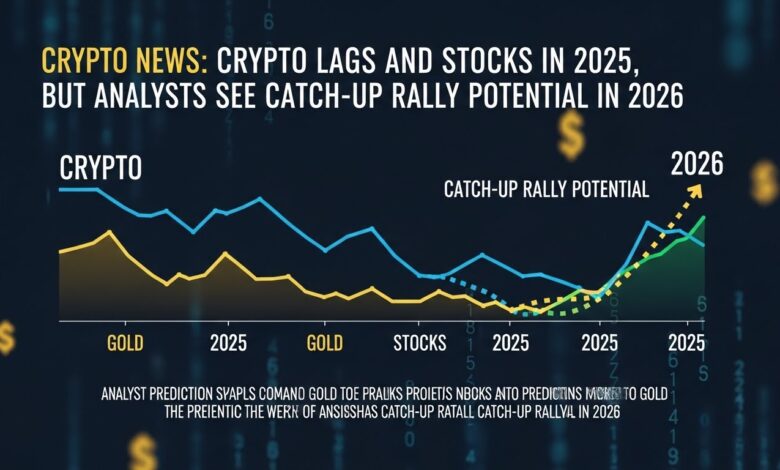
The crypto news cycle in 2025 has been dominated by an unusual narrative: while cryptocurrencies remain resilient, they have clearly underperformed compared to traditional assets such as gold and equities. Investors who expected digital assets to outperform amid macro uncertainty instead watched gold surge to new highs and stock markets extend gains, leaving crypto markets trailing behind. This divergence has sparked intense debate across financial circles, with analysts questioning whether crypto has lost its edge or is simply consolidating before its next major move.
Despite the relative underperformance, many market strategists argue that the current phase represents a classic mid-cycle pause rather than the end of crypto’s growth story. Historical patterns, liquidity trends, and structural adoption metrics suggest that digital assets may be setting the stage for a powerful rebound. As a result, a growing number of analysts are pointing toward 2026 as a potential year of a crypto catch-up rally, where cryptocurrencies could narrow or even reverse the performance gap with gold and stocks.
This article explores the reasons why crypto lagged in 2025, how gold and equities stole the spotlight, and why the long-term outlook for digital assets remains constructive. Drawing on macroeconomic trends, institutional behavior, and historical cycles, we examine why the next phase of the market could favor crypto once again.
Crypto Performance in 2025: the Lag
The crypto market performance in 2025 surprised many crypto investors who entered the year with bullish expectations. After strong momentum in previous cycles, digital assets entered a period of consolidation marked by lower volatility and muted returns. While this stability was welcomed by institutional investors, it limited the explosive upside that retail participants often associate with crypto bull markets.
One major factor behind the lag was capital rotation. As global interest rates stabilized and recession fears eased, investors gravitated toward assets with established track records. Equities benefited from improving earnings visibility, while gold attracted inflows as a hedge against geopolitical uncertainty. In contrast, cryptocurrencies struggled to attract the same level of fresh capital, particularly from risk-averse investors.
Another contributing factor was regulatory clarity arriving sooner than expected. While long-term positive, clearer regulations reduced speculative excess in the short term. The market transitioned from hype-driven rallies to valuation-driven growth, which tends to unfold more slowly. As a result, crypto markets spent much of 2025 digesting gains rather than extending them.
Gold’s Strong Run: Why Investors Chose Safety
Gold as a Safe-Haven Asset in 2025
Gold’s performance in 2025 reinforced its reputation as a timeless store of value. Amid ongoing geopolitical tensions, trade realignments, and concerns over sovereign debt, investors flocked to gold for protection. Central bank buying remained robust, adding further support to prices and boosting confidence in the metal’s long-term outlook.
For many institutional investors, gold offered something crypto could not fully deliver in 2025: predictability. While digital assets are increasingly viewed as a hedge against monetary debasement, gold’s centuries-long history still commands trust during periods of uncertainty. This dynamic siphoned capital away from crypto, particularly among conservative portfolios.
Inflation Hedging and Real Yields
Another reason gold outperformed was its role as an inflation hedge in a world of fluctuating real yields. Even as inflation moderated, concerns about future fiscal spending kept gold demand elevated. Crypto, often marketed as “digital gold,” struggled to fully capitalize on this narrative during the year, highlighting that its hedge properties are still being tested in real time.
Stocks Outperform: Equity Markets Regain Momentum
Corporate Earnings and AI Optimism
Stock markets delivered impressive returns in 2025, driven by resilient corporate earnings and optimism surrounding artificial intelligence. Technology stocks, in particular, benefited from productivity gains and expanding margins, attracting both institutional and retail investors. This enthusiasm overshadowed crypto, which lacked a similarly clear growth catalyst during the year.
Liquidity Flows Favor Equities
Global liquidity conditions also played a role. As central banks signaled stability rather than aggressive easing, liquidity favored assets with immediate cash flow potential. Equities, supported by dividends and buybacks, became a natural destination for capital. Crypto, still largely driven by future adoption narratives, took a back seat.
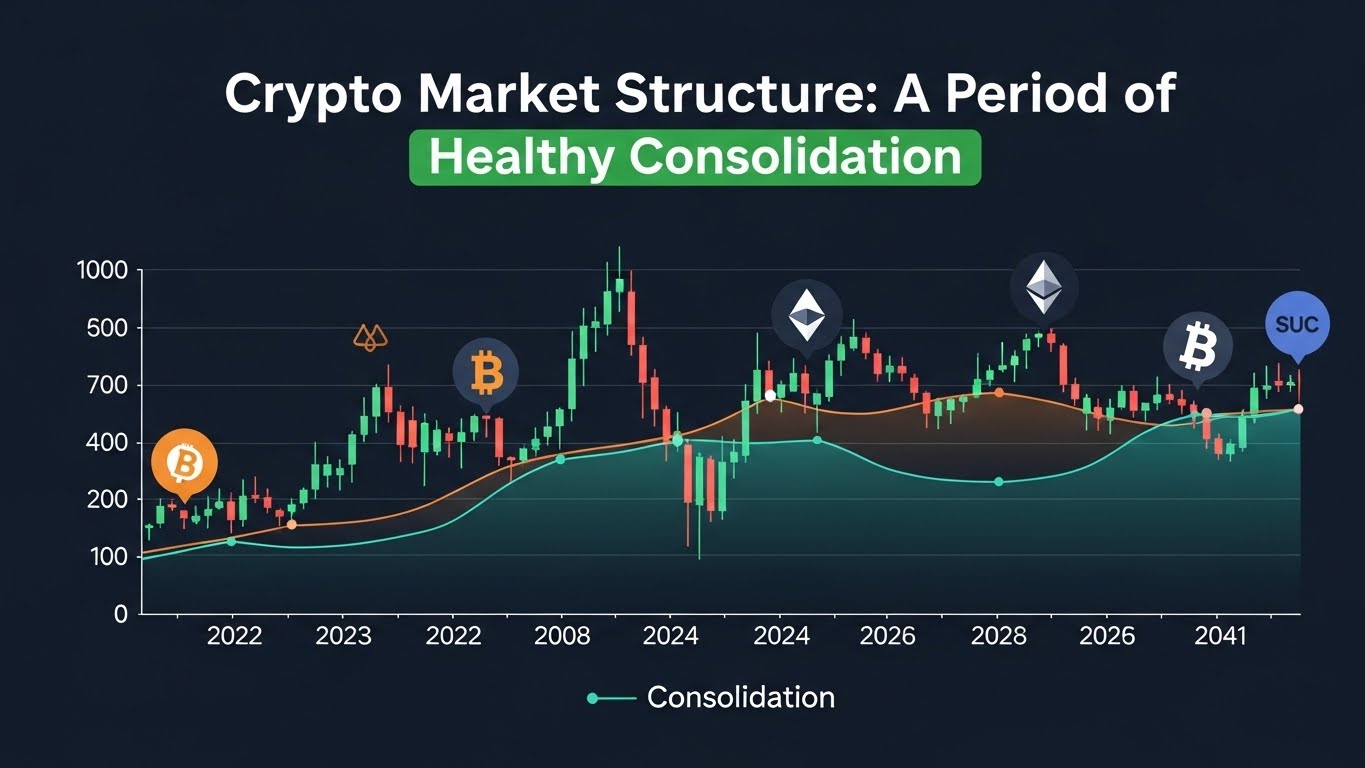
Crypto Market Structure: A Period of Healthy Consolidation
Reduced Volatility and Institutional Influence
One of the most notable developments in crypto news 2025 was the decline in extreme volatility. While some viewed this as a sign of stagnation, others saw it as evidence of market maturation. Institutional investors continued to build positions, favoring stability over speculation.
This structural shift mirrors earlier phases in traditional markets, where consolidation periods often precede significant expansions. The presence of long-term holders increased, reducing selling pressure and creating a stronger foundation for future rallies.
Network Growth and Fundamental Strength
Despite price underperformance, blockchain activity continued to grow. Metrics such as active addresses, transaction volumes, and layer-two adoption showed steady improvement. These fundamentals suggest that crypto’s underlying value proposition remains intact, even if prices lagged in the short term.
Analysts’ Outlook: Why 2026 Could Be a Turning Point
Historical Market Cycles and Crypto Catch-Up Rallies
Analysts frequently point to historical cycles when explaining the crypto catch-up rally potential in 2026. In previous cycles, crypto cycle often lagged traditional assets during periods of consolidation, only to outperform dramatically once liquidity conditions shifted. These delayed reactions are common in emerging asset classes.
If history rhymes, the groundwork laid in 2025 could set the stage for renewed momentum. As macro conditions evolve, crypto’s higher beta nature could once again attract capital seeking outsized returns.
Monetary Policy and Global Liquidity
Looking ahead, expectations of gradual monetary easing could be a key catalyst. Even modest increases in global liquidity have historically benefited crypto markets disproportionately. Analysts argue that as interest rates eventually decline, risk appetite will return, favoring digital assets.
Institutional Adoption: A Long-Term Bullish Signal
ETFs, Custody, and Infrastructure Growth
Institutional adoption continued quietly throughout 2025. The expansion of crypto ETFs, improved custody solutions, and clearer compliance frameworks made digital assets more accessible than ever. While these developments did not immediately translate into price gains, they significantly reduced barriers to entry.
By 2026, analysts expect these infrastructure improvements to amplify inflows, particularly from pension funds and asset managers seeking diversification.
Portfolio Diversification and Risk Allocation
Crypto’s role as a portfolio diversifier remains compelling. Even small allocations can improve risk-adjusted returns, according to multiple studies. As traditional assets become more correlated, crypto’s unique risk profile could regain attention, driving renewed demand.
The Role of Bitcoin and Ethereum in the Next Cycle

Bitcoin’s Store-of-Value Narrative
Bitcoin remains central to any discussion of future crypto performance. Its fixed supply and growing institutional acceptance reinforce its long-term value proposition. While Bitcoin underperformed gold in 2025, analysts believe its scarcity narrative could regain prominence during the next phase of monetary easing.
Ethereum and the Expansion of Use Cases
Ethereum’s ecosystem continued to expand in 2025, with growth in decentralized finance, tokenization, and enterprise adoption. These developments strengthen Ethereum’s case as a productivity asset rather than a speculative one, positioning it well for a catch-up rally.
Risks That Could Delay the Crypto Recovery
Regulatory Uncertainty and Policy Shifts
Despite progress, regulatory risks remain. Sudden policy changes or restrictive measures could dampen sentiment and delay recovery. Investors must remain mindful of these uncertainties when evaluating long-term prospects.
Market Sentiment and Investor Psychology
Crypto markets are highly sensitive to sentiment. Extended periods of underperformance can test investor patience, potentially slowing the pace of recovery even when fundamentals improve.
Why Analysts Remain Optimistic About 2026
The consensus among many analysts is that the divergence seen in 2025 is unlikely to persist indefinitely. Markets tend to rotate leadership, and assets that lag often become future outperformers. With fundamentals strengthening and adoption expanding, crypto appears well-positioned for such a rotation.
By 2026, a convergence of factors—improving liquidity, institutional inflows, and renewed risk appetite—could fuel a powerful rebound. For long-term investors, the current phase may be less about immediate returns and more about positioning for the next cycle.
Conclusion: Patience Before the Next Crypto Surge
The crypto news narrative of 2025 highlights a year of patience rather than euphoria. While gold and stocks captured the spotlight, crypto quietly built a stronger foundation. Analysts widely believe that this period of underperformance may ultimately prove constructive, setting the stage for a meaningful catch-up rally in 2026.
For investors, the key takeaway is perspective. Markets move in cycles, and leadership changes over time. As macro conditions evolve and adoption deepens, crypto’s role in the global financial system continues to expand. Those willing to look beyond short-term comparisons may find that today’s lag becomes tomorrow’s opportunity.
FAQs
Q: Why did crypto lag gold and stocks in 2025?
Crypto lagged due to capital rotation toward safer and more established assets, reduced volatility, and a period of consolidation following earlier gains.
Q: Is crypto still considered a hedge like gold?
Crypto is increasingly viewed as a long-term hedge, but its short-term behavior can differ from gold due to its emerging market dynamics.
Q: Why do analysts expect a crypto rally in 2026?
Analysts cite historical cycles, improving liquidity conditions, and growing institutional adoption as key drivers for a potential catch-up rally.
Q: Which cryptocurrencies could benefit most from a rebound?
Bitcoin and Ethereum are often highlighted due to their strong fundamentals, institutional interest, and central roles in the crypto ecosystem.
Q: What risks could prevent a crypto recovery?
Regulatory uncertainty, adverse macroeconomic developments, and prolonged negative sentiment could delay or limit a recovery.