Dogecoin Holders Buy the Dip After 16% Price Crash dogecoin has once again captured the attention of the crypto market after experiencing a sharp 16% price crash in a relatively short period. While such a decline might typically spark fear and panic selling, the reaction among many investors has been surprisingly different. A growing number of Dogecoin holders are looking to buy more after the 16% crash, viewing the pullback as an opportunity rather than a warning sign. This behavior highlights the unique position Dogecoin holds within the broader cryptocurrency ecosystem, where community sentiment, meme culture, and speculative optimism play a powerful role alongside technical analysis and market fundamentals.
The recent downturn occurred amid broader market volatility, where major cryptocurrencies also faced selling pressure due to macroeconomic uncertainty, shifting risk appetite, and reduced short-term liquidity. Despite this backdrop, Dogecoin’s loyal community appears largely unfazed. Instead of abandoning their positions, many long-term holders are doubling down, signaling confidence in DOGE’s ability to recover and potentially outperform in the next bullish phase. This renewed interest is supported by increased on-chain activity, signs of accumulation by larger wallets, and sustained social engagement that continues to keep Dogecoin relevant.
We explores why Dogecoin holders are buying more after the 16% crash, what market signals suggest about future price action, and how broader trends such as meme coin sentiment, crypto market recovery, and DOGE whale accumulation are influencing investor behavior. By examining technical indicators, psychological factors, and real-world adoption narratives, we can better understand why Dogecoin remains one of the most resilient and talked-about digital assets in the market today.
Dogecoin Holders Buy the Dip
The 16% crash in Dogecoin price did not happen in isolation. It coincided with a period of heightened volatility across the cryptocurrency market, where Bitcoin and Ethereum also experienced notable pullbacks. When major assets correct, meme coins like Dogecoin often see amplified moves due to their higher speculative nature and lower liquidity depth. In this case, short-term traders took profits following a recent rally, triggering a cascade of sell orders that pushed DOGE lower.
Another contributing factor was the cooling of retail enthusiasm after a burst of speculative trading. As momentum slowed, leveraged positions were gradually unwound, adding to downward pressure. This kind of price action is not unusual for Dogecoin, which has historically seen sharp corrections followed by equally dramatic recoveries. For seasoned investors, this pattern reinforces the idea that volatility is part of DOGE’s DNA rather than a sign of structural weakness.
Market Sentiment During the Crash
During the crash, overall market sentiment briefly shifted toward caution. Fear indices rose, and social media chatter reflected concern among short-term traders. However, this negative sentiment was not uniformly shared. Long-term Dogecoin holders interpreted the decline as a healthy correction rather than the start of a prolonged bear phase. This divergence in sentiment is critical, as it explains why buying pressure emerged even as prices fell.
The concept of buying the dip has become deeply ingrained in crypto culture, particularly among communities with strong conviction. For Dogecoin investors, past experiences of dramatic rebounds have reinforced the belief that temporary crashes can present lucrative entry points. This mindset helped stabilize DOGE after the initial drop and laid the groundwork for renewed accumulation.
Why Dogecoin Holders Are Buying the Dip
Strong Community Conviction
One of Dogecoin’s most defining characteristics is its passionate and resilient community. Unlike many cryptocurrencies that rely heavily on technical developments or institutional backing, Dogecoin thrives on collective belief and shared narrative. When prices fall, this community often rallies rather than retreats. The 16% crash reignited discussions about long-term potential, leading many holders to increase their exposure.
Community-driven confidence is further amplified by Dogecoin’s cultural relevance. As one of the original meme coins, DOGE has transcended its origins to become a symbol of crypto’s lighter, more accessible side. This emotional attachment plays a powerful role in shaping investor behavior, making holders more willing to weather volatility and buy during downturns.
Historical Recovery Patterns
Another key reason Dogecoin holders are buying more after the 16% crash is its historical performance. DOGE has experienced numerous sharp declines in the past, many of which were followed by strong recoveries. These patterns have conditioned investors to expect rebounds, particularly when broader market conditions stabilize.
From a psychological standpoint, past success stories create a sense of familiarity and confidence. When investors see a familiar price drop, they recall previous instances where patience paid off. This reinforces accumulation behavior and reduces the likelihood of panic selling, contributing to Dogecoin’s ability to find support after corrections.
Whale Accumulation Signals
On-chain data suggests that larger wallets, often referred to as whales, have been quietly accumulating Dogecoin during the dip. DOGE whale accumulation is a critical signal for market participants, as it indicates confidence from investors with significant capital and longer time horizons. When whales buy during periods of weakness, it often precedes periods of price stabilization or recovery.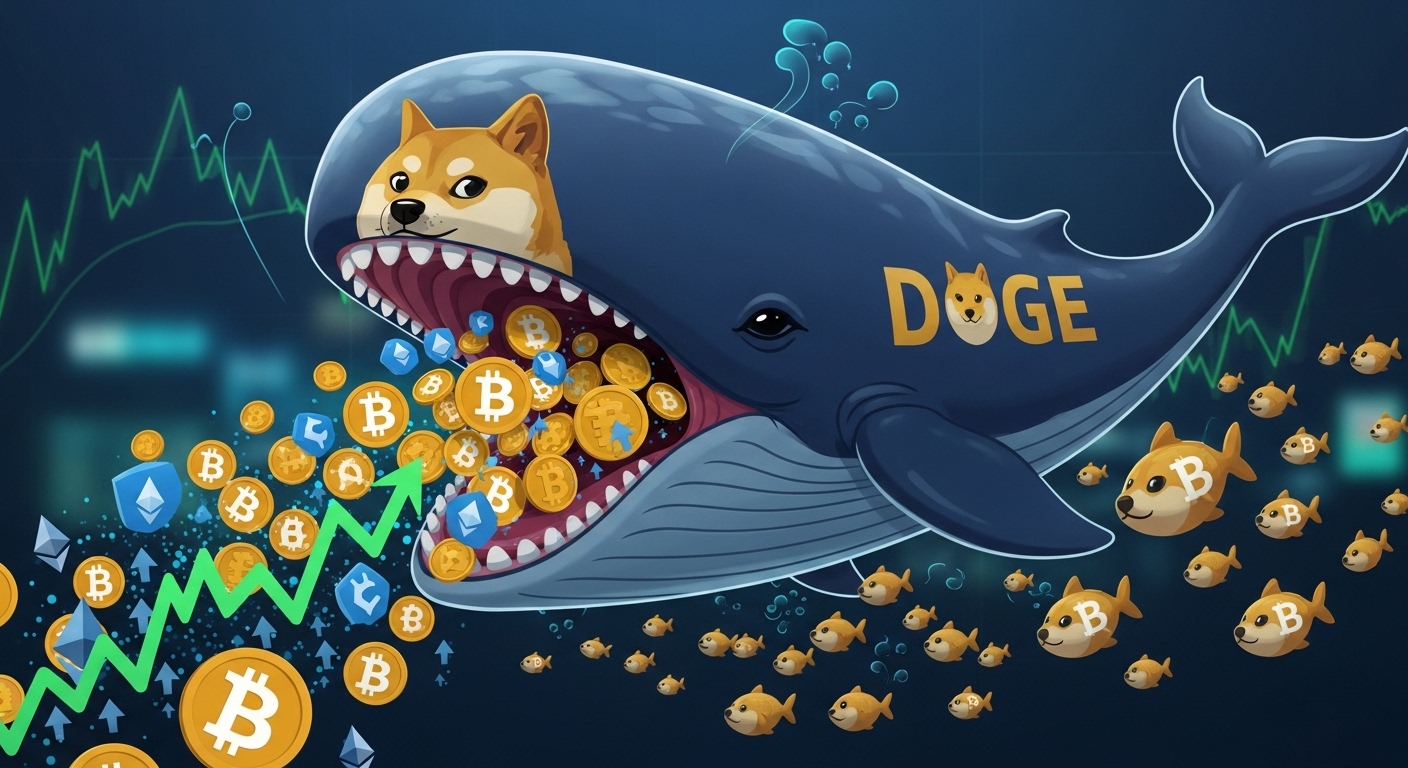
This accumulation also reduces circulating supply available for trading, which can create favorable conditions for price appreciation if demand picks up. Retail investors often view whale activity as validation of their own bullish outlook, further reinforcing the decision to buy more after a crash.
Technical Indicators Pointing to Potential Recovery
Oversold Conditions and Support Levels
From a technical analysis perspective, the 16% crash pushed Dogecoin into oversold territory on several indicators. Relative strength metrics suggested that selling pressure had become excessive, increasing the likelihood of a short-term bounce. Strong historical support zones also came into play, providing a foundation for price stabilization.
These technical signals are closely watched by traders and investors alike. When oversold conditions align with known support levels, it often attracts dip buyers looking for favorable risk-to-reward setups. This dynamic was clearly visible as DOGE found buyers stepping in shortly after the sharp decline.
Trading Volume and Market Structure
Trading volume during the crash and subsequent consolidation phase revealed important clues about market intent. While initial selling volume was high, it gradually tapered off, suggesting that most of the panic-driven selling had already occurred. At the same time, buy-side volume began to increase, indicating renewed interest.
This shift in market structure supports the idea that the crash may represent a temporary correction rather than a long-term trend reversal. For Dogecoin holders, such signals reinforce confidence in accumulating during weakness, especially when combined with broader crypto market recovery expectations.
Broader Meme Coin Market Trends
Meme Coin Resilience Despite Volatility
Dogecoin’s behavior cannot be fully understood without considering the broader meme coin sector. Meme coins are known for their exaggerated price swings, but they also exhibit remarkable resilience due to strong online communities and viral potential. Even during market downturns, meme coins often retain a baseline level of interest that helps them recover quickly.
The recent Dogecoin crash occurred alongside similar movements in other meme assets, suggesting a sector-wide correction rather than a DOGE-specific issue. This context is important, as it reassures investors that Dogecoin’s fundamentals remain intact relative to its peers.
Social Media and Cultural Momentum
Social media engagement plays a significant role in Dogecoin’s market dynamics. Even during price declines, DOGE continues to trend across platforms, keeping it top of mind for both existing holders and potential new investors. This sustained visibility helps maintain demand and supports the narrative that Dogecoin remains relevant despite short-term setbacks.
Cultural momentum also feeds into speculative optimism. As long as Dogecoin remains a recognizable and widely discussed asset, holders are more inclined to view dips as temporary interruptions rather than existential threats.
Long-Term Outlook for Dogecoin
Adoption and Use Case Evolution
While Dogecoin began as a joke, its evolution over the years has been notable. Increased acceptance for payments, integration with tipping platforms, and ongoing discussions around scalability and efficiency have gradually strengthened its real-world utility. These developments contribute to a more robust long-term outlook, encouraging holders to stay invested during volatile periods.
For many investors, the 16% crash does not negate these long-term prospects. Instead, it offers an opportunity to accumulate at more attractive prices before potential adoption-driven growth phases.
Market Cycles and Investor Patience
Cryptocurrency markets move in cycles, and experienced investors understand that corrections are a natural part of this process. Dogecoin holders who have weathered previous cycles are particularly adept at maintaining patience. The decision to buy more after the crash reflects a belief that current prices may look undervalued in hindsight once the next bullish cycle unfolds. This long-term perspective differentiates committed holders from short-term speculators and contributes to Dogecoin’s enduring popularity despite repeated bouts of volatility.
Conclusion
The 16% crash in Dogecoin price has once again tested investor resolve, but the response from the community has been anything but fearful. Instead of retreating, many Dogecoin holders are looking to buy more after the crash, driven by strong community conviction, historical recovery patterns, whale accumulation, and supportive technical signals. These factors combine to create a narrative where temporary weakness is seen as an opportunity rather than a threat.
While risks remain and volatility is an inherent part of the crypto market, Dogecoin’s unique blend of cultural relevance, speculative appeal, and evolving utility continues to inspire confidence among its holders. As broader market conditions stabilize, the recent dip may ultimately be remembered as another chapter in Dogecoin’s long history of dramatic corrections followed by renewed optimism.
FAQs
Q: Why are Dogecoin holders buying more after a 16% crash?
Many Dogecoin holders see the 16% crash as a buying opportunity rather than a warning sign. Historical price behavior shows that DOGE often rebounds strongly after sharp corrections, and this pattern encourages long-term investors to accumulate during periods of weakness. Strong community sentiment and whale accumulation also reinforce confidence.
Q: Does the recent crash indicate a long-term bearish trend for Dogecoin?
The crash alone does not necessarily signal a long-term bearish trend. It occurred during broader market volatility and pushed Dogecoin into oversold territory, which often precedes short-term recoveries. Many investors believe the decline represents a healthy correction within a larger market cycle.
Q: How does whale activity influence Dogecoin price after a crash?
Whale activity is closely watched because large holders often have longer investment horizons. Accumulation by whales during a crash can reduce available supply and signal confidence in future price appreciation. This behavior often reassures retail investors and supports price stabilization.
Q: What role does community sentiment play in Dogecoin’s recovery?
Community sentiment is central to Dogecoin’s resilience. A highly engaged and optimistic community helps maintain demand even during downturns. Social media discussions and cultural relevance keep Dogecoin visible and encourage holders to stay invested or buy more during dips.
Q: Is buying Dogecoin after a crash a good strategy for new investors?
Buying after a crash can offer attractive entry points, but it also carries risk due to Dogecoin’s volatility. New investors should understand market cycles, manage risk carefully, and consider long-term goals rather than short-term price movements when deciding whether to invest.