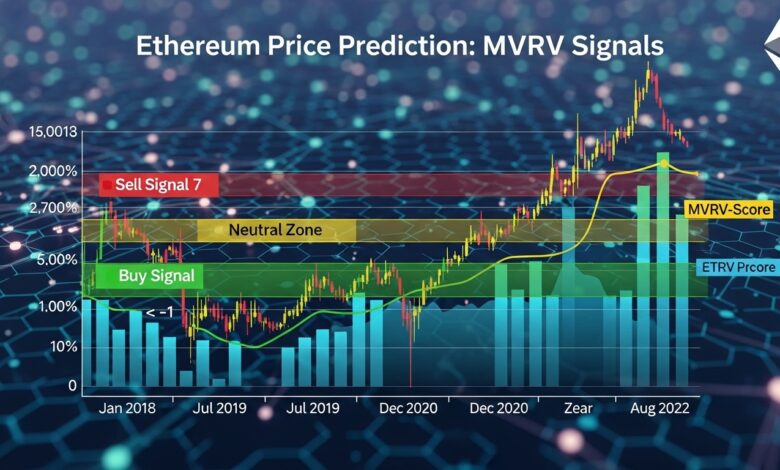
Ethereum Price Prediction MVRV Signals a Bottom Before Wave 4 the cryptocurrency market is known for its cyclical nature, and Ethereum price prediction has once again become a major topic among analysts and investors. As the second-largest cryptocurrency by market capitalization, Ethereum often sets the tone for the broader digital asset market after Bitcoin. Recently, analysts have begun focusing on a crucial on-chain indicator known as the Market Value to Realized Value (MVRV) ratio, which appears to be signaling that Ethereum could be approaching a market bottom before the start of a potential Wave 4 rally.
This signal has sparked widespread discussion across the crypto community. Traders, institutional investors, and blockchain analysts are studying historical patterns, technical indicators, and on-chain metrics to determine whether Ethereum is preparing for its next major upward move. If the MVRV signal proves accurate, the coming months could mark the transition from a consolidation phase into a new bullish cycle.
Understanding the significance of this signal requires a deeper exploration of Ethereum’s market structure, the role of the MVRV ratio, and how Elliott Wave Theory applies to crypto markets. Ethereum price prediction analysis, we will explore the indicators suggesting a potential bottom, evaluate market sentiment, and examine the possible trajectory of Ethereum as Wave 4 develops.
Ethereum Price Prediction MVRV Signals
Ethereum has historically moved in powerful cycles that mirror the broader cryptocurrency market trends. These cycles often consist of periods of rapid price appreciation followed by corrections and consolidation phases. During these periods, on-chain indicators help investors determine whether the market is overvalued, undervalued, or approaching a turning point.
In the context of Ethereum price prediction, market cycles play a crucial role. After significant bullish runs, Ethereum tends to enter a corrective phase where prices stabilize and weaker hands exit the market. This process allows the market to reset before the next upward move.
Several factors influence Ethereum’s market cycles. These include network activity, institutional demand, macroeconomic conditions, and technological developments within the Ethereum blockchain ecosystem. Additionally, the growth of decentralized finance (DeFi), smart contracts, and layer-2 scaling solutions continues to drive long-term adoption. The current market environment suggests that Ethereum may be nearing the end of a corrective phase. Analysts believe that once this phase concludes, the market could begin forming the next bullish wave, commonly referred to as Wave 4 in Elliott Wave analysis.
What Is the MVRV Ratio and Why It Matters
The Basics of the MVRV Indicator
The Market Value to Realized Value (MVRV) ratio is one of the most widely used on-chain analysis tools for evaluating cryptocurrency valuations. This metric compares the market capitalization of a cryptocurrency to its realized capitalization. Market capitalization reflects the current market value of all coins in circulation. Realized capitalization, on the other hand, represents the value of coins based on the price at which they were last moved on the blockchain.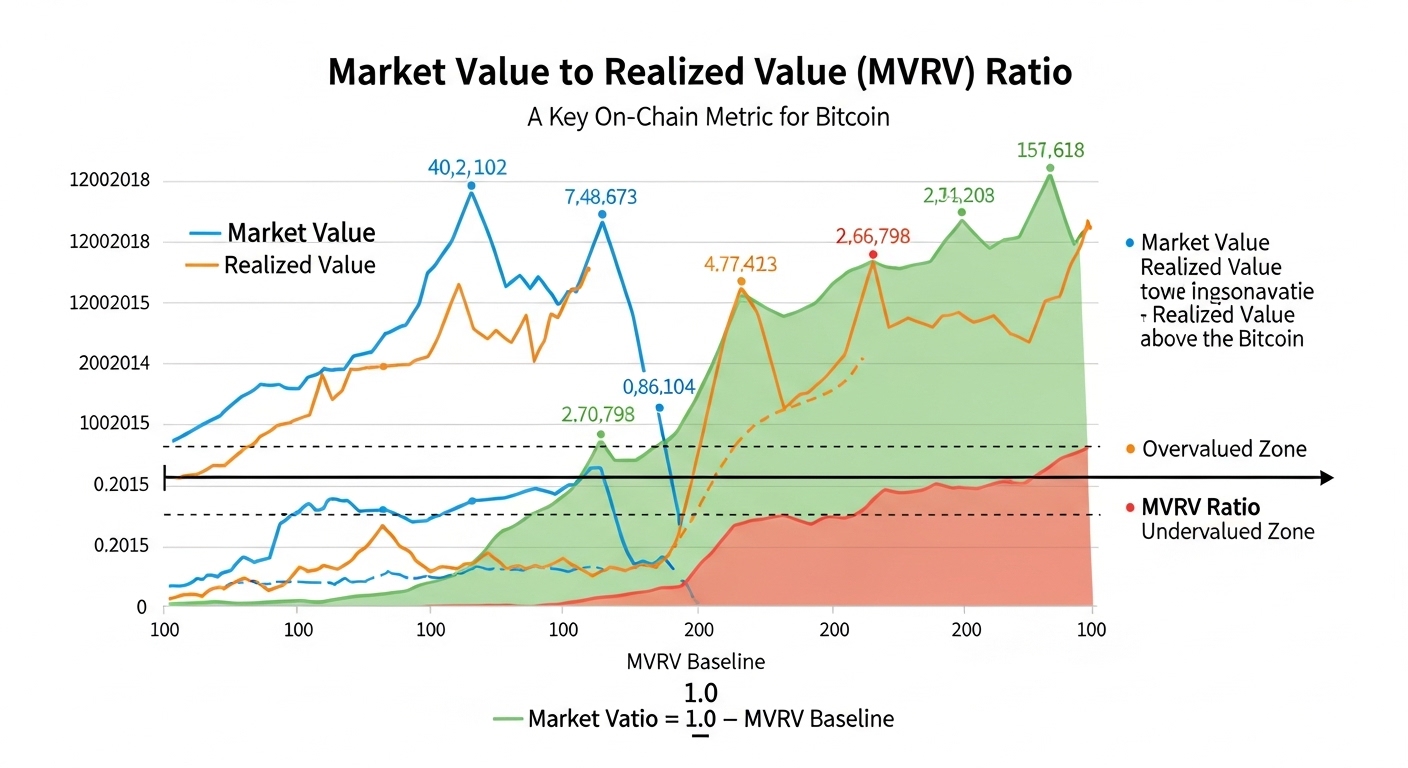
When the MVRV ratio is high, it indicates that investors are sitting on significant unrealized profits. Historically, such conditions often precede market corrections because holders may begin taking profits. When the ratio drops to low levels, it suggests that many investors are holding their coins at a loss. This scenario often signals market capitulation, which historically marks the formation of market bottoms.
How MVRV Signals Potential Market Bottoms
For Ethereum, the MVRV indicator has repeatedly proven effective in identifying periods when the market is undervalued. During previous cycles, whenever the MVRV ratio entered a historically low range, Ethereum eventually experienced strong price recoveries.
Currently, analysts have noticed that the MVRV ratio for Ethereum is approaching levels that previously coincided with major bottoms. This observation has fueled optimism about the next phase of Ethereum price prediction models. Such signals do not guarantee immediate rallies. However, they often indicate that downside risk may be decreasing while long-term accumulation opportunities increase.
Elliott Wave Theory and the Concept of Wave 4
The Structure of Elliott Wave Patterns
Another important framework used in Ethereum price prediction is Elliott Wave Theory. Developed by Ralph Nelson Elliott, this theory proposes that financial markets move in predictable wave patterns driven by investor psychology.
According to Elliott Wave Theory, markets typically move in five impulsive waves during bullish cycles and three corrective waves during bearish cycles. These waves reflect the emotional cycles of fear, optimism, greed, and caution among market participants. In the case of Ethereum, analysts believe the market has already completed several major waves during previous bull runs. The current phase may represent the transition into Wave 4, which typically follows a strong upward move.
What Wave 4 Means for Ethereum
Wave 4 is often characterized by consolidation and sideways price movement before the final bullish push known as Wave 5. This stage allows the market to cool off after intense speculation while maintaining the broader bullish structure.
If Ethereum is indeed approaching Wave 4, the market could experience a period of stabilization followed by renewed momentum. Historically, these phases provide opportunities for investors who believe in the long-term growth of Ethereum’s decentralized ecosystem. For traders analyzing Ethereum price prediction, identifying the beginning of Wave 4 can provide valuable insights into potential entry points.
On-Chain Data Supporting the Bottom Formation
Beyond the MVRV ratio, several blockchain analytics indicators are pointing toward a potential bottom for Ethereum. One key metric is the increasing number of long-term holders accumulating ETH during market dips. Data suggests that experienced investors are gradually increasing their positions, which often happens near market bottoms. Another indicator is the declining amount of Ethereum held on centralized exchanges. When coins move off exchanges and into private wallets, it typically signals long-term holding behavior rather than short-term speculation.
The growth of staking participation within the Ethereum network is also noteworthy. Since the transition to proof-of-stake consensus, more ETH holders are locking their coins to support network security. This reduces circulating supply and can influence future price dynamics. Combined with the MVRV signal, these metrics strengthen the argument that the market may be preparing for the next phase of the Ethereum price prediction cycle.
Macroeconomic Factors Influencing Ethereum Price Prediction
The cryptocurrency market does not operate in isolation. Global economic conditions often influence investor sentiment and capital flows into digital assets. Interest rate policies, inflation expectations, and global liquidity conditions can all affect Ethereum’s price trajectory. When traditional financial markets experience uncertainty, some investors turn to cryptocurrencies as alternative assets.
Additionally, institutional adoption of blockchain technology continues to grow. Financial institutions, payment companies, and technology firms are increasingly exploring Ethereum’s smart contract capabilities. These developments contribute to the long-term fundamental value of Ethereum, strengthening the case for bullish Ethereum price prediction models in the coming years.
Institutional Interest and Ethereum’s Expanding Ecosystem
Ethereum’s ecosystem has expanded dramatically over the past few years. The network now supports thousands of decentralized applications ranging from NFT marketplaces to decentralized exchanges. Institutional investors have taken notice of this growth. Large asset managers and venture capital firms are allocating resources toward Ethereum-based projects and blockchain infrastructure.
The increasing popularity of tokenized assets, decentralized finance platforms, and Web3 applications continues to drive demand for Ethereum’s native token. As adoption grows, the long-term outlook for Ethereum price prediction becomes increasingly tied to the broader expansion of blockchain technology.
Technical Analysis Signals Aligning with MVRV
Technical analysis also provides important insights into Ethereum’s potential market direction. Many analysts observe that ETH has been forming key support levels during recent market pullbacks.
Price consolidation near historically significant zones often indicates that sellers are losing momentum while buyers gradually accumulate assets. When this pattern aligns with on-chain signals such as the MVRV ratio, it increases the probability of a market reversal.
Another commonly monitored indicator is the Relative Strength Index (RSI). When RSI levels move into oversold territory, it often suggests that the market may be due for a rebound. The convergence of these indicators strengthens the case for a bullish Ethereum price prediction, particularly if market sentiment begins to improve.
Potential Price Scenarios for Ethereum
Forecasting cryptocurrency prices always involves uncertainty, but analysts often outline multiple scenarios when developing Ethereum price prediction models. In a bullish scenario, Ethereum successfully forms a bottom and begins a gradual recovery. As confidence returns to the market, ETH could regain key resistance levels and eventually enter the next phase of the bullish cycle.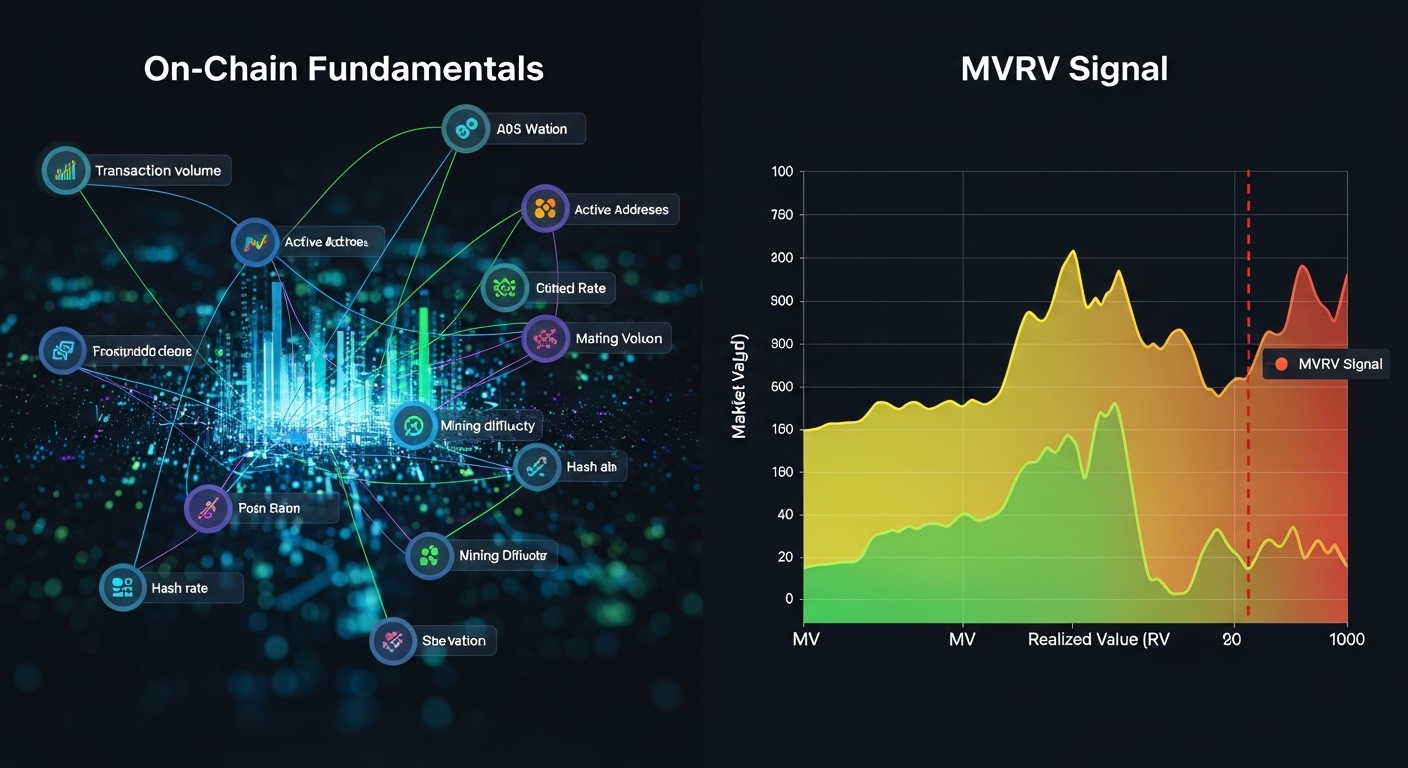
A neutral scenario involves extended consolidation where Ethereum trades within a defined range while investors await stronger macroeconomic signals. A bearish scenario would involve continued market pressure, potentially pushing Ethereum to test lower support levels before forming a definitive bottom. Despite these possibilities, the presence of strong on-chain fundamentals, the MVRV signal, and growing adoption trends provide a solid foundation for long-term optimism.
Risks and Challenges Facing Ethereum
While many analysts are optimistic about Ethereum’s future, several risks could influence its price trajectory. Competition from other smart contract platforms remains a factor. Networks offering faster transactions and lower fees continue to attract developers and users. Regulatory developments also play a significant role in shaping cryptocurrency markets. Governments worldwide are still developing frameworks for digital assets, and policy changes could impact market sentiment.
Another challenge is network scalability. Although Ethereum has introduced upgrades and layer-2 solutions, maintaining efficiency as adoption grows remains an ongoing effort. These factors must be considered when evaluating any Ethereum price prediction.
Long-Term Outlook for Ethereum
Despite short-term volatility, Ethereum’s long-term outlook remains closely tied to the continued growth of blockchain innovation. The network serves as the foundation for countless applications within decentralized finance, NFT ecosystems, and emerging Web3 infrastructure. As these industries expand, demand for Ethereum’s blockchain services may increase significantly.
Additionally, improvements in scalability, security, and efficiency could strengthen Ethereum’s competitive position within the broader crypto landscape. For long-term investors, these developments reinforce the importance of understanding market cycles when considering Ethereum price prediction strategies.
Conclusion
The latest Ethereum price prediction analysis suggests that the market may be approaching a crucial turning point. The MVRV ratio, a respected on-chain valuation metric, is signaling conditions that historically align with market bottoms. When combined with Elliott Wave analysis, growing institutional interest, and strong network fundamentals, the possibility of Ethereum entering the early stages of Wave 4 becomes increasingly plausible.
Although uncertainties remain within the cryptocurrency market, Ethereum continues to demonstrate resilience and innovation. Its expanding ecosystem, active developer community, and growing adoption across industries position it as one of the most influential blockchain platforms in the world. If the current signals prove accurate, the coming months could mark the beginning of a new chapter in the ongoing evolution of Ethereum price prediction and the broader crypto market.
FAQs
Q: What does the MVRV ratio indicate in Ethereum price prediction?
The MVRV ratio is an important on-chain metric used to evaluate whether Ethereum is overvalued or undervalued relative to historical price levels. It compares the current market value of Ethereum to the realized value based on the price at which coins were last moved. When the ratio falls to historically low levels, it suggests that many investors are holding their coins at a loss. This condition often indicates a potential market bottom, making it a valuable signal for analysts developing Ethereum price prediction models.
Q: Why is Wave 4 important in Ethereum price prediction?
In Elliott Wave Theory, Wave 4 typically represents a consolidation phase that follows a strong upward trend. During this stage, the market stabilizes and corrects before entering the final bullish phase known as Wave 5. For Ethereum, identifying the beginning of Wave 4 can help traders and investors understand where the market currently sits within the broader cycle. This knowledge can influence investment strategies and long-term Ethereum price prediction expectations.
Q: Can on-chain indicators accurately predict Ethereum price movements?
On-chain indicators such as MVRV, exchange inflows, and holder distribution metrics provide valuable insights into investor behavior and market conditions. While these indicators cannot guarantee future price movements, they help analysts understand trends that may influence Ethereum’s trajectory. When on-chain signals align with technical analysis and macroeconomic trends, they can significantly improve the reliability of Ethereum price prediction models.
Q: What factors could influence Ethereum’s next major price movement?
Several factors may influence Ethereum’s next major price movement. These include global economic conditions, investor sentiment, technological upgrades within the Ethereum network, and the growth of decentralized applications built on the blockchain. Institutional adoption and regulatory developments can also play important roles. Because Ethereum operates within a rapidly evolving industry, these variables must be considered when forming any Ethereum price prediction.
Q: Is Ethereum still considered a strong long-term investment?
Many analysts believe Ethereum remains one of the most promising blockchain projects due to its large developer ecosystem, widespread adoption, and strong technological foundation. The network supports thousands of decentralized applications and continues to evolve through upgrades and innovation. While price volatility is inevitable in cryptocurrency markets, the long-term outlook for Ethereum often remains positive in many Ethereum price prediction analyses because of its central role in the expanding Web3 economy and decentralized finance ecosystem.