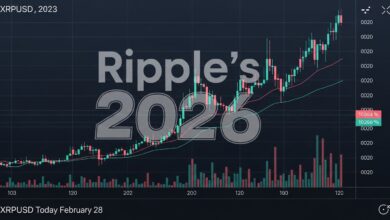
Ripple CEO Brad Garlinghouse Predicts Crypto Market Peak in 2026 the cryptocurrency market has always been defined by cycles of innovation, volatility, optimism, and skepticism. Each cycle brings new narratives, technologies, and leaders whose insights shape investor sentiment and industry direction. Among those leaders, Ripple CEO Brad Garlinghouse stands out as one of the most vocal and influential figures in the global crypto ecosystem. His recent statement that the crypto market could reach a new high in 2026 has sparked widespread discussion across the industry, from retail investors to institutional players.
Brad Garlinghouse’s outlook is not a casual prediction made in isolation. It reflects years of observing market behavior, regulatory evolution, and technological maturation within blockchain-based financial systems. As the head of Ripple, a company deeply involved in cross-border payments and enterprise blockchain solutions, Garlinghouse operates at the intersection of traditional finance and digital assets. His perspective carries weight because it blends practical business experience with a long-term vision for crypto adoption.
We explores why Ripple CEO Brad Garlinghouse expects the crypto market to reach new highs in 2026, what factors could drive this growth, and how broader market dynamics such as regulation, institutional adoption, and technological innovation play a critical role. By examining these themes in depth, readers can gain a clearer understanding of where the crypto industry may be headed and why 2026 is emerging as a pivotal year for digital assets.
Predicts Crypto Market
Brad Garlinghouse is best known as the CEO of Ripple, the blockchain company behind the XRP Ledger and the digital asset XRP. Before joining Ripple, Garlinghouse held executive roles at major technology companies, giving him a strong background in scaling global platforms and navigating complex regulatory environments. His leadership at Ripple has been particularly significant during periods of intense scrutiny, especially as the company faced legal challenges that tested the resilience of both Ripple and the broader crypto market.
When Ripple CEO Brad Garlinghouse speaks about the future of crypto, his comments are grounded in direct experience with policymakers, financial institutions, and technology innovators. Unlike short-term market commentators, Garlinghouse tends to focus on structural trends rather than daily price movements. This long-term approach is why his expectation that the crypto market could reach a new high in 2026 resonates strongly with industry observers.
Long-Term Vision Versus Short-Term Volatility
The crypto market is often judged by its short-term price swings, which can obscure the deeper progress being made across the ecosystem. Garlinghouse has repeatedly emphasized that true value creation in crypto takes time. His expectation of a 2026 market high aligns with the idea that major technological and regulatory shifts do not happen overnight.
From this perspective, the years leading up to 2026 represent a maturation phase for digital assets. Infrastructure is improving, institutional trust is slowly being built, and regulatory clarity is emerging in key markets. Ripple CEO Brad Garlinghouse views these developments as foundational elements that could support a much larger and more stable crypto market in the coming years.
The Role of Regulation in Shaping the 2026 Crypto Market
Regulatory Clarity as a Growth Catalyst
One of the central themes in Garlinghouse’s outlook is regulation. For years, uncertainty around crypto regulation has been a major barrier to adoption, particularly among large financial institutions. Ambiguous rules have made it difficult for banks, payment providers, and asset managers to fully embrace digital assets without risking compliance issues.
According to Brad Garlinghouse, regulatory clarity could be one of the strongest drivers pushing the crypto market toward new highs by 2026. As governments and regulatory bodies define clearer frameworks for digital assets, companies will gain the confidence needed to invest, build, and innovate at scale. This shift could unlock significant capital inflows into the market.
Ripple’s Legal Journey and Its Broader Implications
Ripple’s own legal battles have played a major role in shaping Garlinghouse’s views on regulation. The company’s experience navigating complex legal challenges has highlighted the importance of clear and consistent rules. While these challenges created short-term uncertainty, they also accelerated conversations between regulators and the crypto industry.
The outcome of such regulatory engagements could set important precedents that benefit the entire market. Ripple CEO Brad Garlinghouse believes that by 2026, many of these issues will be resolved, allowing the crypto market to move forward with greater confidence and legitimacy.
Institutional Adoption and Its Impact on Market Growth
The Shift from Speculation to Strategic Investment
In the early years of crypto, the market was largely driven by retail speculation. While individual investors still play an important role, the landscape is changing. Institutional investors are increasingly viewing digital assets as a legitimate asset class rather than a speculative gamble.
Brad Garlinghouse has pointed out that institutional adoption tends to follow regulatory clarity and infrastructure development. As custody solutions, compliance tools, and market transparency improve, institutions become more comfortable allocating capital to crypto. This gradual shift could significantly expand the size of the market by 2026.
How Financial Institutions Influence Market Stability
Institutional participation often brings a stabilizing effect to financial markets. Large investors typically operate with longer time horizons and more disciplined strategies than retail traders. Their involvement can reduce extreme volatility and support more sustainable growth.
Ripple CEO Brad Garlinghouse expects that by 2026, institutional players such as banks, hedge funds, and payment networks will be deeply integrated into the crypto ecosystem. This integration could help push the market to new highs while also making it more resilient to sudden shocks.
Technological Innovation as a Driver of Crypto Market Expansion
Blockchain Scalability and Real-World Use Cases
Technology is at the heart of the crypto market’s long-term potential. Early blockchain networks faced limitations in scalability, speed, and cost, which restricted their usefulness for large-scale applications. Over time, significant progress has been made to address these issues.
Garlinghouse often highlights the importance of real-world use cases in driving adoption. Technologies that enable faster cross-border payments, decentralized finance, and tokenized assets are transforming how value is transferred globally. As these solutions mature, they could attract a broader user base and contribute to market growth leading up to 2026.
Ripple’s Focus on Payments and Enterprise Solutions
Ripple’s core mission has always been to improve global payments using blockchain technology. By working directly with financial institutions, Ripple aims to solve practical problems rather than chasing speculative trends. This approach reflects Garlinghouse’s belief that sustainable growth comes from utility.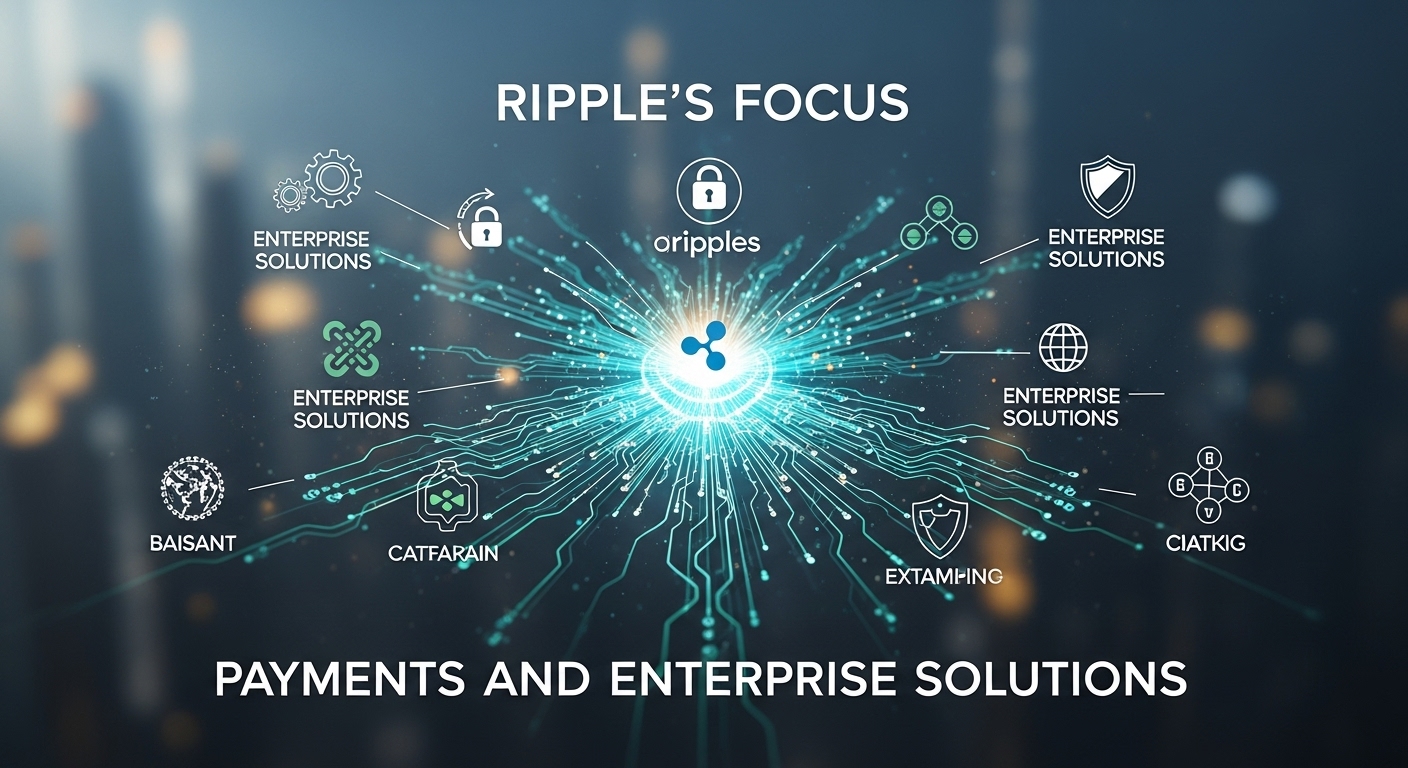
As enterprise adoption increases, blockchain networks like the XRP Ledger could see higher transaction volumes and greater relevance within the financial system. Ripple CEO Brad Garlinghouse sees this utility-driven growth as a key factor supporting his expectation of a crypto market high in 2026.
Macroeconomic Factors Influencing the Crypto Market Outlook
Inflation, Monetary Policy, and Digital Assets
Macroeconomic conditions play a crucial role in shaping investor behavior. Periods of inflation, currency devaluation, and economic uncertainty often drive interest in alternative assets. Cryptocurrencies, with their decentralized nature, have increasingly been viewed as potential hedges against traditional financial risks.
Garlinghouse acknowledges that macroeconomic trends can influence crypto adoption, but he also emphasizes that digital assets must prove their value beyond speculation. By 2026, he expects crypto to be more deeply integrated into the global financial system, making it less dependent on short-term economic narratives.
Global Adoption and Emerging Markets
Another important factor is global adoption, particularly in emerging markets. In regions with limited access to traditional banking services, crypto can provide alternative ways to store and transfer value. This practical utility could drive significant growth in user adoption over the next few years.
Ripple CEO Brad Garlinghouse has frequently spoken about the importance of financial inclusion. As more people around the world gain access to digital assets, the overall size and influence of the crypto market could expand dramatically by 2026.
Market Cycles and the Timing of a 2026 High
Historical Patterns in the Crypto Market
The crypto market has historically moved in cycles, often influenced by technological milestones, investor sentiment, and external events. While past performance does not guarantee future results, these cycles offer useful insights into how the market evolves.
Garlinghouse’s expectation of a 2026 high aligns with the idea that the market needs time to absorb recent developments and build a stronger foundation. Instead of chasing immediate gains, the focus shifts toward long-term value creation.
Why 2026 Could Be a Turning Point
Several trends converge around the mid-2020s. Regulatory frameworks are expected to mature, institutional adoption is likely to deepen, and blockchain technology will continue to evolve. Together, these factors could create an environment conducive to significant market growth.
Ripple CEO Brad Garlinghouse sees 2026 as a point where these long-term efforts begin to pay off. Rather than a speculative bubble, he envisions a more robust and sustainable crypto market reaching new highs.
The Broader Implications for Investors and the Industry
Shifting Investor Mindsets
Garlinghouse’s outlook encourages investors to think beyond short-term price movements. By focusing on long-term fundamentals, investors can better align their strategies with the underlying growth of the crypto ecosystem.
This shift in mindset could lead to more responsible investment behavior and a healthier market overall. Ripple CEO Brad Garlinghouse believes that education and transparency will play key roles in shaping this evolution.
Industry Collaboration and Innovation
The path to a 2026 market high is not solely dependent on individual companies. Collaboration across the industry, including partnerships between blockchain firms, financial institutions, and regulators, will be essential.
As the ecosystem becomes more interconnected, innovation can accelerate, driving new applications and business models. This collaborative environment supports Garlinghouse’s belief in the long-term potential of crypto.
Conclusion
Ripple CEO Brad Garlinghouse’s expectation that the crypto market will reach a new high in 2026 reflects a thoughtful and experience-driven outlook on the industry’s future. Rather than focusing on short-term hype, his perspective emphasizes regulatory clarity, institutional adoption, technological innovation, and real-world utility as the key drivers of sustainable growth.
As the crypto market continues to evolve, the coming years may prove critical in shaping its role within the global financial system. If the trends highlighted by Garlinghouse continue to unfold, 2026 could indeed mark a significant milestone, not just in terms of market valuation but in the broader acceptance and integration of digital assets worldwide.
FAQs
Q: Why does Ripple CEO Brad Garlinghouse believe the crypto market will peak in 2026?
Brad Garlinghouse believes the crypto market will reach new highs in 2026 because that timeframe allows for regulatory clarity, institutional adoption, and technological maturity to fully develop. In his view, these factors need time to align, and 2026 represents a point where long-term progress translates into significant market growth rather than short-term speculation.
Q: How important is regulation to the crypto market’s future according to Brad Garlinghouse?
Regulation is central to Garlinghouse’s outlook because clear and consistent rules can unlock institutional participation and reduce uncertainty. He sees regulation not as a barrier but as a foundation that can legitimize the industry and support sustainable expansion leading up to 2026.
Q: What role does institutional adoption play in reaching a new crypto market high?
Institutional adoption brings large-scale capital, stability, and credibility to the crypto market. Garlinghouse expects that by 2026, institutions will be deeply involved in digital assets, helping to drive the market to new highs while also reducing extreme volatility.
Q: How does Ripple’s business model influence Brad Garlinghouse’s market outlook?
Ripple’s focus on real-world payment solutions gives Garlinghouse a utility-driven perspective on crypto growth. By working with financial institutions and solving practical problems, Ripple reinforces his belief that long-term adoption and genuine use cases will push the market higher by 2026.
Q: Should investors base their strategies on the idea of a 2026 crypto market high?
Garlinghouse’s prediction encourages investors to adopt a long-term mindset rather than chasing short-term gains. While no forecast is guaranteed, focusing on fundamentals such as regulation, technology, and adoption can help investors make more informed decisions as the crypto market evolves toward 2026.