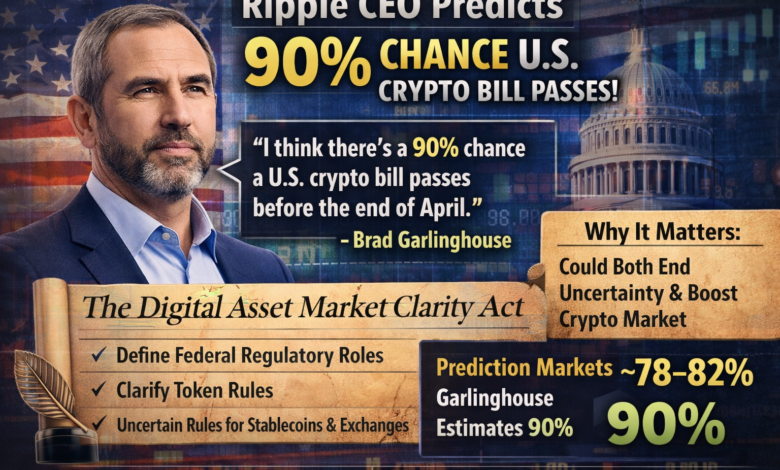
Ripple CEO Predicts 90% Chance U.S. Crypto Bill by April the cryptocurrency industry has spent years navigating uncertainty in the United States, where regulatory ambiguity has shaped everything from exchange operations to token classifications. Now, optimism is building. Brad Garlinghouse, CEO of Ripple, recently predicted a 90% chance that a comprehensive U.S. crypto bill will pass by April. His statement has ignited fresh discussions across financial markets, blockchain communities, and policy circles.
The possibility of long-awaited crypto regulation, digital asset legislation, and blockchain compliance frameworks becoming law in the coming months marks a turning point. For years, the American crypto ecosystem has been caught between innovation and enforcement. If the U.S. crypto bill passes as predicted, it could redefine how cryptocurrency markets, stablecoins, and decentralized finance (DeFi) operate within the world’s largest economy.
We explores what the Ripple CEO’s prediction means, why April could be a pivotal month, how the proposed U.S. crypto bill may reshape the digital asset landscape, and what investors and institutions should expect next.
Ripple CEO Predicts 90% Chance U.S. Crypto
When Brad Garlinghouse speaks about regulation, markets listen. Ripple has been at the center of high-profile legal battles involving token classification and securities law interpretation, particularly with the U.S. Securities and Exchange Commission. His prediction that there is a 90% chance the U.S. crypto bill passes by April reflects more than optimism; it suggests political momentum.
Why the April Timeline Matters
April represents more than just a calendar milestone. Legislative sessions, bipartisan negotiations, and mounting pressure from financial institutions are converging. If the U.S. crypto bill passes within this timeframe, it could provide clarity ahead of broader economic planning cycles and fiscal policy adjustments.
The urgency stems from the need to establish regulatory clarity, define digital asset oversight, and prevent innovation from moving offshore. Lawmakers increasingly recognize that without a structured framework, American competitiveness in the blockchain sector may erode.
Market Reaction to the Announcement
The Ripple CEO’s statement immediately sparked renewed discussion across trading desks and institutional strategy meetings. Investors interpret such predictions as signals of potential market stability, improved crypto compliance standards, and reduced enforcement risk.
Historically, regulatory clarity has fueled market growth. When jurisdictions outline clear rules, venture capital flows increase, exchanges expand operations, and banks feel safer engaging in cryptocurrency services.
Understanding the Proposed U.S. Crypto Bill
Although various drafts exist, the overarching aim of the U.S. crypto bill is to establish a comprehensive legal framework governing digital assets. The bill seeks to address long-standing debates over whether certain tokens should be classified as securities or commodities.
Defining Digital Assets and Securities
One of the most critical aspects involves clarifying the jurisdiction between regulators. The debate over whether tokens fall under securities law or commodity oversight has created significant uncertainty. A structured U.S. crypto bill would likely outline definitions for utility tokens, payment tokens, and security tokens, creating a tiered classification system. Such clarity could significantly reduce litigation risk and provide a roadmap for token issuers. Ripple itself has navigated these challenges, making Garlinghouse’s prediction especially meaningful within industry circles.
Stablecoins and Payment Infrastructure
Stablecoins are expected to play a central role in the U.S. crypto bill. Policymakers have expressed concern over systemic risk, transparency, and reserve backing. The legislation could introduce standardized reserve requirements, auditing protocols, and reporting obligations.
For companies like Ripple, which focus on cross-border payments and blockchain infrastructure, regulatory certainty around stablecoin oversight could accelerate adoption within traditional financial systems.
Ripple’s Strategic Position in the Regulatory Landscape
Ripple’s journey through regulatory challenges has positioned the company as a vocal advocate for clearer digital asset policies. The firm’s long-standing legal battle with regulators has shaped its perspective on what a functional framework should look like.
Lessons from Legal Disputes
Ripple’s case underscored the ambiguity surrounding token classification. It also highlighted the need for consistent guidelines rather than enforcement-driven policymaking. Garlinghouse has frequently emphasized the importance of replacing uncertainty with structured rules.
If the U.S. crypto bill passes as predicted, it could validate years of industry lobbying efforts and establish the United States as a more predictable environment for blockchain companies.
Institutional Partnerships and Global Expansion
Ripple has already built partnerships with financial institutions across multiple continents. However, U.S. regulatory ambiguity has limited some domestic growth opportunities. A comprehensive U.S. crypto bill could unlock new partnerships, encourage banks to integrate blockchain rails, and strengthen cross-border settlement systems.
Political Momentum Behind the U.S. Crypto Bill
The prediction that the U.S. crypto bill has a 90% chance of passing suggests bipartisan cooperation. Lawmakers increasingly view digital assets as both an economic opportunity and a regulatory necessity.
Bipartisan Collaboration
Crypto legislation has evolved beyond partisan lines. While debates remain over enforcement mechanisms and agency jurisdiction, many policymakers agree that a modern framework is overdue. The rise of blockchain innovation, digital payments infrastructure, and tokenized assets has made delay increasingly impractical. April may represent a window in which political incentives align. With elections approaching in future cycles, lawmakers may seek to demonstrate progress on technology policy.
Industry Lobbying and Advocacy
Crypto companies, trade groups, and financial institutions have significantly increased lobbying efforts in Washington. Their arguments center on competitiveness, innovation, and economic leadership. Garlinghouse’s confidence likely reflects private discussions and signals emerging from legislative negotiations.
Impact on Cryptocurrency Markets
If the U.S. crypto bill passes by April, the effects could ripple across markets globally. Regulatory certainty tends to reduce volatility caused by enforcement uncertainty.
Investor Confidence and Capital Inflows
Institutional investors often hesitate in uncertain environments. A formal U.S. crypto bill would provide guardrails, potentially unlocking capital from pension funds, hedge funds, and asset managers seeking exposure to digital assets.
Clear guidelines around custody, taxation, and compliance could also expand retail participation by enhancing consumer protections.
Exchange Operations and Compliance Standards
Exchanges operating in the United States face ongoing scrutiny regarding token listings and reporting requirements. A structured legal framework could standardize compliance expectations and reduce the risk of sudden enforcement actions.
This stability may encourage exchanges to innovate with crypto derivatives, tokenized securities, and enhanced liquidity solutions.
Broader Economic Implications
The potential passage of the U.S. crypto bill extends beyond the crypto sector. It intersects with monetary policy, global competitiveness, and technological leadership.
Strengthening U.S. Leadership in Blockchain Innovation
Countries worldwide are racing to establish crypto-friendly regulatory regimes. A timely U.S. crypto bill could reaffirm American leadership in financial technology innovation and prevent capital flight to more accommodating jurisdictions.
Regulatory clarity often stimulates startup formation, venture capital investment, and academic research into blockchain applications.
Integration with Traditional Finance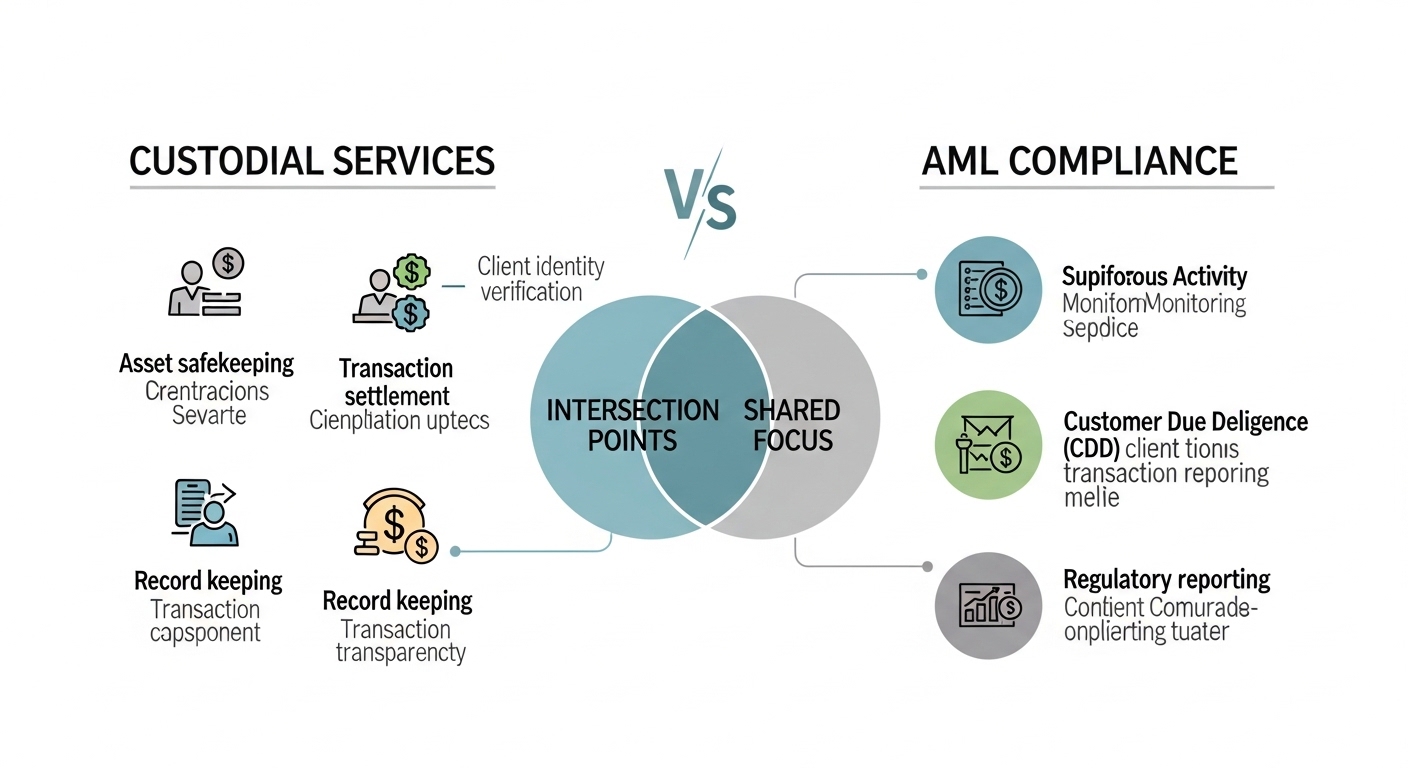
The convergence of blockchain and traditional finance continues to accelerate. Banks are exploring tokenized deposits, digital bonds, and blockchain settlement networks. A comprehensive U.S. crypto bill could formalize this integration by setting standards for custodial services, anti-money laundering compliance, and operational transparency.
Potential Challenges Ahead
Despite Garlinghouse’s optimism, legislative processes remain unpredictable. Negotiations over agency authority, consumer protection provisions, and enforcement mechanisms could introduce delays.
Regulatory Turf Wars
One of the most contentious issues involves the division of oversight between financial regulators. Achieving consensus may require compromises that adjust enforcement authority or redefine certain digital asset categories.
Implementation and Compliance Costs
Even if the U.S. crypto bill passes by April, implementation could present challenges. Companies may face new reporting requirements, licensing standards, and auditing obligations. Smaller startups may need time to adapt to expanded compliance expectations.
What Investors Should Watch
As April approaches, several indicators may signal the bill’s trajectory. Committee votes, bipartisan amendments, and public statements from key lawmakers could offer clues about final passage.
Market participants should also monitor how exchanges, fintech firms, and financial institutions prepare for potential regulatory shifts. Strategic positioning often begins before formal enactment.
Conclusion
The statement that there is a 90% chance the U.S. crypto bill passes by April marks a pivotal moment for the digital asset industry. Brad Garlinghouse’s prediction reflects growing legislative momentum, industry advocacy, and the recognition that regulatory clarity can no longer be postponed.
If enacted, the U.S. crypto bill could reshape how cryptocurrencies, stablecoins, and blockchain platforms operate within the United States. It may strengthen investor confidence, attract institutional capital, and integrate digital assets more seamlessly into traditional financial systems. While challenges remain, the potential passage of comprehensive crypto legislation would signal a new era of structured innovation. As April draws nearer, the global crypto community watches closely. The outcome could define the trajectory of American blockchain leadership for years to come.
FAQs
Q: Why does the Ripple CEO believe there is a 90% chance the U.S. crypto bill will pass by April?
The Ripple CEO’s confidence likely stems from ongoing bipartisan negotiations, increased industry lobbying efforts, and signals from lawmakers indicating strong support for comprehensive digital asset regulation. After years of regulatory uncertainty and enforcement-driven actions, policymakers appear motivated to establish a clear legal framework. The April timeline may align with legislative schedules and political incentives, increasing the probability of passage.
Q: How would the U.S. crypto bill impact cryptocurrency investors?
If the U.S. crypto bill passes, investors could benefit from greater regulatory clarity and improved consumer protections. Clear definitions of digital assets and structured oversight may reduce legal risks and market uncertainty. This stability could attract institutional capital, expand retail participation, and enhance confidence in cryptocurrency markets overall.
Q: What role do stablecoins play in the proposed U.S. crypto bill?
Stablecoins are expected to be a central focus of the legislation. Lawmakers are concerned about reserve transparency, systemic risk, and operational standards. The bill may introduce auditing requirements, reserve backing mandates, and reporting obligations to ensure stablecoins operate safely within the broader financial system.
Q: Could the passage of the U.S. crypto bill affect global crypto markets?
Yes, the United States plays a significant role in global finance. If the U.S. crypto bill establishes clear and comprehensive guidelines, it may influence regulatory approaches in other jurisdictions. International markets often respond to U.S. policy shifts, meaning the bill could have ripple effects across global cryptocurrency ecosystems.
Q: What challenges could delay the U.S. crypto bill despite strong optimism?
Potential delays could arise from disagreements over regulatory authority, enforcement provisions, or compliance standards. Lawmakers must balance innovation with consumer protection and financial stability. Even with broad support, complex legislative negotiations may introduce last-minute amendments or revisions that impact the timeline.