Ripple’s Hidden Power Play: Can XRP Power Instant Global Payments Be the Backbone of Instant Global Payments is more than just a bold statement. It represents a growing belief within the digital asset industry that XRP could reshape the way money moves around the world. As traditional financial systems struggle with delays, high fees, and fragmented infrastructure, Ripple has positioned XRP as a solution built for speed, scalability, and efficiency.
The global payments landscape remains surprisingly outdated. Sending money across borders can still take days, require multiple intermediaries, and involve unpredictable costs. In contrast, blockchain-based systems promise near-instant settlement and transparent fees. Within this competitive space, Ripple and XRP stand out due to their laser focus on cross-border transactions and institutional adoption.
We explores Ripple’s hidden power play, examines how XRP functions as a bridge currency, analyzes its real-world use cases, and evaluates whether XRP truly has the potential to become the backbone of instant global payments. Along the way, we will dive into cross-border payments, blockchain technology, digital asset liquidity, real-time settlement, and the broader financial innovation landscape shaping the future of money.
Ripple’s Hidden Power Play
Founded in 2012, Ripple set out to solve a fundamental problem: the inefficiency of international payments. Unlike many blockchain projects that focus primarily on retail users, Ripple targeted banks, financial institutions, and payment providers from the start.
The company’s mission is to enable seamless global value transfer. Instead of replacing the banking system, Ripple works alongside it, offering infrastructure that enhances speed and reduces cost. This pragmatic approach has helped Ripple secure partnerships with financial institutions across multiple continents.
What Makes XRP Different?
XRP is the native digital asset of the XRP Ledger, a decentralized blockchain designed for fast and low-cost transactions. Unlike proof-of-work cryptocurrencies, the XRP Ledger uses a consensus protocol that allows transactions to settle in seconds.
XRP is not just a speculative token. Its primary utility lies in serving as a bridge asset. In cross-border payments, XRP can be used to convert one currency into another almost instantly. This eliminates the need for pre-funded accounts in foreign currencies, a common requirement in traditional correspondent banking.
The combination of liquidity provisioning, real-time gross settlement, and low transaction fees forms the foundation of Ripple’s hidden power play.
The Problem with Traditional Global Payments
Slow and Costly Cross-Border Transfers
The traditional banking system relies heavily on correspondent networks such as SWIFT. While reliable, this system involves multiple intermediaries. Each intermediary adds time, cost, and operational complexity.
When someone sends money internationally, the funds may pass through several banks before reaching the recipient. Settlement can take two to five business days, and fees can accumulate at each step. In emerging markets, delays may be even longer. This outdated infrastructure stands in stark contrast to today’s digital expectations. Consumers expect instant messaging, instant streaming, and instant data access. Why should money be any different?
Liquidity Traps and Pre-Funding
One of the biggest inefficiencies in international finance is the need for pre-funded nostro and vostro accounts. Banks must hold large sums of money in foreign currencies to facilitate cross-border transactions. This ties up capital that could otherwise be used for lending or investment.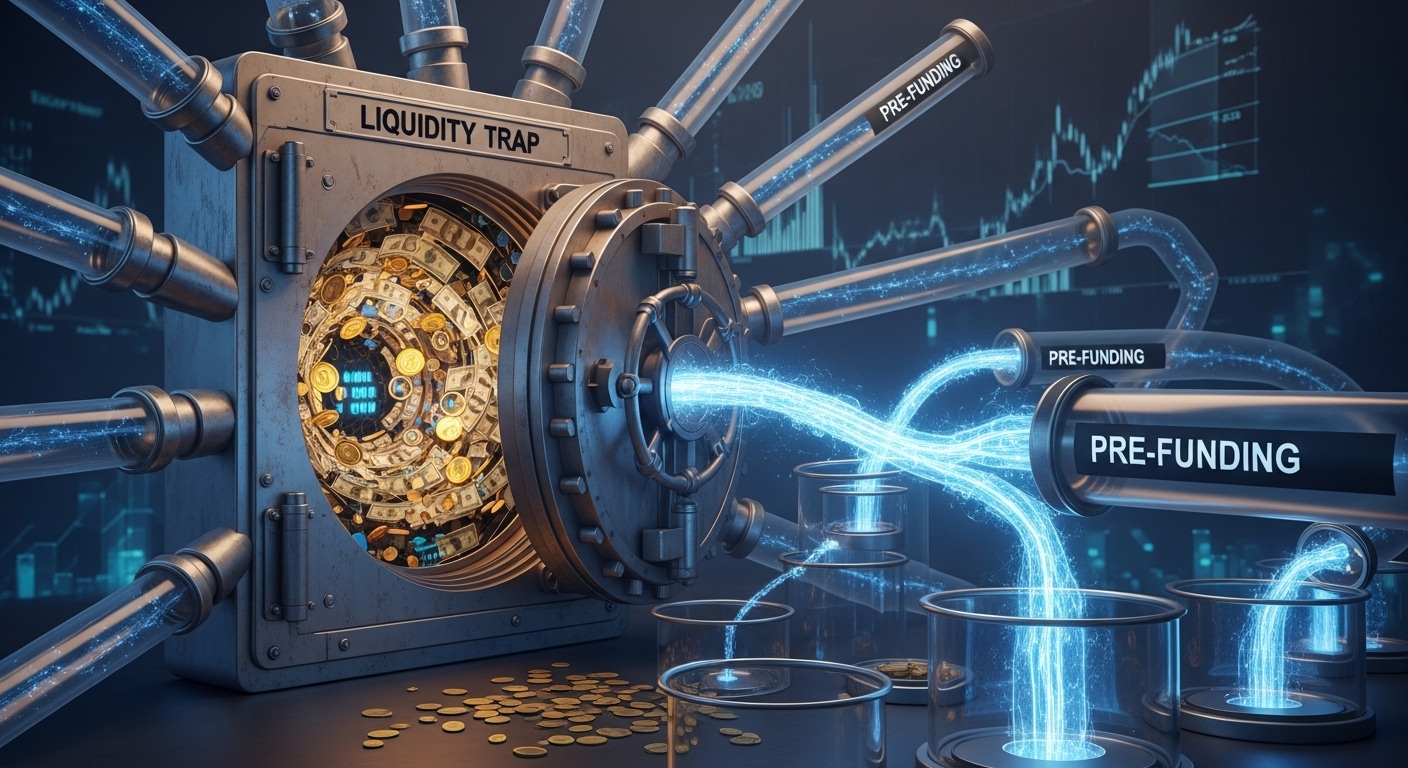
Ripple’s model, powered by XRP, aims to eliminate this friction. By using XRP as an intermediary asset, institutions can source liquidity on demand. This concept of cross-border payments has become central to Ripple’s strategy.
How XRP Enables Instant Global Payments
On-Demand Liquidity Explained
Ripple’s On-Demand Liquidity solution leverages XRP to bridge two fiat currencies. For example, if a company in the United States wants to send money to Mexico, the dollars are converted into XRP, transferred across the XRP Ledger within seconds, and then converted into Mexican pesos. This process dramatically reduces settlement time and eliminates the need for pre-funded accounts. It also improves transparency, as transactions are recorded on a public blockchain.
By enabling near-instant conversion and transfer, XRP supports the vision of instant global payments. This is Ripple’s hidden power play: transforming XRP from a digital asset into a core infrastructure component for international finance.
Speed, Scalability, and Cost Efficiency
The XRP Ledger can process transactions in three to five seconds. Transaction fees are typically fractions of a cent. Compared to traditional systems, this represents a significant leap forward in efficiency.
Scalability also plays a crucial role. The network is capable of handling high transaction throughput, making it suitable for enterprise-level usage. These attributes make XRP attractive to financial institutions seeking real-time settlement and cost-effective remittances.
Ripple’s Institutional Strategy
Partnerships and Global Reach
Ripple’s approach has always centered on collaboration rather than disruption. By partnering with banks and payment providers, Ripple integrates its technology into existing systems.
This strategy allows XRP to operate within regulatory frameworks and established financial networks. Over time, these partnerships strengthen Ripple’s credibility and expand the use cases for XRP. Institutional adoption is key to XRP’s long-term success. If banks and financial service providers increasingly rely on XRP for liquidity, it could solidify its role as the backbone of instant global payments.
Regulatory Challenges and Resilience
Ripple has faced regulatory scrutiny, particularly from the U.S. Securities and Exchange Commission. Legal battles have shaped public perception of XRP and influenced its market performance.
Despite these challenges, Ripple has continued expanding internationally. Regulatory clarity in various jurisdictions has provided momentum for renewed growth. This resilience highlights another aspect of Ripple’s hidden power play. By navigating complex legal landscapes and maintaining institutional relationships, Ripple positions XRP as a legitimate and compliant digital asset within the global financial system.
XRP and the Future of Financial Innovation
Competing with Other Payment Networks
Ripple is not alone in pursuing blockchain-based payment solutions. Projects built on networks like Ethereum and various stablecoin ecosystems also aim to facilitate fast transfers.
However, XRP’s primary focus on cross-border institutional payments distinguishes it from platforms that emphasize decentralized applications or retail transactions. This specialization could give XRP a competitive advantage in the niche of international settlements.
The Role of Central Bank Digital Currencies
Central banks around the world are exploring digital currencies. While central bank digital currencies may streamline domestic payments, cross-border interoperability remains a challenge.
Ripple has positioned itself as a potential partner for central banks seeking interoperable solutions. XRP’s ability to act as a neutral bridge asset could enhance connectivity between different digital currency systems. In this evolving landscape, XRP’s value proposition lies in enabling seamless movement between diverse financial ecosystems.
Market Dynamics and Investor Perspective
XRP as a Utility and Investment Asset
XRP occupies a unique position in the cryptocurrency market. It serves as both a utility token and a tradable digital asset. Its price is influenced by adoption trends, regulatory developments, and broader market sentiment.
For investors, the appeal of XRP often hinges on its real-world utility. Unlike purely speculative tokens, XRP’s use in cross-border payments provides a tangible value proposition.
However, volatility remains a factor. Cryptocurrency markets are inherently unpredictable. While XRP’s long-term vision is compelling, short-term price movements can be influenced by macroeconomic conditions and regulatory news.
Liquidity and Global Demand
As more institutions utilize XRP for liquidity management, demand could increase. Higher usage may contribute to greater network effects, reinforcing XRP’s position in the global payments ecosystem.
This interplay between utility and market dynamics underscores Ripple’s hidden power play. If XRP becomes embedded in payment infrastructure, its demand may be driven less by speculation and more by transactional necessity.
The Broader Impact on Global Finance
Financial Inclusion and Remittances
Remittances represent a multi-billion-dollar industry. Migrant workers often pay high fees to send money home. XRP-powered solutions could lower costs and accelerate transfers, benefiting individuals in developing regions.
By reducing friction in remittance corridors, Ripple contributes to broader financial inclusion. Faster and cheaper transfers empower communities and stimulate local economies.
A New Standard for Settlement
If XRP achieves widespread adoption, it could redefine expectations around settlement speed. Real-time transactions may become the norm rather than the exception. Such a shift would have ripple effects across industries, from e-commerce to supply chain management. The ability to move value instantly could unlock new business models and streamline global trade.
Conclusion
Ripple’s Hidden Power Play XRP Be the Backbone of Instant Global Payments captures the essence of a transformative vision. By focusing on institutional adoption, leveraging the efficiency of the XRP Ledger, and addressing the pain points of traditional banking, Ripple has positioned XRP as a serious contender in the global payments arena.
The journey has not been without obstacles. Regulatory battles and market volatility have tested resilience. Yet the underlying value proposition remains compelling. XRP offers speed, cost efficiency, scalability, and liquidity solutions that align with the needs of modern finance.
Whether XRP ultimately becomes the backbone of instant global payments will depend on adoption, regulatory clarity, and technological evolution. However, its strategic positioning and practical utility suggest that Ripple’s hidden power play is far from speculative hype. It represents a calculated effort to reshape the infrastructure of global finance.
FAQs
Q: How does XRP differ from traditional banking systems in cross-border payments?
Traditional banking systems rely on correspondent networks and pre-funded accounts, which can slow down transactions and increase costs. XRP operates on a blockchain-based ledger that settles transactions in seconds. By acting as a bridge currency, XRP eliminates the need for multiple intermediaries and reduces reliance on pre-funded accounts. This makes cross-border payments faster, more transparent, and potentially more affordable for institutions and end users alike.
Q: Can XRP truly become the backbone of instant global payments?
XRP has the technical capabilities to support instant global payments, including high transaction speed and low fees. Its success depends on institutional adoption, regulatory clarity, and integration with existing financial systems. If banks and payment providers increasingly use XRP for liquidity management, it could solidify its role as a core component of international payment infrastructure.
Q: What role does Ripple play in the XRP ecosystem?
Ripple develops enterprise payment solutions that utilize XRP and the XRP Ledger. While XRP operates on a decentralized network, Ripple promotes its adoption among financial institutions. Through partnerships and technological development, Ripple aims to integrate XRP into mainstream cross-border payment systems.
Q: Is XRP affected by regulatory decisions?
Yes, regulatory developments significantly impact XRP’s market performance and adoption. Legal clarity can encourage institutional participation, while uncertainty may create hesitation. Ripple’s interactions with regulators have shaped XRP’s trajectory, highlighting the importance of compliance in the evolving digital asset space.
Q: How could XRP influence the future of financial innovation?
XRP could accelerate the transition toward real-time global settlement. By enabling instant cross-border transfers and efficient liquidity management, XRP supports broader financial innovation. Its integration with emerging technologies such as digital currencies and blockchain-based systems may help create a more interconnected and efficient global financial ecosystem.